Clear Sky Science · en
Feasibility and acceptability of technology-assisted problem management plus (TA-PM+) in community settings in Pakistan: a pre-post mixed-methods study
Bringing Mental Health Care Closer to Everyday Life
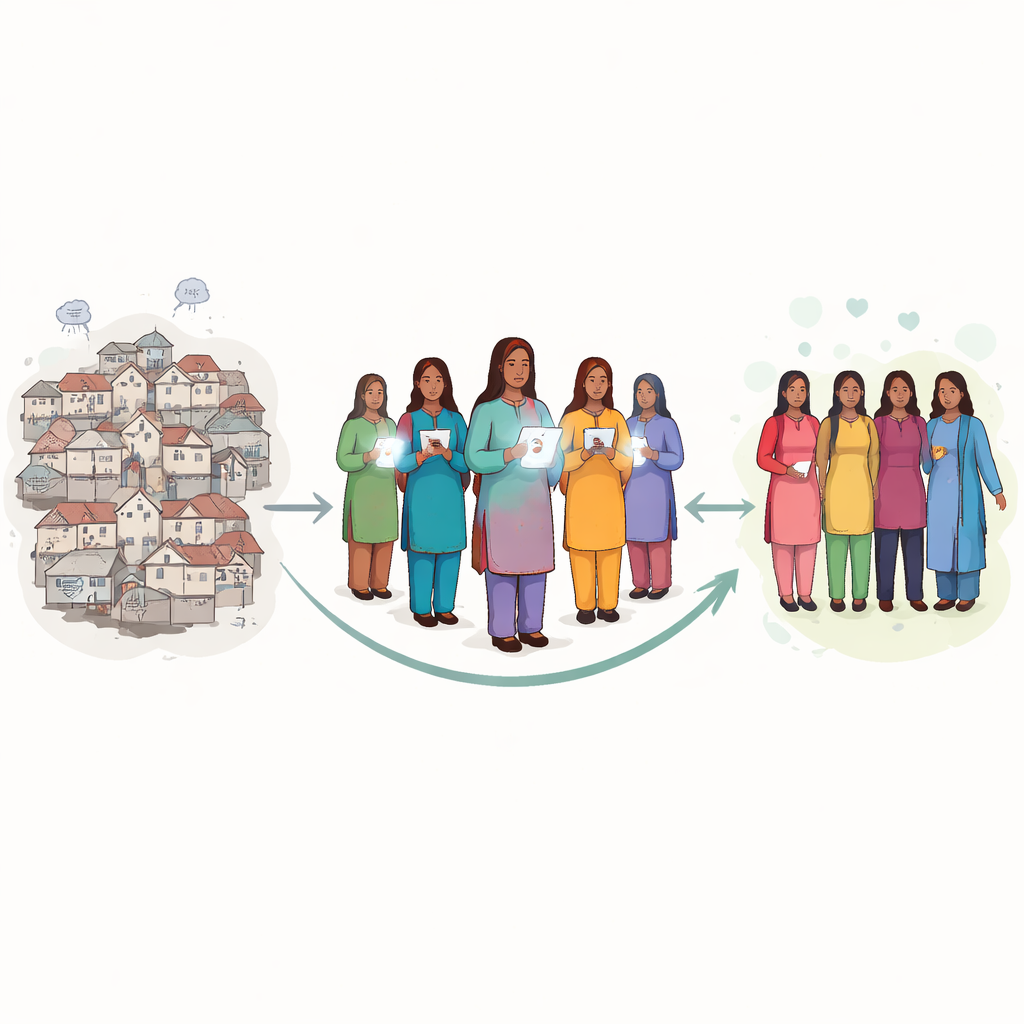
In many low-income neighborhoods around the world, especially in countries like Pakistan, women live with high levels of stress, anxiety, and depression but have little or no access to mental health professionals. This study explores whether a simple, phone- and tablet-based program can help local community health workers deliver effective emotional support, right in women’s homes and streets, without needing a psychologist present. It asks a practical question that matters to families and health planners alike: can everyday health workers, armed with a carefully designed app, really make a difference to women’s mental well-being?
A Simple Support Program, Upgraded with Technology
The research builds on an existing World Health Organization program called Problem Management Plus, a brief talking therapy that teaches people how to manage stress, solve everyday problems, stay active, and lean on social support. Traditionally, this program takes about 90 minutes per session and demands extensive training and supervision, which makes it hard to roll out widely in crowded, under-resourced clinics. To overcome these hurdles, the team co-created a digital version called Technology-Assisted Problem Management Plus (TA-PM+). Instead of replacing human contact, the app runs alongside face-to-face visits: it guides Pakistan’s government-employed Lady Health Workers step by step, plays short educational videos for participants, and records key information automatically.
How the Study Worked in a Real Community
The researchers tested TA-PM+ in a semi-urban union council on the outskirts of Islamabad, a low-income area where many families face malnutrition, unstable income, and low literacy. Twelve Lady Health Workers, each already responsible for 100 to 250 households, received five days of training in the counseling program plus hands-on practice with the app. They then used TA-PM+ to deliver five weekly sessions, each about 45 to 60 minutes, to 77 adult women who were experiencing notable psychological distress and difficulties in daily functioning. The study followed a pre–post design, meaning there was no comparison group; instead, women’s anxiety and depression were measured before and after the series of sessions.
What Women and Health Workers Experienced
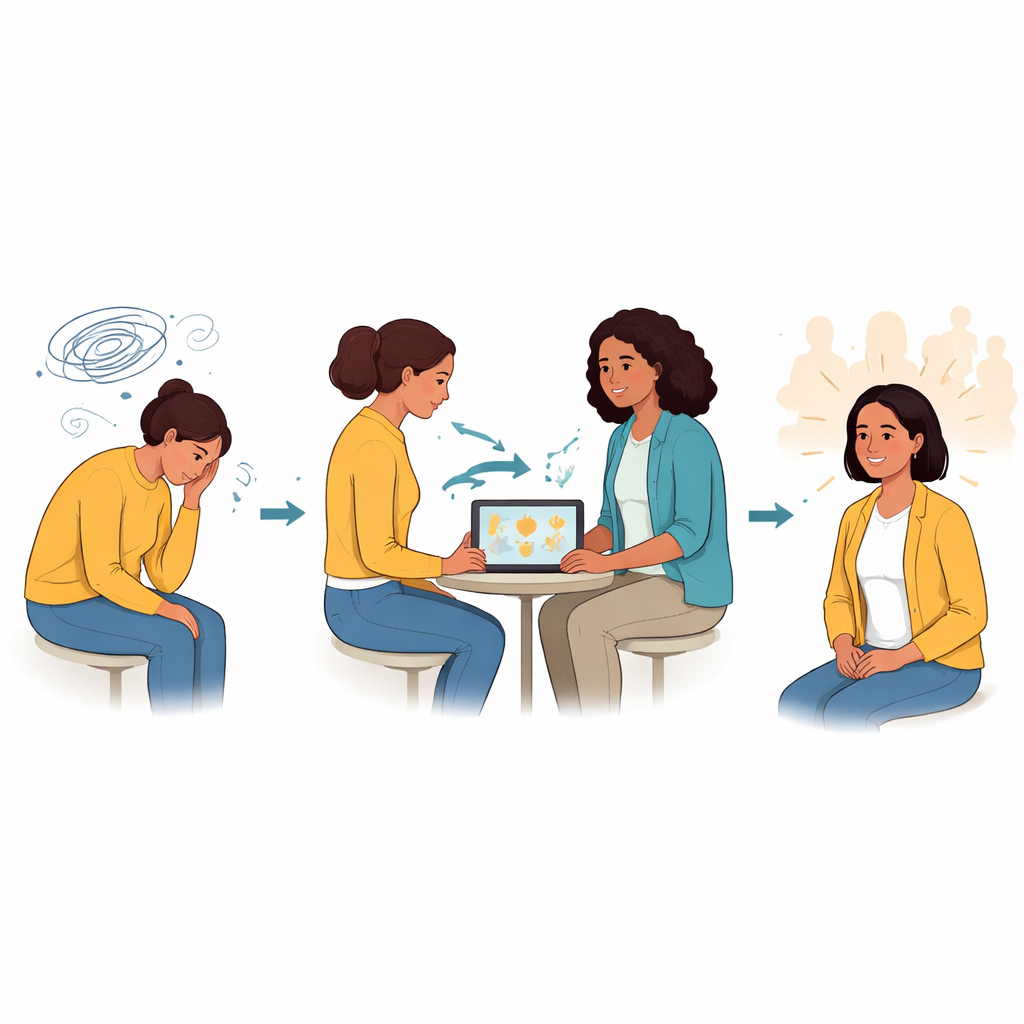
Both the numbers and the interviews paint a largely encouraging picture. Ninety-two percent of women completed all five sessions, and only a few dropped out along the way. Independent ratings of how well the health workers followed the counseling steps showed high quality and consistency, suggesting that the digital guide helped them stay on track. Women reported appreciating the structured format, the relatable videos, and simply having someone to listen to them. Many said they used the breathing exercises and problem-solving ideas in their daily lives, noticing they felt calmer and more in control. At the same time, real-world obstacles surfaced: patchy internet connections delayed uploading data, household chores and childcare frequently interrupted sessions, and some women facing severe poverty or abusive relationships felt that talking alone could not fix their biggest problems.
Early Signs of Better Mood and Less Anxiety
Standard questionnaires showed meaningful drops in symptoms after the five sessions. On average, women’s scores for depression and anxiety fell by roughly half, and these changes were statistically strong, even after checking the data with several types of analysis. The pattern was consistent across different ages, education levels, family sizes, and incomes, suggesting the benefits were not limited to one narrow group. While the study cannot prove cause and effect without a comparison group, the improvement matches results from earlier full-scale trials of the original, non-digital program. Importantly, the digital support allowed sessions to be shorter than the classic 90-minute format while still maintaining quality, hinting that the approach could fit more easily into busy primary care schedules.
What This Could Mean for Communities
For a lay reader, the core message is that a thoughtfully designed mental health app, used by trusted local health workers, can make structured emotional support more realistic in crowded, low-resource settings. TA-PM+ did not replace human relationships; it strengthened them by giving workers clear guidance, engaging videos, and built-in supervision tools. The study shows that women were generally willing to attend, that their distress tended to decrease, and that frontline workers could deliver the program well despite technical and social hurdles. Larger, controlled studies are still needed, but this early work suggests that blending simple psychology with accessible technology may be a promising way to bring mental health care within reach of millions who have long gone without it.
Citation: Saleem, M., Zafar, S., Abbasi, F. et al. Feasibility and acceptability of technology-assisted problem management plus (TA-PM+) in community settings in Pakistan: a pre-post mixed-methods study. Sci Rep 16, 14153 (2026). https://doi.org/10.1038/s41598-026-49596-8
Keywords: digital mental health, community health workers, women’s mental health, low-income settings, brief psychological intervention