Clear Sky Science · en
Metagenomic profiling of microbial communities and the resistome within Egyptian hospital wastewater and tap water
Why the Water Leaving Hospitals Matters to You
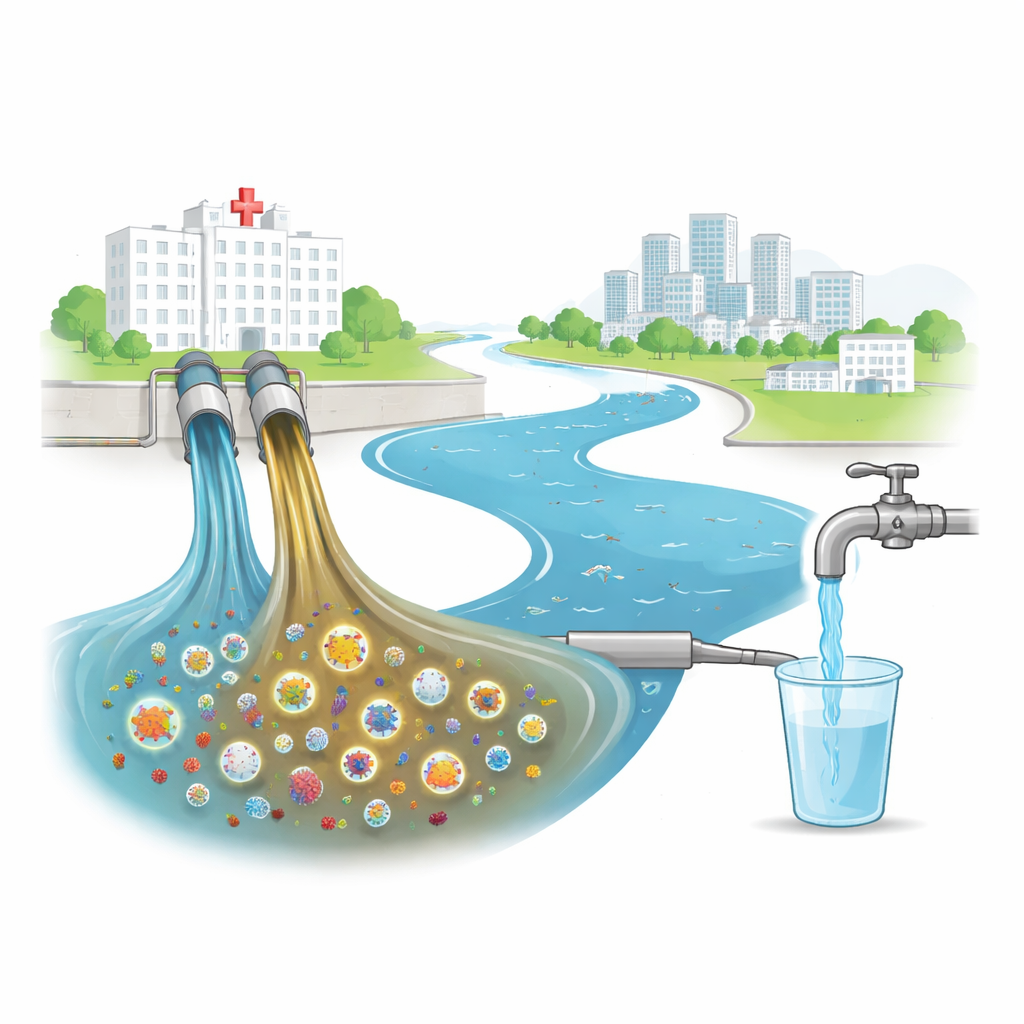
Every time a hospital flushes a toilet, rinses a surgical tool, or cleans a ward, the resulting wastewater carries a hidden cargo of microbes. Some of these microscopic hitchhikers can withstand our strongest antibiotics. This study, carried out in five major hospitals in Cairo, Egypt, asked a simple but urgent question: what exactly is living in hospital wastewater and tap water, and how much antibiotic resistance is riding along? Using a powerful DNA-reading technology, the researchers peered into these unseen communities to understand how hospital effluent might be seeding the wider environment with hard-to-treat germs.
Looking for Invisible Life in Hospital Pipes
The team collected 20 water samples: hospital wastewater taken directly from drainage points, and tap water from the same buildings, during both summer and winter. Instead of growing microbes in the lab—a method that misses many species—they used whole-genome metagenomic sequencing with Oxford Nanopore devices. This approach reads long stretches of DNA from all organisms present in the water at once, allowing the scientists to map out which bacteria were there and which carried genes that make them resistant to antibiotics. They then compared the microbial diversity between hospital wastewater and tap water, and cross-checked resistance genes using three major international databases.
Very Different Microbial Worlds in Two Types of Water
The microbial communities in hospital wastewater and tap water turned out to be strikingly different. Wastewater from the five hospitals contained a rich and varied mix of bacteria, including many species that normally live in the human gut. Two groups in particular, Acinetobacter and Propioniciclav, were especially common. In contrast, tap water from the same hospitals was much less diverse, consistent with the disinfecting effects of chlorination. Here, the most common bacteria belonged to the genera Enterococcus, Escherichia, and Francisella. These tap water microbes can signal fecal contamination and may pose health concerns, yet overall the tap water still hosted far fewer kinds of bacteria than the wastewater.
Where Antibiotic Resistance Is Concentrated
When the researchers searched for antibiotic resistance genes, the difference between wastewater and tap water was even more dramatic. Across three separate databases, they found no resistance genes in any tap water sample. Hospital wastewater, however, was packed with them. Depending on the database, between 28 and 45 distinct types of resistance genes appeared, and hundreds of individual gene subtypes were present across the five hospitals. Many of these genes protect bacteria from antibiotics that target protein production, such as aminoglycosides, macrolides, tetracyclines, and related drugs. Two hospitals, especially a large tertiary teaching hospital, stood out with the highest loads of resistance genes, including genes linked to last-resort antibiotics like carbapenems.
Mobile DNA That Helps Resistance Spread
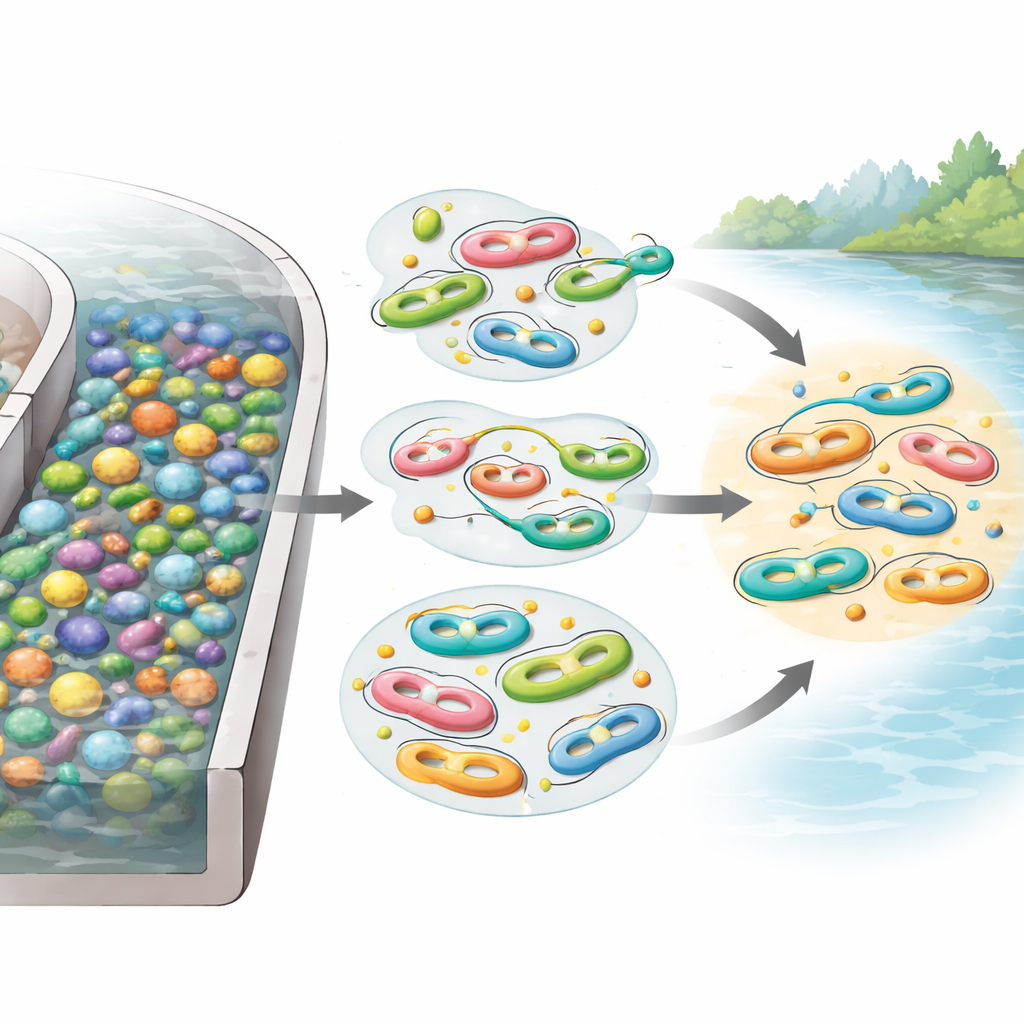
Beyond cataloging resistance genes, the study looked for plasmids—small, mobile DNA circles that bacteria use to swap genetic traits, including antibiotic resistance. Using a dedicated database, the team identified 39 different plasmid types in hospital wastewater. Members of the so-called Col family of plasmids were particularly common, along with other plasmids known to carry powerful resistance factors in hospital pathogens. This means that hospital wastewater is not just full of resistant bacteria; it also contains genetic vehicles that can move resistance traits between bacterial species and out into rivers, soils, and possibly farm animals and people.
What This Means for Public Health
To a lay observer, these findings tell a clear story: in these Egyptian hospitals, tap water appears largely free of identifiable resistance genes, but the wastewater is a dense, evolving “soup” of microbes and mobile DNA that together form a major reservoir of antibiotic resistance. Because water flows beyond hospital walls, this reservoir can leak into the broader environment, giving resistance genes new chances to land in disease-causing bacteria. The authors argue that hospitals need more than internal infection control; they also need effective wastewater treatment, closer surveillance of water quality, and careful antibiotic use. Taken together, the results underscore that the fight against antibiotic resistance is not confined to clinics—it also runs through the pipes beneath our feet.
Citation: Radwan, H.M., El Menofy, N.G., Tharwat, E.K. et al. Metagenomic profiling of microbial communities and the resistome within Egyptian hospital wastewater and tap water. Sci Rep 16, 13894 (2026). https://doi.org/10.1038/s41598-026-49481-4
Keywords: hospital wastewater, antimicrobial resistance, resistance genes, water microbiome, plasmids