Clear Sky Science · en
Ecological study on alien Amaranthus spinosus L. in the Egyptian Nile Valley
Why a prickly weed in Egypt matters
Along the banks of the Nile in southern Egypt, a thorny weed from the Americas is quietly spreading. This plant, known as spiny amaranth, is both a nutritious leafy vegetable and a troublesome invader of farm fields worldwide. The study described here follows its arrival and spread in the Aswan stretch of the Nile Valley, asking where it grows, which local plants accompany it, what the surrounding soils are like, and how its hardy seeds might help it gain a stronger foothold. Understanding this new arrival offers a glimpse of how global plant travelers can reshape fragile river ecosystems in arid regions.
A newcomer on the Nile
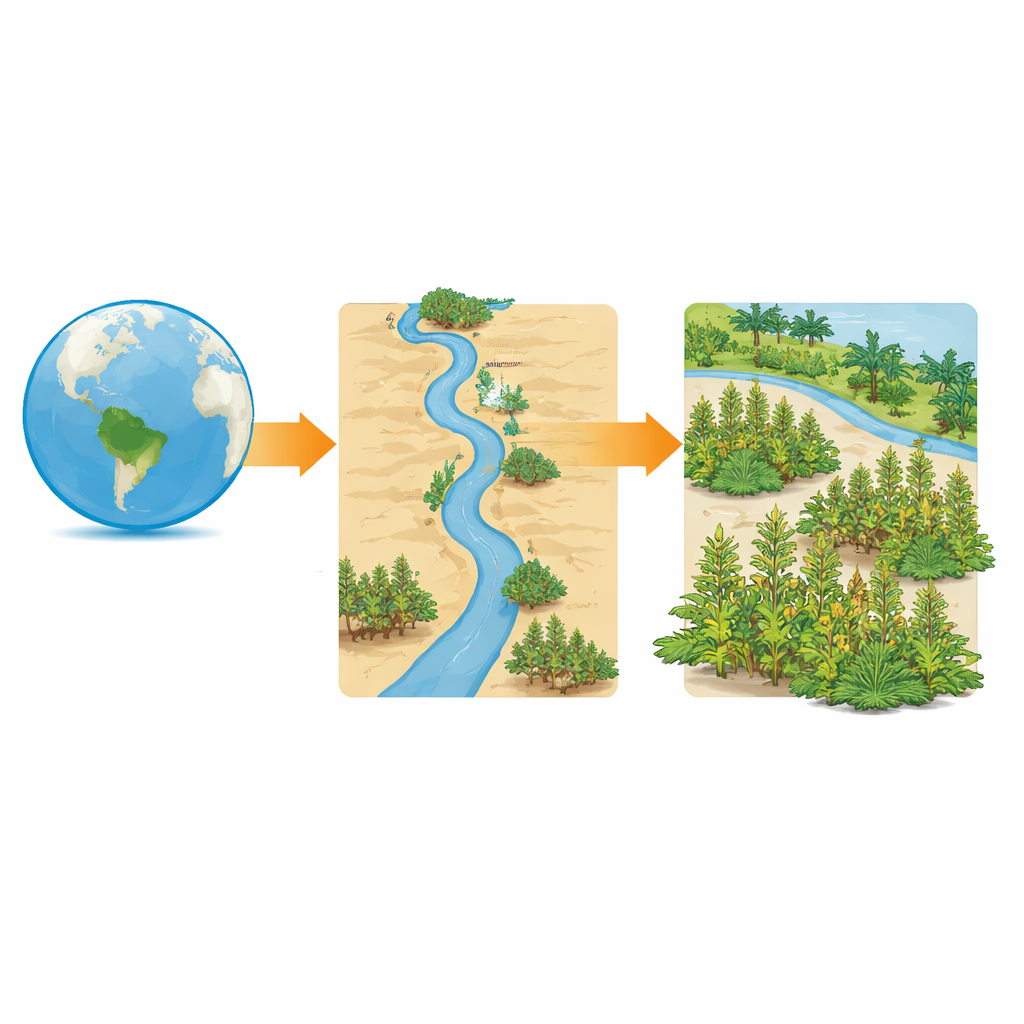
Spiny amaranth comes originally from tropical South and Central America but now occurs across much of the tropics and subtropics as a weed, vegetable and medicinal plant. In Egypt it was long known from the Nile Delta around Cairo and considered just an introduced, naturalized species rather than a full-blown invader. Recently, however, botanists began spotting it hundreds of kilometers to the south, around Aswan. That shift raised alarms: if the plant is starting to colonize new regions on its own, it could be on the verge of moving from a quiet guest in the flora to a disruptive invader along the Nile corridor.
Tracking plants along a desert river
To understand what is happening, the researchers surveyed five sites along the Nile in Aswan between 2018 and 2025. These sites capture a harsh “arid–hydro” setting: burning summers, almost no rain, rocky desert, and a thin green ribbon along the river. Within this landscape they focused on four habitat types where spiny amaranth appeared: roadsides, shallow depressions, a dry side channel known locally as a khor, and river banks. In dozens of one–square–meter plots they recorded every plant species present and collected soil samples down to half a meter to measure texture, salts, nutrients and organic matter. They also gathered mature seeds of spiny amaranth for detailed measurements under a microscope.
Plant neighbors and human pressure
The team found spiny amaranth growing together with 40 other species from 38 genera and 16 plant families. Short–lived annuals and woody shrubs were especially common companions, reflecting the tough, disturbed conditions of roadsides, fields and river edges. Many of these partner species are widespread in warm regions around the world, a sign that the area already hosts a cosmopolitan, disturbance–tolerant flora. About a third of the recorded species face local threats, mainly the loss and fragmentation of habitat due to building, industry and tourism. Such pressures simplify the plant community and tend to favor hardy, opportunistic newcomers like spiny amaranth that can quickly colonize bare or trampled ground.
Soils, seeds and a talent for spreading
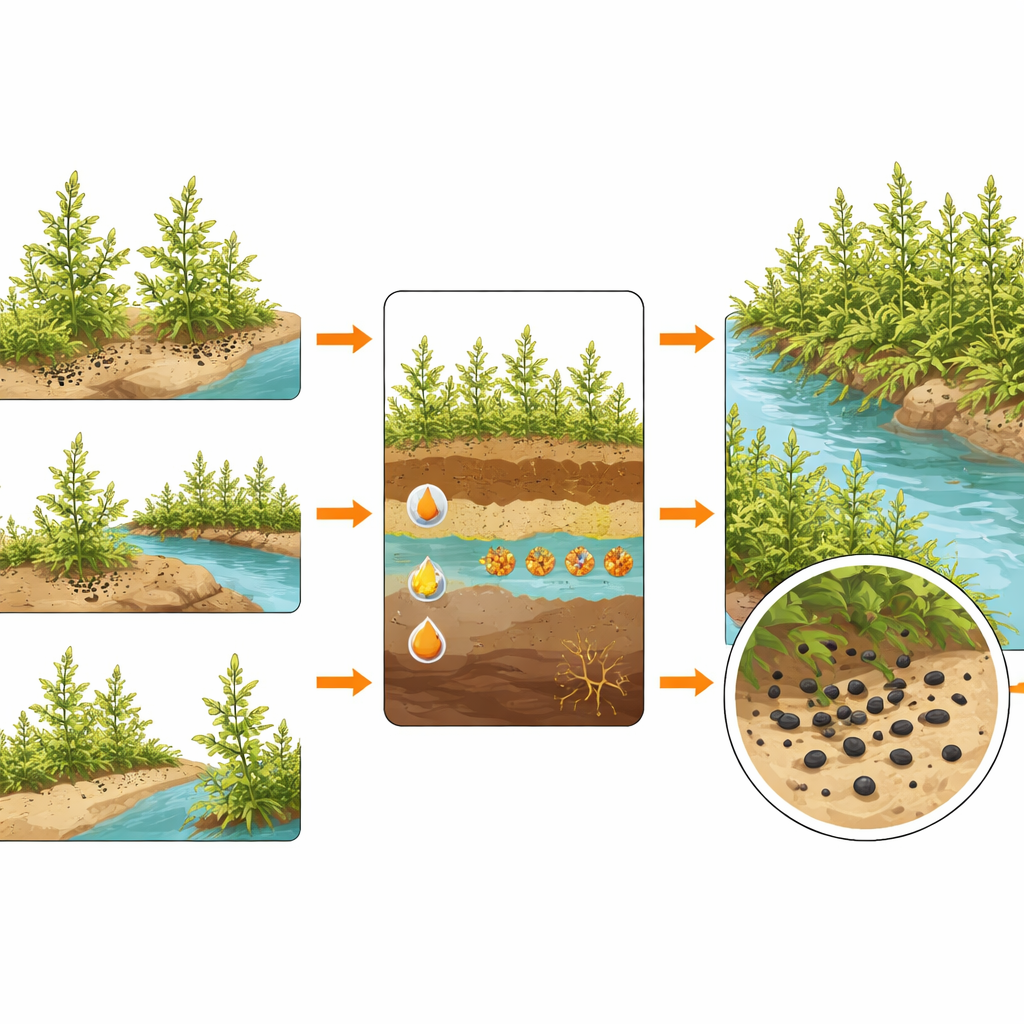
Despite the harsh climate, spiny amaranth proved remarkably flexible. It occurred in all four habitat types, in soils that were generally alkaline, low in organic matter and only mildly salty. Statistical analyses linked the mix of species in each habitat mainly to soil texture (sand, silt and clay) and to key dissolved ions such as calcium, magnesium, sodium, nitrate and carbonate. In other words, subtle differences below ground help sort which plants grow where, but spiny amaranth tolerates a wide range of those conditions. Its seeds add to this advantage: they are very small, disk–shaped, smooth and dark brown to reddish brown, about 7.5 millimeters across, with a shape and surface suited to packing densely and moving easily with water, soil or human activity. Such durable, uniform seeds can help the plant establish new patches rapidly after disturbance.
On the edge of becoming invasive
Putting the pieces together, the authors conclude that spiny amaranth is now firmly established in the Aswan reach of the Nile and has begun to behave like it does in other parts of the world where it is considered invasive. It already occupies multiple habitat types, grows alongside many widespread disturbance–loving species, tolerates varied soils and produces robust seeds. While it is still officially listed in Egypt as merely an introduced species, the pattern in Aswan resembles the early stages of invasion seen elsewhere. The researchers warn that Egypt may be entering a critical window: if the plant spreads unchecked into new farms, river banks and desert margins, it could alter native plant communities and threaten biodiversity. Their main recommendation is simple but urgent—carry out regular surveys and closely track the behavior of this and other alien plants so that management steps can be taken before quiet newcomers turn into serious ecological problems.
Citation: Ayed, F.A., Ahmed, D.A.EA. Ecological study on alien Amaranthus spinosus L. in the Egyptian Nile Valley. Sci Rep 16, 13892 (2026). https://doi.org/10.1038/s41598-026-49216-5
Keywords: spiny amaranth, Nile Valley vegetation, alien plant species, invasive weeds, Egypt biodiversity