Clear Sky Science · en
Synthesis, calf thymus DNA binding, in-vitro cytotoxicity, molecular docking, and antimicrobial studies of novel metal complexes containing a 2,3-diaminopyridine derivative Schiff base
New molecules in the fight against germs and cancer
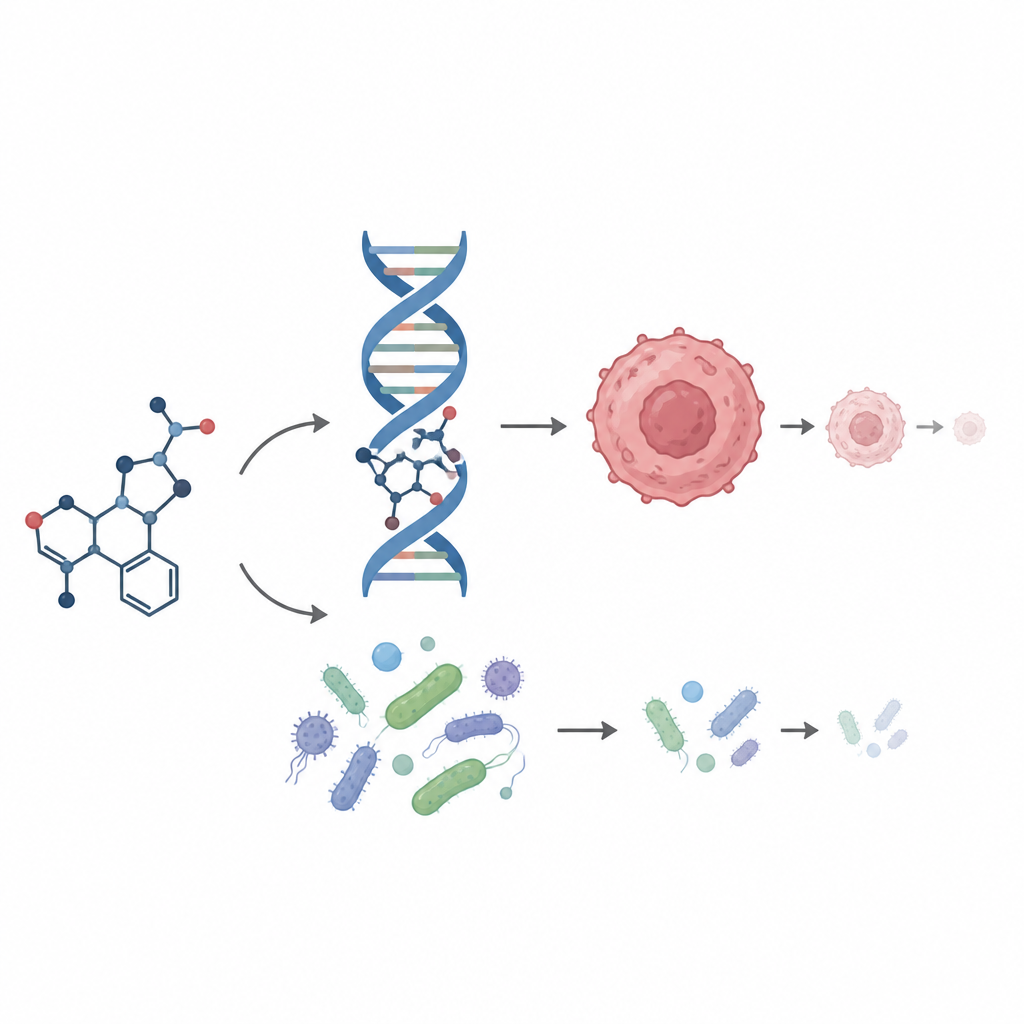
Doctors and scientists are always looking for drugs that can both stop infections and slow cancer cells. In this study, chemists designed a family of tailor made molecules built around metals such as copper, cobalt, nickel, manganese, and palladium. They examined how these molecules latch onto DNA, damage harmful microbes, and stunt the growth of breast cancer cells in the lab, offering clues for future medicines.
Building a custom chemical key
The team began by making a “Schiff base” molecule, a flexible organic frame that can grip metal atoms at four points, like a claw. This core piece was assembled from two small building blocks, 2,3 diaminopyridine and 2,4 dihydroxybenzaldehyde, reacted together in alcohol. When different metal salts were added, each metal settled into its own preferred shape, giving rise to five distinct metal versions of the same basic design. A battery of tests, including light absorption, magnetism, and infrared signals, was used to work out how the metals sat inside the claw and how tightly everything was held together. These measurements showed that the complexes form stable, non conducting units in solution.
How these molecules talk to DNA
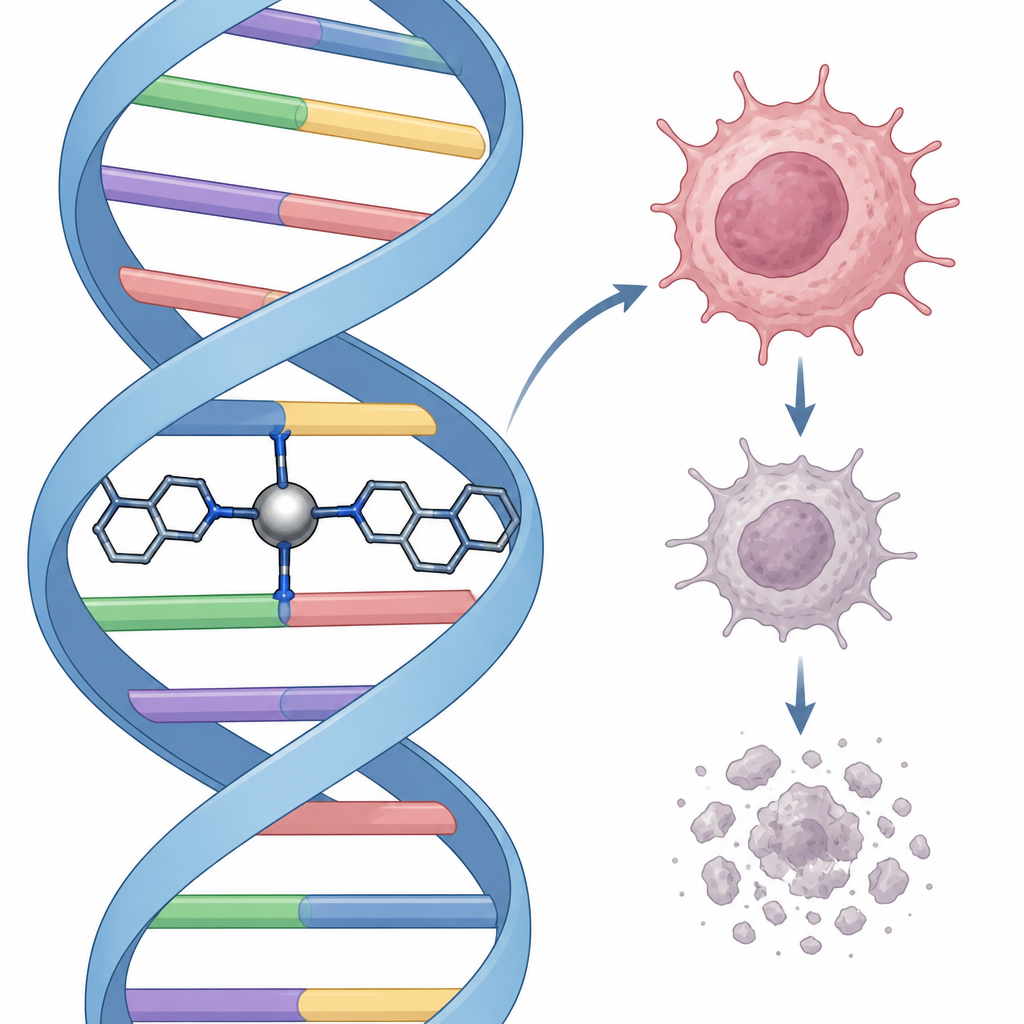
Because many cancer drugs work by binding to DNA, the researchers next asked how strongly the new compounds attach to strands of calf thymus DNA, a common stand in for human DNA. By shining ultraviolet light through solutions that contained both DNA and the metal complexes, they saw the light signals dim and shift slightly as more DNA was added. This pattern indicates that the flat parts of the molecules slide between the rungs of the DNA ladder, a mode of binding known as intercalation. Among the set, the palladium complex gripped DNA most firmly, followed by nickel, manganese, cobalt, copper, and finally the metal free ligand. Stronger DNA binding tended to go hand in hand with stronger toxic effects on cancer cells.
Testing power against microbes
The compounds were then tested against several bacteria and fungi that can cause disease, including Staphylococcus epidermidis, Bacillus cereus, Salmonella species, and the yeast Candida albicans. Using standard plate tests, the scientists measured the clear zones where microbes failed to grow around wells containing each compound. Most of the new metal complexes were more active against fungi than bacteria, and they generally worked better on Gram positive bacteria than on Gram negative ones. The manganese complex stood out, showing the lowest amounts needed to stop and kill fungal cells, even matching or beating a common antifungal drug in some cases.
Probing action on breast cancer cells
To explore anticancer potential, the team exposed human breast cancer cells (MCF 7) to increasing doses of each compound and measured how many cells survived. All of the metal complexes reduced cell growth more strongly than the parent ligand alone. The palladium complex was the most potent, needing less than one micromole per milliliter to cut cell growth in half, a value even lower than that of the standard drug doxorubicin under the same conditions. Computer simulations supported these findings, showing that the compounds fit snugly into pockets on three proteins involved in cancer cell growth, spread, and DNA repair, which could help explain their impact on tumor cells.
What this could mean for future treatments
Taken together, the results suggest that carefully chosen metals, locked into a single organic frame, can tune how strongly a molecule sticks to DNA, how easily it slips into microbial cells, and how harshly it affects cancer cells. While these tests were done in test tubes and cell cultures, not in animals or people, they highlight a promising strategy for crafting multi purpose agents that can attack infections and tumors through related chemical tricks. With further refinement and safety studies, such metal based designs may one day add new tools to the combined fight against microbes and cancer.
Citation: Helal, M.A., Shoaib, R.M.S., El-Sonbati, A.Z. et al. Synthesis, calf thymus DNA binding, in-vitro cytotoxicity, molecular docking, and antimicrobial studies of novel metal complexes containing a 2,3-diaminopyridine derivative Schiff base. Sci Rep 16, 16418 (2026). https://doi.org/10.1038/s41598-026-49189-5
Keywords: Schiff base, metal complexes, DNA binding, antimicrobial activity, breast cancer cells