Clear Sky Science · en
Sustainable improvement of single cross maize performance using vinasse-based biofertilizer
Turning Waste into a Helpful Farm Tool
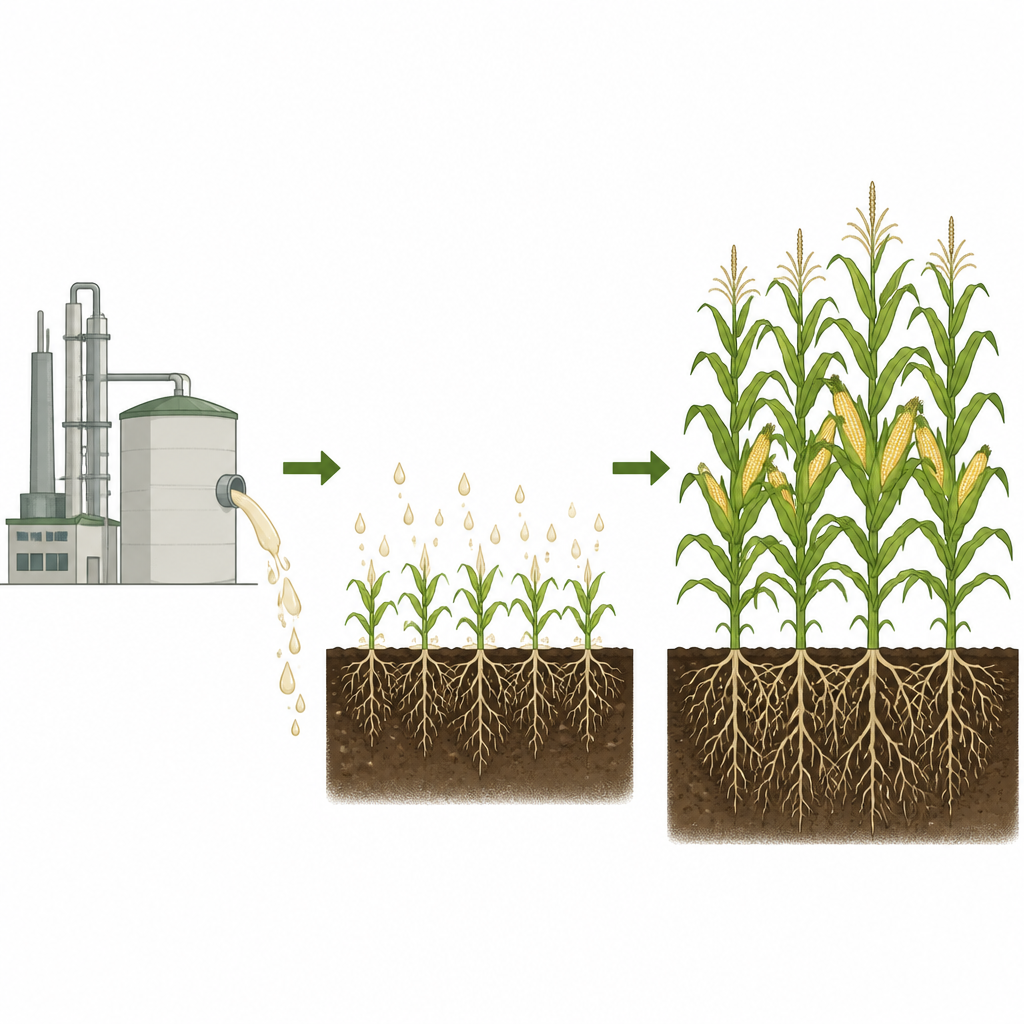
As the world searches for ways to grow more food with fewer chemicals, an unexpected helper is emerging from sugar and alcohol factories: a dark liquid waste called vinasse. This study explores whether that waste, instead of being a disposal problem, can be safely turned into a low cost fertilizer to boost maize harvests in Egypt’s hot, dry climate.
What Vinasse Is and Why It Matters
Vinasse is the leftover liquid from making ethanol and sugar. It is rich in nutrients such as potassium, nitrogen, phosphorus, and trace metals that plants need to grow. In many regions it is either discarded or spread on land without much planning, which can risk salt buildup in the soil. The researchers wanted to know whether carefully chosen amounts of vinasse could feed maize plants, reduce dependence on expensive chemical fertilizers, and support more sustainable farming.
Testing Maize Hybrids in the Field
The team ran two years of field trials at Assiut University in Upper Egypt, where summers are hot and rain is almost absent. They planted three common single cross maize hybrids (SC2031, SC2036, and SC168) in plots that received four vinasse levels: none, low, medium, and high. All plots also received the standard nitrogen and phosphorus doses that local farmers use, so vinasse acted as an added organic booster. The scientists measured plant height, leaf number, leaf greenness, stem thickness, ear size, grain yield, and grain quality traits such as protein and oil content.
How Maize Responded to Vinasse
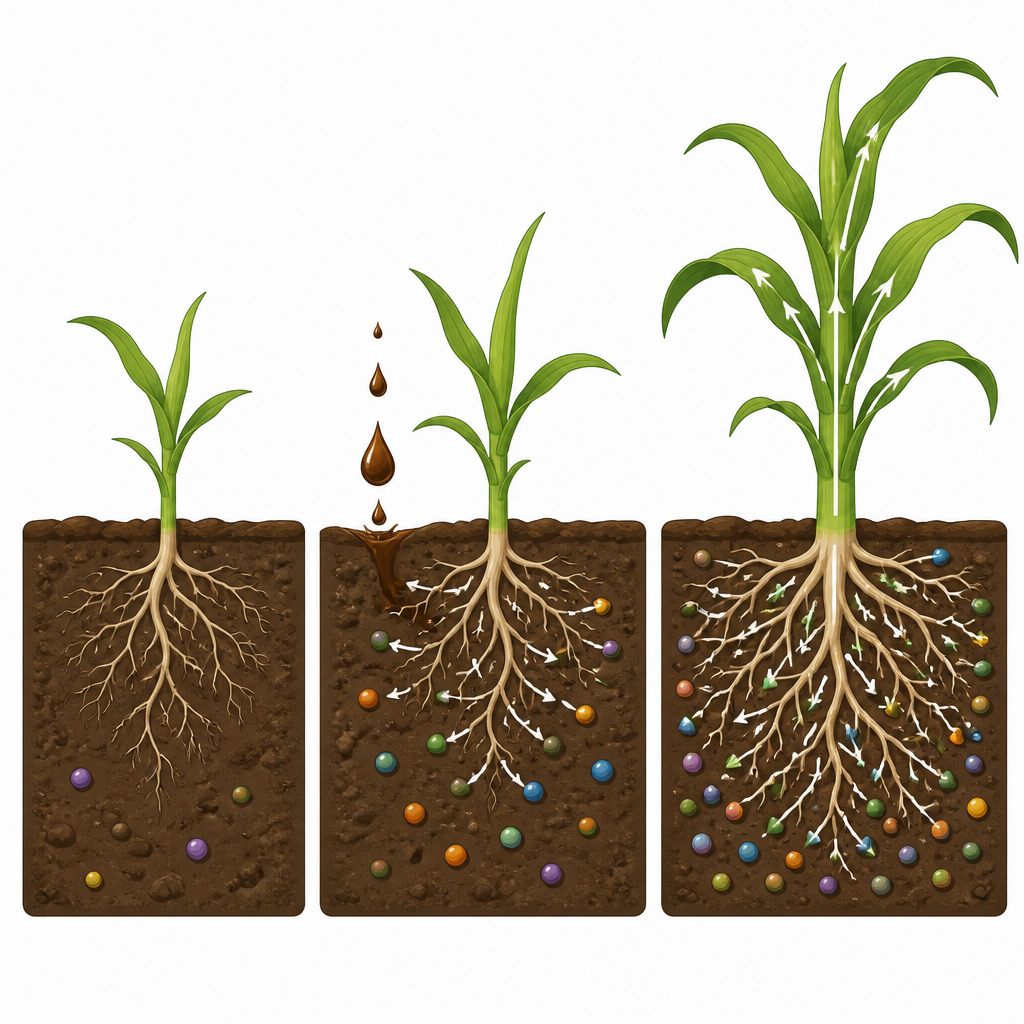
Across both seasons, more vinasse generally meant stronger plants. The highest dose produced taller maize with more leaves, thicker stems, and greener foliage, signs of better photosynthesis and nutrient supply. Grain yield per plant, ear length and thickness, and the weight of 100 grains all improved as vinasse increased. The hybrid SC2036 stood out: under the highest vinasse dose it reached about 187 to 191 grams of grain per plant, equal to roughly 8.6 tons per hectare, and had especially heavy kernels. Protein and oil in the grain also rose with vinasse, meaning the harvest was not only larger but slightly more nutritious. One side effect was a small drop in shelling percentage, reflecting a trade off between grain filling and cob structure.
Choosing Between High Yield and Steady Performance
Beyond simple averages, the researchers used statistical tools that look at how traits and treatments interact. These methods showed that SC2036 was the most responsive: its growth and yield climbed sharply when vinasse was added, especially at the top dose, but it also varied more across conditions. SC2031, in contrast, gave very steady yields from year to year and across vinasse levels, even if its peak performance was slightly lower. SC168 lagged behind the other two in both yield and stability. Overall, the analyses suggested that vinasse levels and plant traits were closely linked, and that leaf number and greenness were good signs of a well fed, high yielding crop.
What This Means for Farmers and the Environment
For farmers in dry regions like Upper Egypt, the findings suggest that vinasse can be safely turned from an industrial waste into a useful biofertilizer when applied at controlled doses. Using vinasse at low to moderate rates with the right hybrid, particularly SC2036 for high yield or SC2031 for stability, can increase maize productivity and slightly improve grain quality while easing pressure on costly mineral fertilizers. The study concludes that vinasse, managed carefully to avoid salt problems, can be part of a sustainable fertilization strategy that helps close the food gap without relying solely on synthetic inputs.
Citation: Mohamed, A.A., Usman, A.R.A., Gameh, M.A. et al. Sustainable improvement of single cross maize performance using vinasse-based biofertilizer. Sci Rep 16, 15040 (2026). https://doi.org/10.1038/s41598-026-49182-y
Keywords: vinasse, maize, biofertilizer, organic fertilization, crop yield