Clear Sky Science · en
Exploring the roles of Polygonati Rhizoma in delaying skin aging using network pharmacology and molecular docking
Why a humble root matters for youthful skin
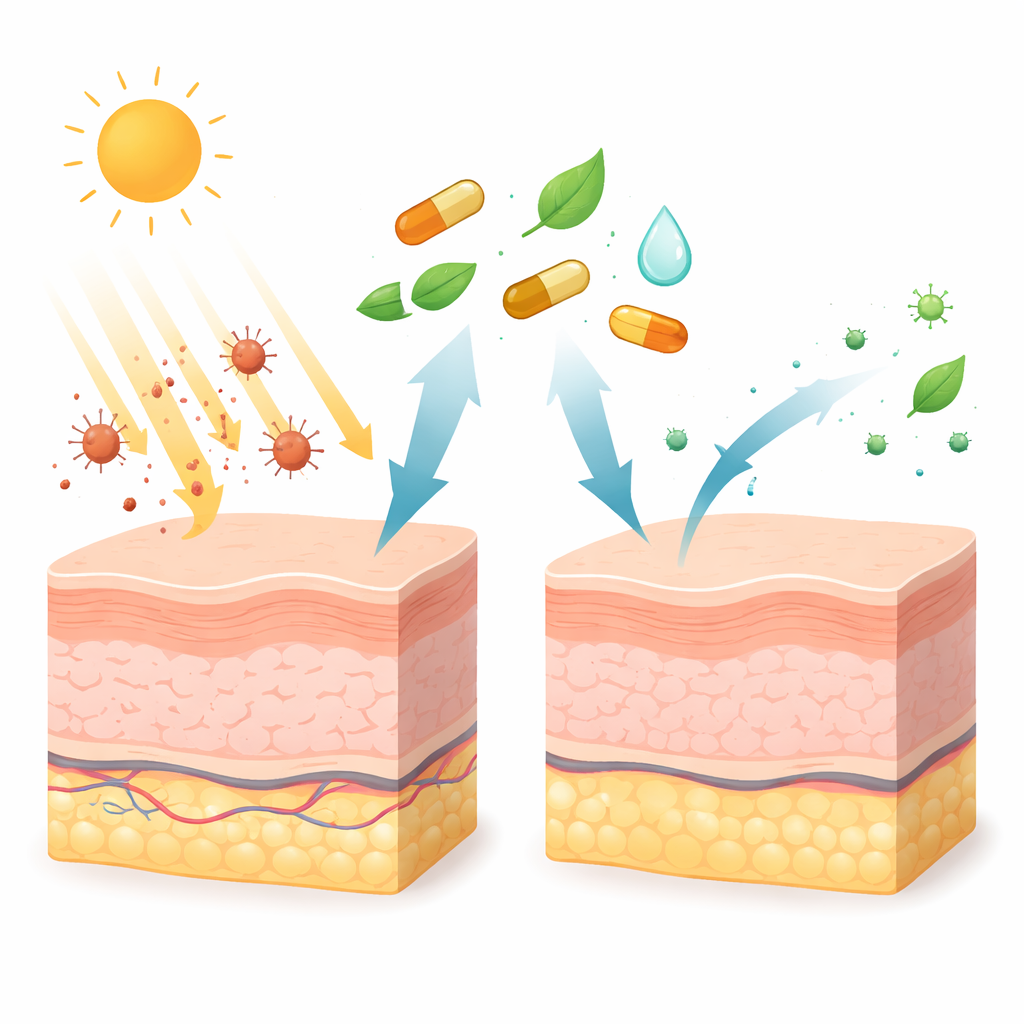
Many people are searching for gentler, plant-based ways to keep their skin looking firm and smooth as they age. Polygonati Rhizoma, a traditional Chinese medicinal root long used as both food and medicine, has recently drawn interest as a natural ingredient for anti-aging skincare. This study explores how specific small molecules from this root might protect the skin from damage and wrinkles, using modern computer tools and lab tests to uncover what is happening deep inside our cells.
An old remedy under the scientific spotlight
Polygonati Rhizoma has been recorded in classic medical texts for more than two thousand years and is credited with boosting energy, strengthening organs, and supporting immunity. Modern work has added more benefits: it can help fight fatigue, regulate blood sugar, and protect the heart and brain. Much of this power appears to come from its complex mix of natural chemicals, including sugars, plant pigments (flavonoids), and other small molecules. Earlier experiments suggested that extracts from this root could extend lifespan in simple animals and shield various organs from age-related damage, but how it might slow visible skin aging was not yet clear.
Mapping the skin-aging “wiring diagram”
To tackle this puzzle, the researchers first combed online databases to find which ingredients in Polygonati Rhizoma are most likely to be absorbed and behave like drugs in the body. They narrowed an initial list of 38 compounds down to nine promising candidates. In parallel, they gathered hundreds of human genes known to be linked with skin aging, such as those tied to wrinkles, loss of elasticity, and chronic inflammation. By overlapping the root’s predicted targets with the skin-aging gene list, they identified 17 shared genes. Computer-based enrichment analyses showed that these genes cluster in pathways related to cell signaling, control of gene activity, and defense against stress and inflammation, suggesting the root may influence several aging-related processes at once.
Zeroing in on two key plant molecules
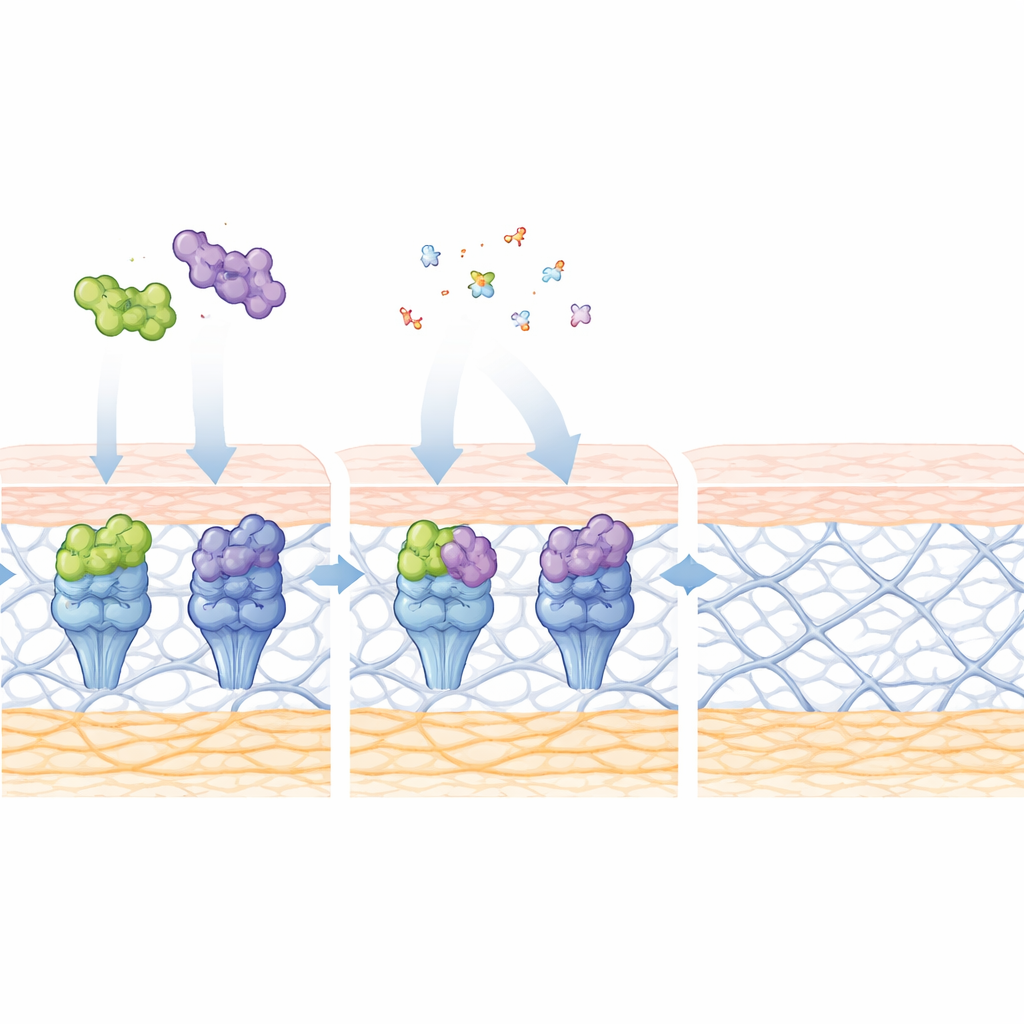
The team then built a “compound–target–pathway” network that connects specific root molecules, the human proteins they might influence, and the biological pathways those proteins control. This systems view highlighted two flavonoids—4’,5-dihydroxyflavone and baicalein—as especially central. Six proteins stood out as likely partners, including three closely tied to skin aging: MMP9, which breaks down the skin’s structural mesh and contributes to wrinkle formation; PTGS2, a driver of inflammatory reactions; and CYP1B1, which is associated with the production of harmful reactive molecules inside cells. In detailed computer docking studies, both flavonoids fit snugly into pockets on these proteins, with notably strong predicted binding to MMP9, PTGS2, and CYP1B1, forming multiple stabilizing interactions.
Watching molecular interactions in motion
Static docking pictures can be misleading, so the researchers ran long molecular dynamics simulations—virtual movies of atoms in motion—to see whether these protein–flavonoid complexes would remain stable over time in a watery, body-like environment. For both MMP9 and PTGS2, the complexes with 4’,5-dihydroxyflavone and baicalein settled into steady shapes and stayed structurally compact, with persistent hydrogen bonds between plant molecule and protein. Calculations of binding free energy supported the idea that these interactions are energetically favorable. In other words, the simulations suggest that the flavonoids can latch onto and likely dampen the activity of key enzymes involved in breaking down skin structure and fueling inflammation.
Testing antioxidant power in the lab
Because unstable “free radical” molecules are central drivers of aging, especially in sun-exposed skin, the scientists also tested whether the two flavonoids could neutralize these reactive species in test-tube experiments. Using two common assays that measure how well a substance mops up different types of radicals, they found that both 4’,5-dihydroxyflavone and baicalein showed strong antioxidant activity. In fact, at the same concentrations, they outperformed vitamin C, a well-known antioxidant. This supports the idea that the compounds not only interact with aging-related proteins but also directly reduce oxidative stress that damages skin cells and their supporting matrix.
What this means for future skincare
Taken together, the study suggests that Polygonati Rhizoma may help delay skin aging through a two-pronged action: its key flavonoids appear able to bind and modulate proteins that drive wrinkle formation and inflammation, while also acting as potent cleaners of damaging free radicals. Although these results come from computer models and cell-free tests rather than human trials, they provide a solid scientific framework for why this traditional root could be a valuable ingredient in new anti-aging cosmetic products. For everyday readers, the message is that some long-used herbal remedies are now being dissected with modern tools, revealing plausible molecular reasons why they might help keep skin healthier and younger-looking.
Citation: Wang, X., Lei, Q., Cai, F. et al. Exploring the roles of Polygonati Rhizoma in delaying skin aging using network pharmacology and molecular docking. Sci Rep 16, 13752 (2026). https://doi.org/10.1038/s41598-026-48521-3
Keywords: skin aging, Polygonati Rhizoma, natural antioxidants, flavonoids, anti-aging skincare