Clear Sky Science · en
Antioxidant, antimicrobial, and apoptosis-related activities of Azadirachta indica (Neem) leaf extract in MCF-7 and A549 cell lines
Why a common tree matters for health
Neem, a hardy tree growing across many tropical regions, has long been used in traditional medicine for everything from skin problems to infections. This study takes a closer, laboratory-based look at what neem leaves can actually do. The researchers tested an alcohol-based leaf extract against germs and cancer cells to see whether this familiar plant might offer real tools for fighting infection, protecting cells from damage, and slowing the growth of tumors. Their findings suggest that neem’s natural chemicals could one day support new treatments, if carefully studied and used.
What is inside neem leaves
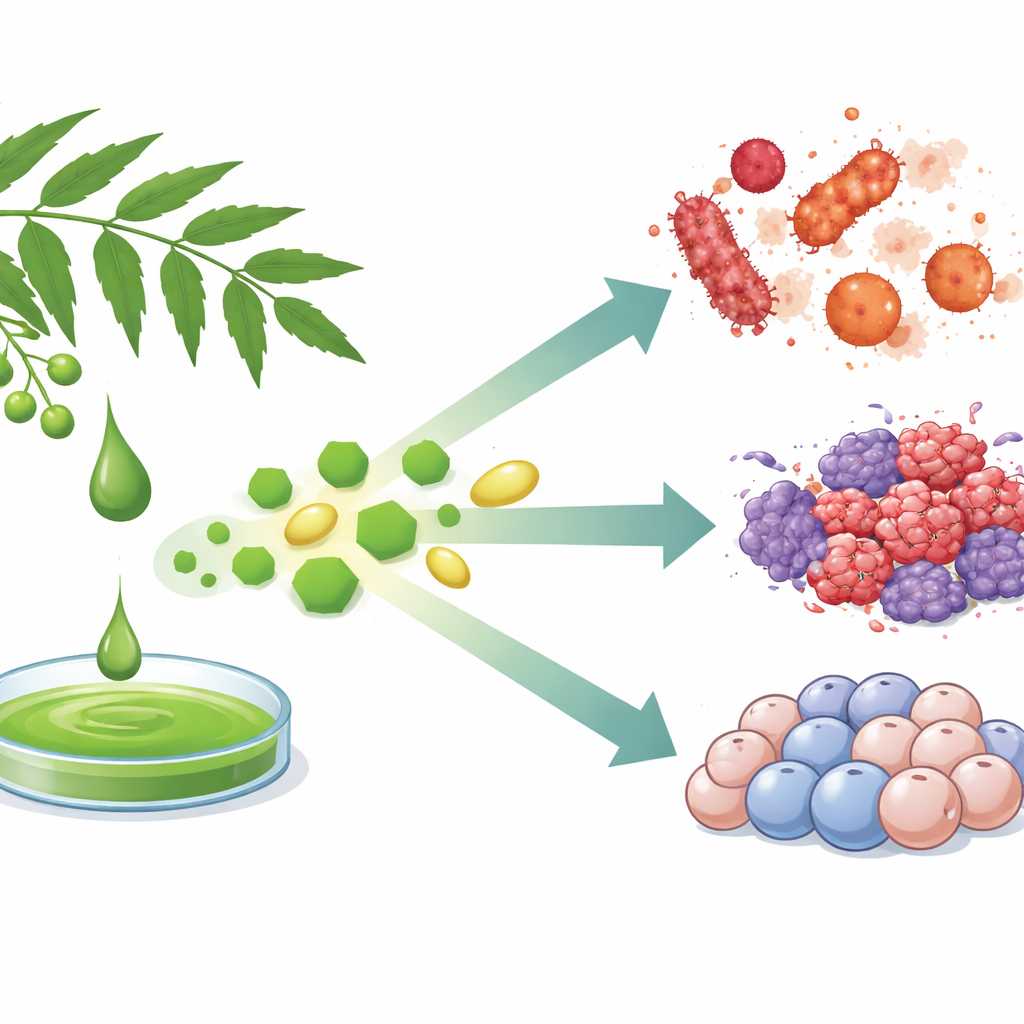
To understand why neem might be helpful, the team first identified some of the major natural compounds in the leaf extract. They found high levels of plant chemicals called polyphenols and flavonoids, such as rutin, gallic acid, and chlorogenic acid. These are the same broad families of molecules often praised in berries, tea, and other plant foods for their role in protecting cells from damage. While the article uses technical tools to measure these components, the key idea is simple: neem leaves are rich in small, reactive molecules that can mop up harmful by-products of normal metabolism and stress.
Fighting germs with plant power
The scientists next asked whether the neem extract could stop bacteria and yeast from growing. In petri-dish tests, drops of the extract created clear zones where microbes could not grow, showing a direct antimicrobial effect. The extract was particularly strong against so-called Gram‑negative bacteria such as Escherichia coli and Enterobacter aerogenes, and in some cases worked better than the standard antibiotic tetracycline. It also held its own against the common yeast Candida albicans, performing about as well as the antifungal drug fluconazole. Further tests suggested that neem may weaken microbes in part by reducing the activity of their own protective enzymes, making them less able to handle damaging oxygen-based molecules.
Shielding cells from damaging molecules
Because excess “oxidative” stress is linked to aging, inflammation, and many chronic diseases, the team examined whether neem extract could neutralize reactive molecules in test-tube systems. Using several standard assays, they showed that the extract was highly effective at scavenging free radicals and mimicking the actions of natural protective enzymes. In fact, in one common test it outperformed vitamin C, a well-known antioxidant. Together with its rich polyphenol content, these results support the view that neem leaves act as a strong natural antioxidant source, at least under laboratory conditions.
Targeting cancer cells while sparing healthy ones
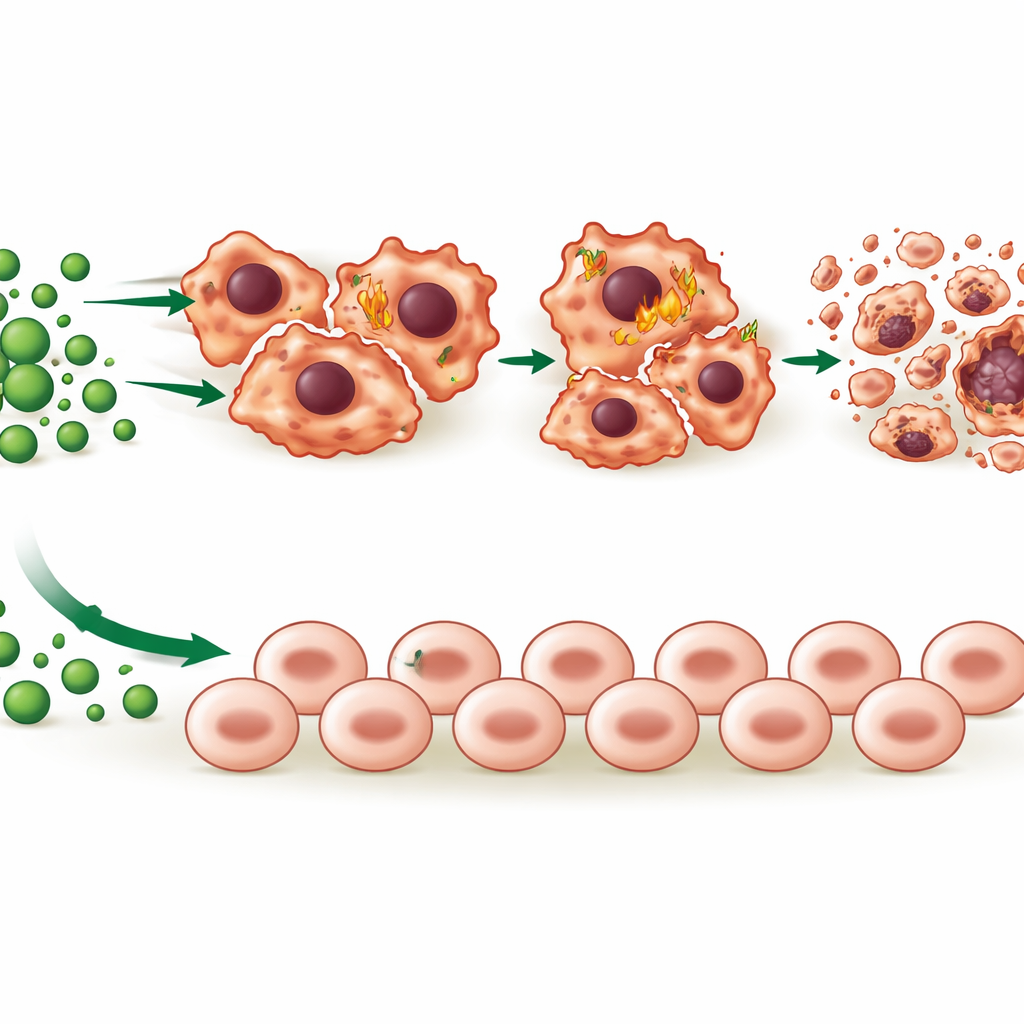
The most striking part of the study looked at how neem extract affects living cells. The researchers exposed two human cancer cell lines, one from breast tissue (MCF‑7) and one from lung tissue (A549), as well as normal mouse liver cells, to increasing doses of the extract. Cancer cell growth dropped as the dose rose, with breast cancer cells proving especially sensitive. In contrast, normal liver cells were far less affected, even at high concentrations. When the team examined the cancer cells’ life cycle, they found that neem pushed most of the lung cancer cells into a resting state known as G0, where they stopped dividing. Gene-expression tests showed that neem dialed down an anti-death gene (BCL‑2) and boosted pro-death signals (BAX and P53), a pattern consistent with triggering programmed cell death rather than simply poisoning the cells.
What these findings mean
Overall, this work paints a picture of neem leaves as a multi-talented natural source of active compounds. In controlled lab experiments, their extract not only slowed or stopped the growth of certain bacteria and yeast, but also strongly neutralized damaging molecules and encouraged cancer cells to halt division and self-destruct, while being gentler on normal cells. That does not mean people should treat infections or cancer with neem on their own; doses, purity, and safety must be rigorously tested in animals and humans. But the results support the idea that components of this familiar tree could serve as starting points for new antimicrobial and anticancer drugs, or as inspirations for safer therapies that work with, rather than against, the body’s own defenses.
Citation: Toson, E.A., Marzouk, M., Rezk, N.A. et al. Antioxidant, antimicrobial, and apoptosis-related activities of Azadirachta indica (Neem) leaf extract in MCF-7 and A549 cell lines. Sci Rep 16, 13413 (2026). https://doi.org/10.1038/s41598-026-48147-5
Keywords: neem, antioxidant, antimicrobial, cancer cells, plant extract