Clear Sky Science · en
Effect of poultry litter amended with biochar or zeolite on nutrient availability, fruit quality, and yield of acid lime in calcareous sandy soil
Turning Farm Waste into Better Limes
In many dry regions, farmers struggle to grow high-quality fruit on sandy, nutrient-poor soils while also cutting back on chemical fertilizers. This study explores a simple idea with big promise: can the bedding waste from poultry farms, upgraded with special natural materials, both feed lime trees and improve the soil, making juicier, more nutritious limes with less synthetic nitrogen fertilizer?
Why Sandy Soils Need Extra Help
Egypt, like many countries in arid zones, is expanding farming into light, calcareous sandy soils that drain quickly and do a poor job of holding water and nutrients. In such soils, conventional nitrogen fertilizers can easily wash away or escape as gases, wasting money and harming the environment. Citrus trees, including acid lime, are heavy feeders and particularly sensitive to nutrient shortages. At the same time, poultry farms generate large amounts of litter—a mix of manure and bedding—that is rich in plant nutrients but can also lose nitrogen rapidly and cause odor and pollution if not managed well.
Upgrading Poultry Litter with Charcoal and Mineral Sponges
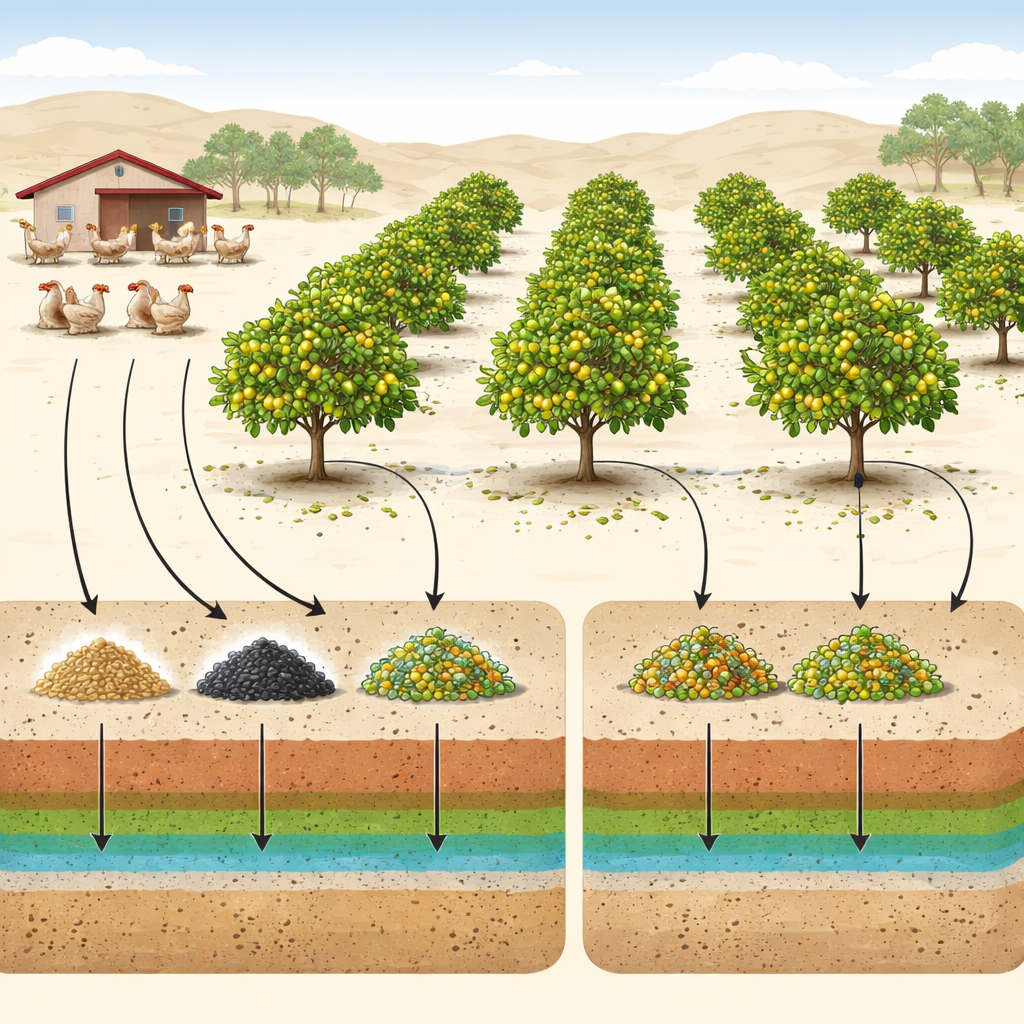
To tackle both problems at once, the researchers tested whether improving poultry litter with biochar (a charcoal-like material made from plant residues) or zeolite (a naturally occurring mineral with a sponge-like structure) could create a slow-release, soil-improving fertilizer. Biochar has a huge internal surface area and tiny pores that can grip nutrients and water, while zeolite carries electrical charges that help it hold onto nutrient ions. Poultry litter made with these additives during poultry rearing was later applied under acid lime trees growing in sandy soil with drip irrigation. The trees then received either the full recommended dose of chemical nitrogen or only half that dose combined with one of three organic options: plain poultry litter, litter with biochar, or litter with zeolite.
Healthier Soil Beneath the Trees
Over two growing seasons, the team measured how much plant-available nitrogen, phosphorus, and potassium remained in the soil after harvest. In the first year, the mixtures that combined half the usual mineral nitrogen with biochar- or zeolite-amended litter clearly outperformed full-rate chemical fertilizer alone. These treatments raised soil nitrogen and potassium to higher levels and, in the case of biochar, sharply increased phosphorus availability. The improved soil conditions were reflected in tree growth: shoots were longer, leaves were larger, and leaf chlorophyll readings were higher with the biochar and zeolite mixtures, matching or exceeding trees given the full dose of mineral nitrogen but without the enhanced organic amendments.
More Fruit, Heavier Limes, and Better Juice
The most striking changes appeared in yield and fruit quality. Trees given poultry litter amended with biochar or zeolite, plus only half the normal mineral nitrogen, produced the highest fruit set and yields, surpassing even the full mineral fertilizer treatment. Yields climbed to about 16 tons of limes per hectare, compared with roughly 12 tons under the low-fertilizer control. Individual fruits from the biochar and zeolite treatments were heavier, taller, and slightly wider, and they contained more juice by weight. The juice itself was sweeter and more flavorful, with higher total soluble solids, greater acidity, and elevated vitamin C content across both years. Leaf analyses confirmed that these trees maintained strong levels of key nutrients such as nitrogen, phosphorus, and potassium, showing that the upgraded litter effectively nourished the trees.
A Practical Recipe for Greener Lime Orchards
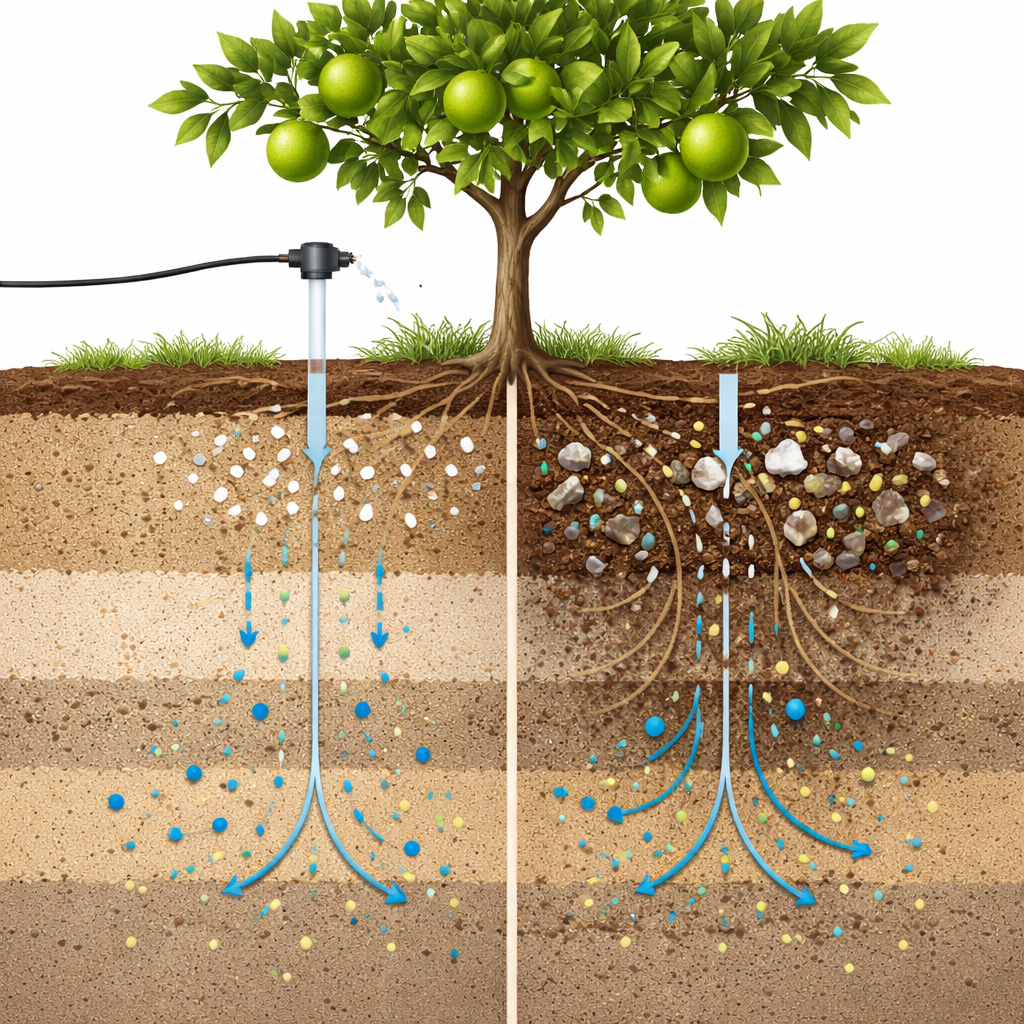
To a grower, the message is straightforward. By applying 10 kilograms of poultry litter that has been enriched with either biochar or zeolite, together with just 0.5 kilogram of nitrogen as ammonium nitrate per tree, farmers on sandy calcareous soils can boost lime yields and fruit quality while cutting mineral nitrogen use in half. The amended litter helps the soil act more like a sponge and pantry combined, holding water and nutrients where roots can reach them instead of letting them wash away. This approach turns a farm waste stream into a valuable resource and offers a realistic path toward more sustainable citrus production in dry, nutrient-poor landscapes.
Citation: Gaber, S.H., Amin, A.EE.A.Z., Farghly, M.F.A. et al. Effect of poultry litter amended with biochar or zeolite on nutrient availability, fruit quality, and yield of acid lime in calcareous sandy soil. Sci Rep 16, 12856 (2026). https://doi.org/10.1038/s41598-026-48057-6
Keywords: acid lime, biochar, zeolite, poultry litter, calcareous sandy soil