Clear Sky Science · en
Using causal machine learning and real world data to improve dose response decision making for secukinumab in psoriatic arthritis
Why this matters for everyday patients
For people living with psoriatic arthritis, finding the right medicine is only half the battle; deciding how much of that medicine to use can be just as important. This study looks at how advanced computer methods, combined with real-world medical records, can help doctors choose between a standard and a higher dose of a common treatment so that more patients feel better, faster, and with fewer trial-and-error changes.
A long-term joint disease in need of smarter dosing
Psoriatic arthritis is a long-lasting inflammatory disease that affects joints, tendons, the spine, and often the skin. Many patients are treated first with traditional drugs and later with modern biological medicines, such as secukinumab, that target specific parts of the immune system. Regulators allow secukinumab to be given in two doses, a lower and a higher one, but current advice on who should get the higher dose is fairly simple: for example, people with more severe symptoms or higher body weight. In day-to-day practice, doctors often rely on personal judgement, which leads to inconsistent dosing decisions and may leave some patients under-treated while others receive more drug than they truly need.
Turning real-world data into a virtual dose trial
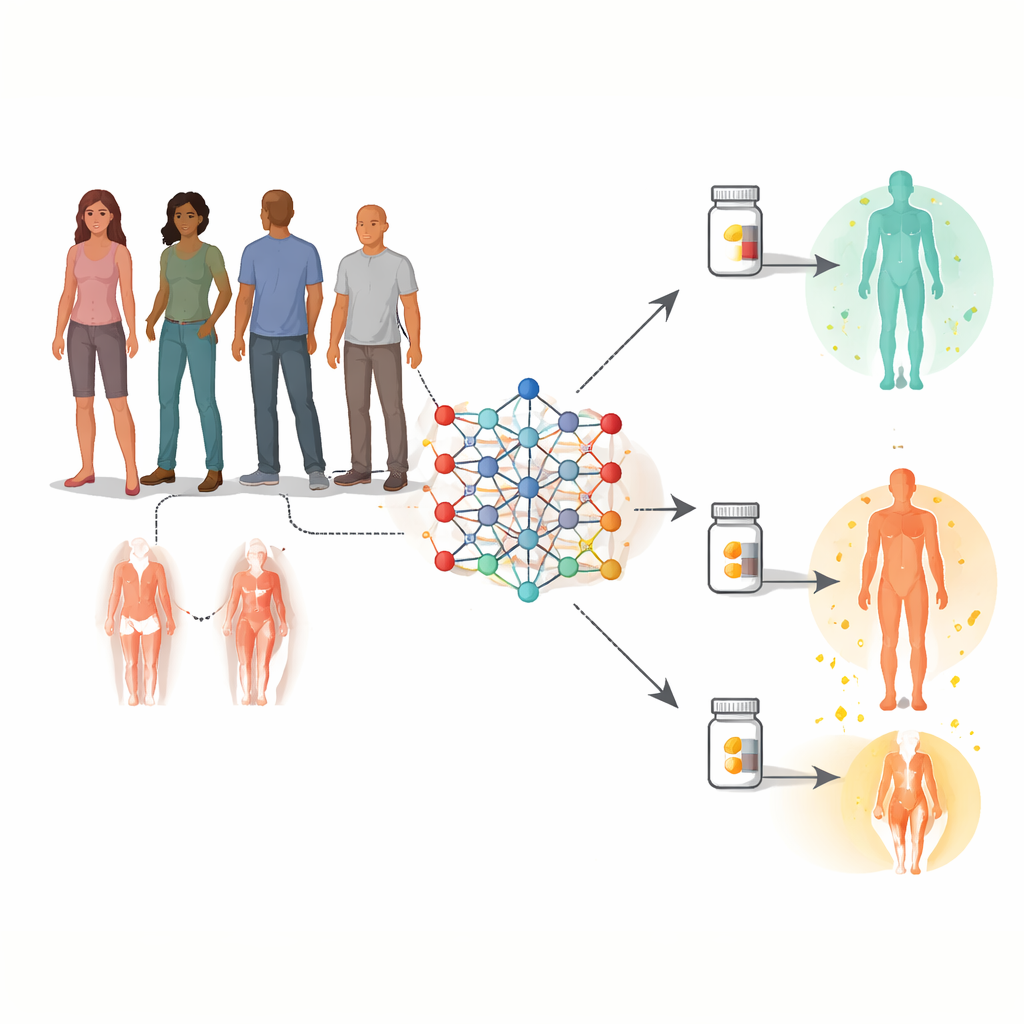
The researchers used data from nearly 2,000 people with psoriatic arthritis in a German observational study called AQUILA, focusing on 1,235 patients who had clear information on symptoms and dose over about four to six months. Some started secukinumab at the lower dose, others at the higher dose, and their health-related quality of life was tracked using a patient questionnaire that measures pain, fatigue, and daily impact. Instead of running a new randomized trial, the team used a method called causal machine learning to “re-create” what might have happened if each patient had started on the other dose, while carefully adjusting for differences such as age, body mass index, prior treatments, depression scores, and skin severity.
What the computer models discovered
On average, both doses led to meaningful improvements in how patients felt, but those on the higher dose had a larger drop in their disease impact score (1.81 points versus 1.44 on a 0–10 scale). After correcting for the fact that sicker patients tended to receive the higher dose, the causal model still found a real benefit from dose escalation: an additional improvement of about 0.24 points, which translates to roughly 16% better results compared with staying on the lower dose. The model went further by estimating individual benefits. It predicted that about three out of four patients would feel at least a small extra gain if they received the higher dose. People with higher body mass index or raised inflammation markers in their blood, as well as those with more severe skin disease, tended to gain the most. In these subgroups, the improvement from moving to the higher dose rose to around 28% above the lower-dose baseline.

From one-size-fits-all to tailored treatment plans
By building a decision-tree style map, the researchers showed how simple patient features could guide dose choices. For example, patients with body mass index above a certain level, or with elevated C-reactive protein (an inflammation marker), were repeatedly flagged as better candidates for higher dosing. The model also highlighted that smokers responded less well at low doses, suggesting they might need more intensive treatment. At the same time, the study pointed out that higher doses cost more and might carry a greater risk of side effects; when the team imposed stricter thresholds for what counts as a “worthwhile” benefit, the number of patients for whom the high dose was recommended dropped sharply. This illustrates how doctors and health systems could tune the model to balance symptom relief against costs and safety.
What this means for patients and the future
For patients, the key message is that advanced data analysis can help move beyond trial-and-error dosing toward more personalized care. This study shows that, using information already collected in routine visits, computers can estimate who is likely to benefit most from a higher dose of secukinumab and by how much. While the findings still need to be weighed against official drug approvals, costs, and potential side effects, the approach itself is widely applicable: the same kind of causal machine learning could be used to fine-tune treatments in many chronic conditions. In the long run, this could mean more people getting “just the right dose” from the start, fewer flare-ups, and better quality of life.
Citation: Kiltz, U., Glassen, T., Brandt-Juergens, J. et al. Using causal machine learning and real world data to improve dose response decision making for secukinumab in psoriatic arthritis. Sci Rep 16, 12186 (2026). https://doi.org/10.1038/s41598-026-47976-8
Keywords: psoriatic arthritis, personalized dosing, secukinumab, causal machine learning, real-world evidence