Clear Sky Science · en
A multicenter study on occult lymph node metastases in sinonasal malignancies
A closer look at hidden cancer spread
Cancers of the nose and nearby sinuses are rare, so doctors have little data to guide how best to treat the lymph nodes in the neck. Surgeons can either remove neck lymph nodes as a precaution during initial tumor surgery or watch patients closely and operate only if cancer later appears. This study pooled records from several large hospitals to ask how often these nose and sinus cancers quietly spread to neck nodes and whether routine neck surgery truly helps patients live longer or remain cancer free.
Rare cancers in a delicate neighborhood
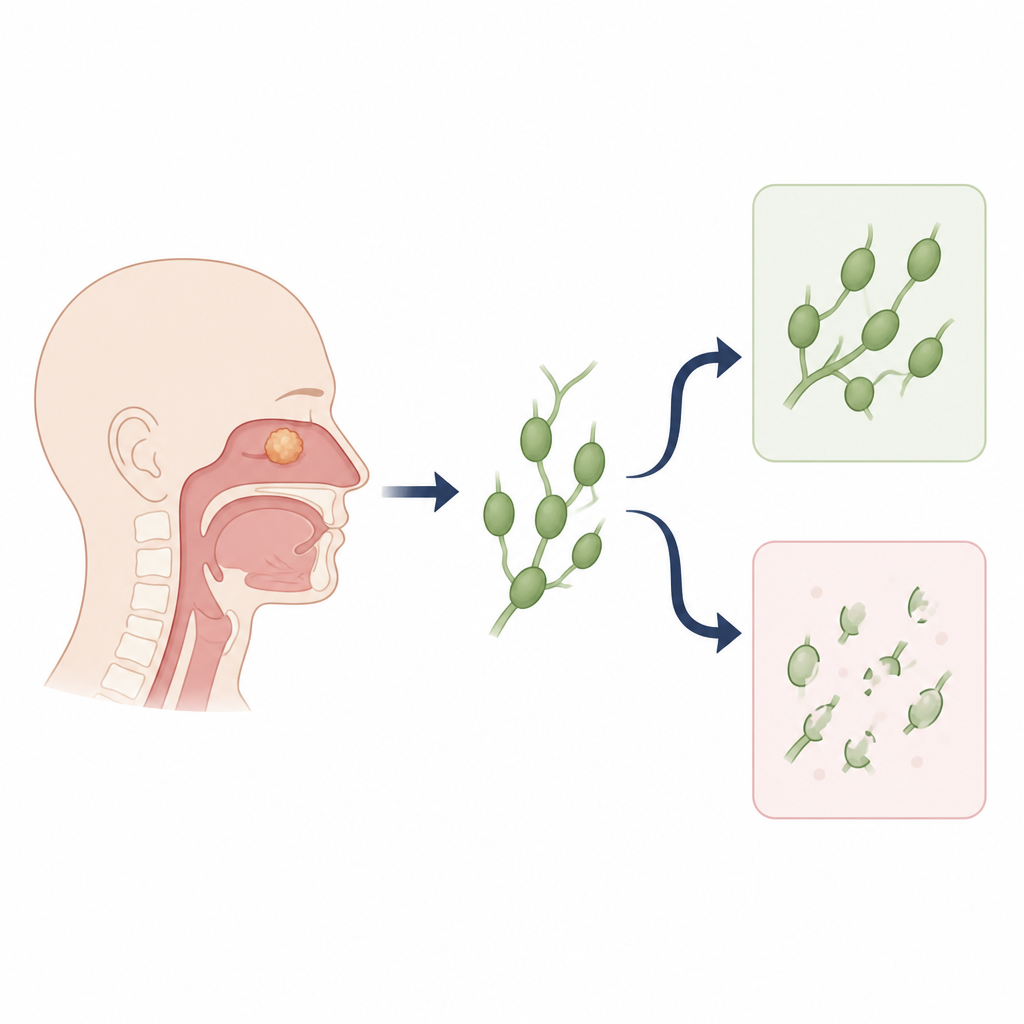
Cancers starting in the nasal cavity and surrounding sinuses make up only a tiny fraction of all tumors, but they sit close to vital structures such as the eyes and brain. The most common type is squamous cell carcinoma, while others include adenocarcinoma and several less frequent forms. Standard care focuses on removing the main tumor, often with an endoscopic technique through the nose to limit damage and speed recovery. At diagnosis, most patients show no signs of neck lymph node spread on scans, yet some harbor tiny deposits too small to detect, known as occult metastases, which may later trigger recurrence.
Tracking hidden neck disease across hospitals
The research team reviewed records from 438 patients treated for nose and sinus cancers at five German centers over a decade. All had no clinical or imaging evidence of neck node spread when first seen. Doctors had followed local tumor boards to choose between two strategies: elective neck dissection, where neck lymph nodes are removed during initial surgery, or a wait and scan approach, relying on regular follow-up to catch any delayed neck disease. The study then linked patient, tumor, and treatment features with later findings of hidden neck spread, overall survival, and time without disease return.
How often hidden spread appears and who is at risk
Only 8 percent of these clinically node negative patients were eventually found to have occult neck metastases, either in lymph nodes removed at planned surgery or as isolated neck recurrences after initial treatment. Most of these patients had just a single affected node, and very advanced nodal disease was not seen. Squamous cell carcinoma stood out as the only robust pre-treatment risk marker for hidden spread; other tumor types showed lower or less certain risks. Tumor size, location, and several other factors were less helpful in predicting which patients would later show neck involvement, limiting the ability to identify high-risk necks in advance.
Neck surgery, survival, and life without recurrence
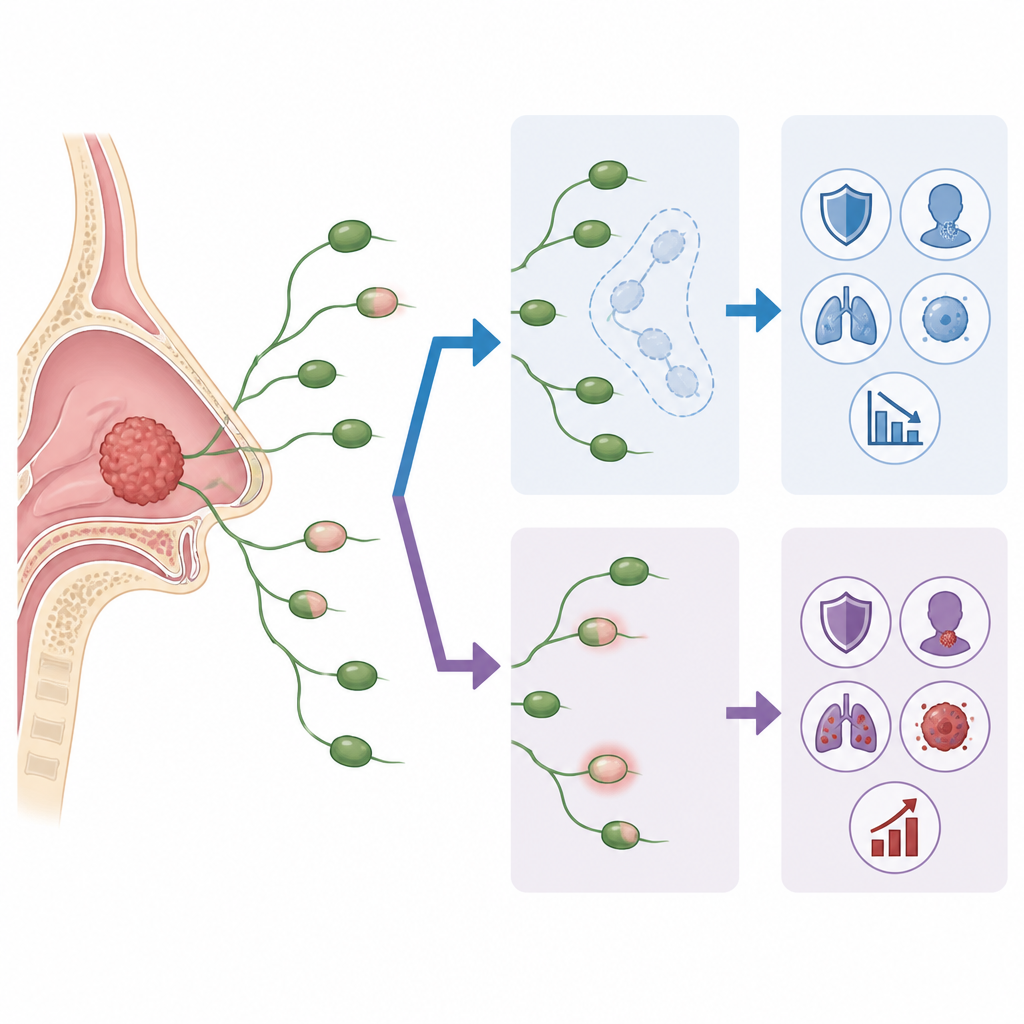
When the team compared outcomes, they found that doing preventive neck surgery did not clearly improve overall survival at five years, although there was a slight trend in its favor. Patients with occult neck disease did not die significantly more often than others, but they did have a shorter span without recurrence, reflecting the extra burden of lymph node spread. Elective neck dissection was linked with better disease-free survival overall, yet this did not translate into a firm gain in lifespan, likely because patients who developed delayed neck disease could often be treated successfully with later surgery or radiation.
What these findings mean for patients
For people facing surgery for nose or sinus cancer, this large study suggests that truly hidden spread to neck nodes is uncommon, though it clearly worsens the pattern of recurrences. Because the overall risk is below the usual threshold at which routine neck surgery is advised, the authors argue that elective neck dissection should not be automatic. Instead, the decision should depend on the tumor type, with closer consideration in squamous cell cancers, and should weigh the modest potential benefit against the extra risk of nerve injury and other side effects. In short, many patients may be safely managed with careful follow-up, while neck surgery is reserved for those with higher risk features or proven nodal disease.
Citation: Sauter, C., Wenda, N., Topçuoğlu, MS.Y. et al. A multicenter study on occult lymph node metastases in sinonasal malignancies. Sci Rep 16, 16025 (2026). https://doi.org/10.1038/s41598-026-47890-z
Keywords: sinonasal cancer, lymph node metastasis, neck dissection, squamous cell carcinoma, disease-free survival