Clear Sky Science · en
Distortion product otoacoustic emission (DPOAE) reveals hearing loss up to 16 kHz in pediatric chemotherapy patients
Why children’s hearing needs special care
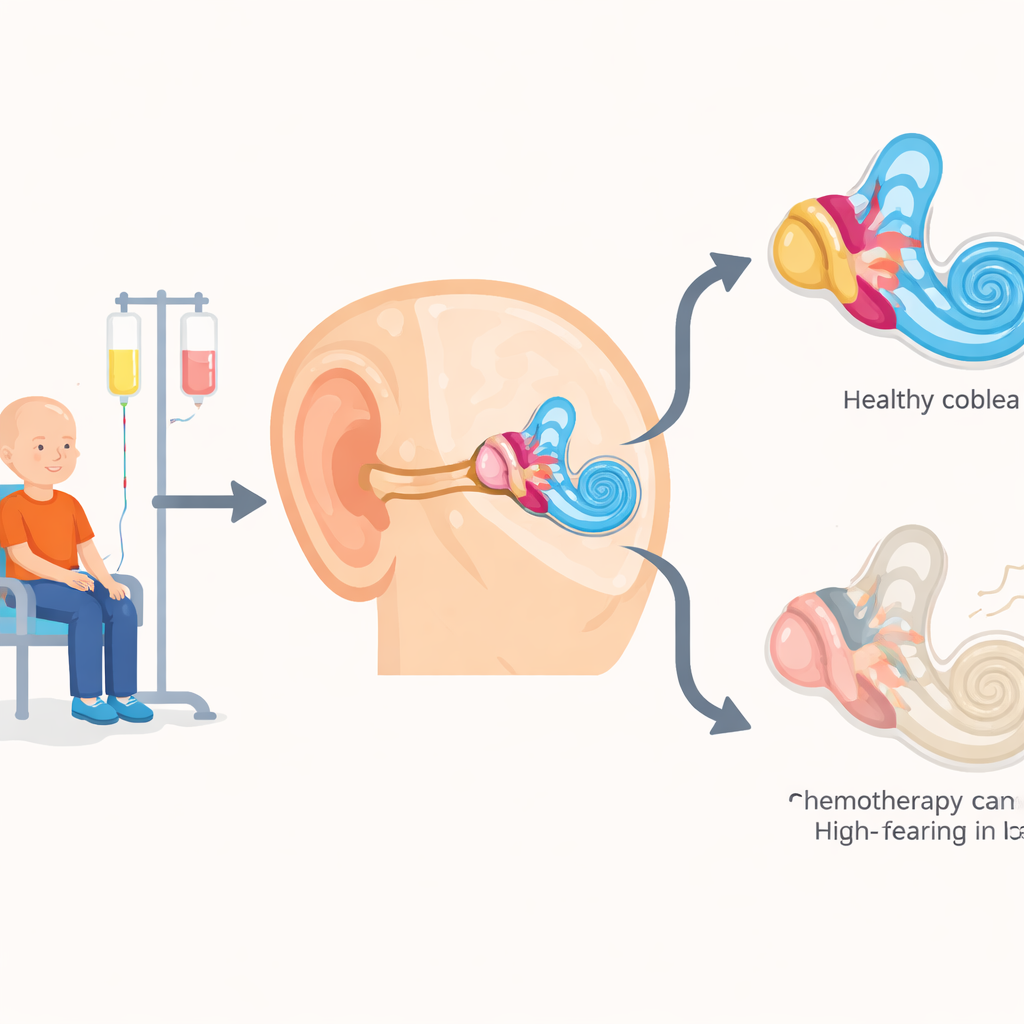
Modern cancer treatments help most children survive, but some of the drugs that save lives can quietly harm hearing, especially for high-pitched sounds. For a child, even mild hearing loss can disrupt speech development, school performance, and social life. This study asks a practical question for families and doctors: is there a simple, child‑friendly test that can catch drug‑related hearing damage early enough to change course and protect a child’s soundscape?
Listening for tiny echoes from the ear
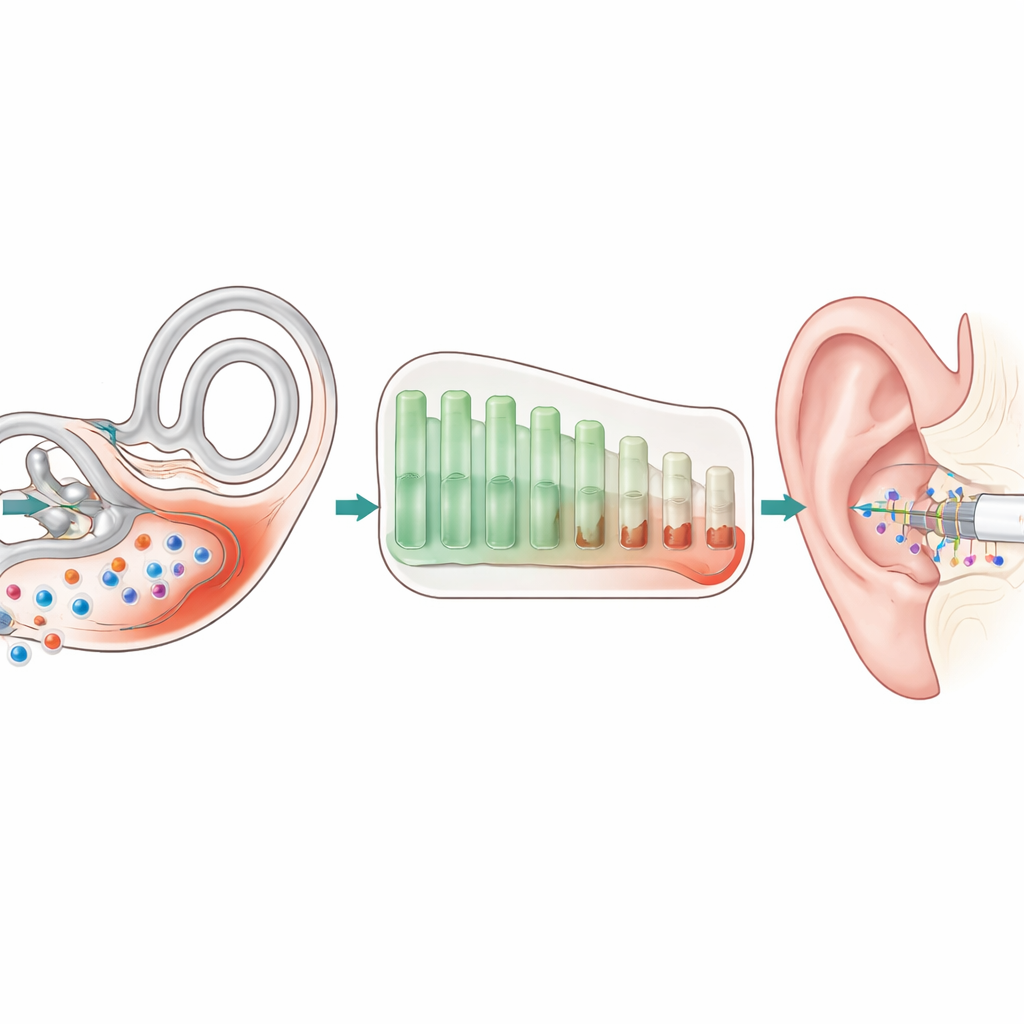
Traditional hearing tests ask a child to raise a hand or press a button when they hear tones through headphones. These tests work well for adults, but can be unreliable or impossible for very young or very ill children, and they often stop at about 8 kilohertz, missing the very highest pitches where early drug damage shows up. The researchers instead focused on a different signal: faint sound echoes produced by the inner ear itself, called distortion product otoacoustic emissions. With a soft probe in the ear canal, a machine plays tones and “listens” for the ear’s response, requiring almost no cooperation from the child and allowing testing at much higher pitches, up to 16 kilohertz.
Following hearing through cancer treatment
The team followed 83 children and teenagers, aged 2 to 19, treated with chemotherapy regimens that included cisplatin, carboplatin, or vincristine. Across 153 visits, they tried both standard hearing tests and the inner‑ear echo method. In practice, only 60 traditional hearing tests produced reliable results, because many children were too young, tired, or unwell to respond consistently. By contrast, the echo-based test worked in every single examination and could probe extremely high pitches. This allowed the researchers to track changes in the inner ear even when the child could not participate fully in a behavioral test.
High pitches reveal early drug effects
When the scientists compared drug types and treatment stages, a clear pattern emerged. For ordinary speech‑range pitches (up to about 8 kilohertz), average hearing thresholds remained mostly stable across treatments. But at very high pitches between 10 and 16 kilohertz, children receiving cisplatin showed clear signs of damage. Traditional tests, when usable, revealed worsening thresholds in this upper range. The echo-based method mirrored this: the inner ear’s response grew weaker at the highest pitches after repeated cisplatin doses, and the extent of this decline tracked with the total amount of cisplatin received. In contrast, vincristine did not produce objective signs of permanent inner‑ear damage, and carboplatin showed smaller and less consistent effects.
Objective tests beat guesswork
The researchers also compared classifications of hearing loss from standard tests with those from the echo method. While the classic test was very good at detecting any problem when children responded reliably, it often suggested hearing loss that the objective echoes did not confirm, especially in younger patients. This mismatch likely reflects the difficulty of getting small children to respond accurately under the stress of cancer treatment. Relying on such uncertain results could lead doctors to reduce or stop effective drugs too early out of fear of hearing damage. The echo method, by directly measuring the ear’s performance without needing the child’s judgment, provided a steadier and more trustworthy picture.
Protecting hearing without sacrificing cures
For families and clinicians, the study’s message is straightforward: a quick, painless test that listens for the ear’s own echoes at very high pitches can reliably flag the earliest signs of hearing damage from cisplatin in children, long before everyday listening is obviously affected. Because it works even in toddlers and very sick patients, this approach can be built into routine care. When early changes are detected, doctors may be able to adjust doses, switch to less harmful drugs, or add protective treatments—aiming to cure the cancer while preserving the child’s ability to hear whispers, birdsong, and classroom conversations throughout life.
Citation: Hecker, D.J., Remke, M.K.H., Linxweiler, M. et al. Distortion product otoacoustic emission (DPOAE) reveals hearing loss up to 16 kHz in pediatric chemotherapy patients. Sci Rep 16, 12729 (2026). https://doi.org/10.1038/s41598-026-47642-z
Keywords: childhood cancer, cisplatin ototoxicity, hearing loss, otoacoustic emissions, pediatric audiology