Clear Sky Science · en
Deruxtecan-based antibody–drug-conjugates induce senescence in HER2-positive breast cancer
Why this matters for cancer patients
Many people know that modern cancer drugs are becoming more precise, aiming to attack tumors while sparing healthy tissue. This study looks at a powerful class of targeted medicines used in HER2-positive breast cancer and uncovers an unexpected survival trick that cancer cells use. Understanding this trick could help doctors choose smarter drug combinations and may explain why some tumors stop responding to treatment.
Smart drugs that carry toxic cargo
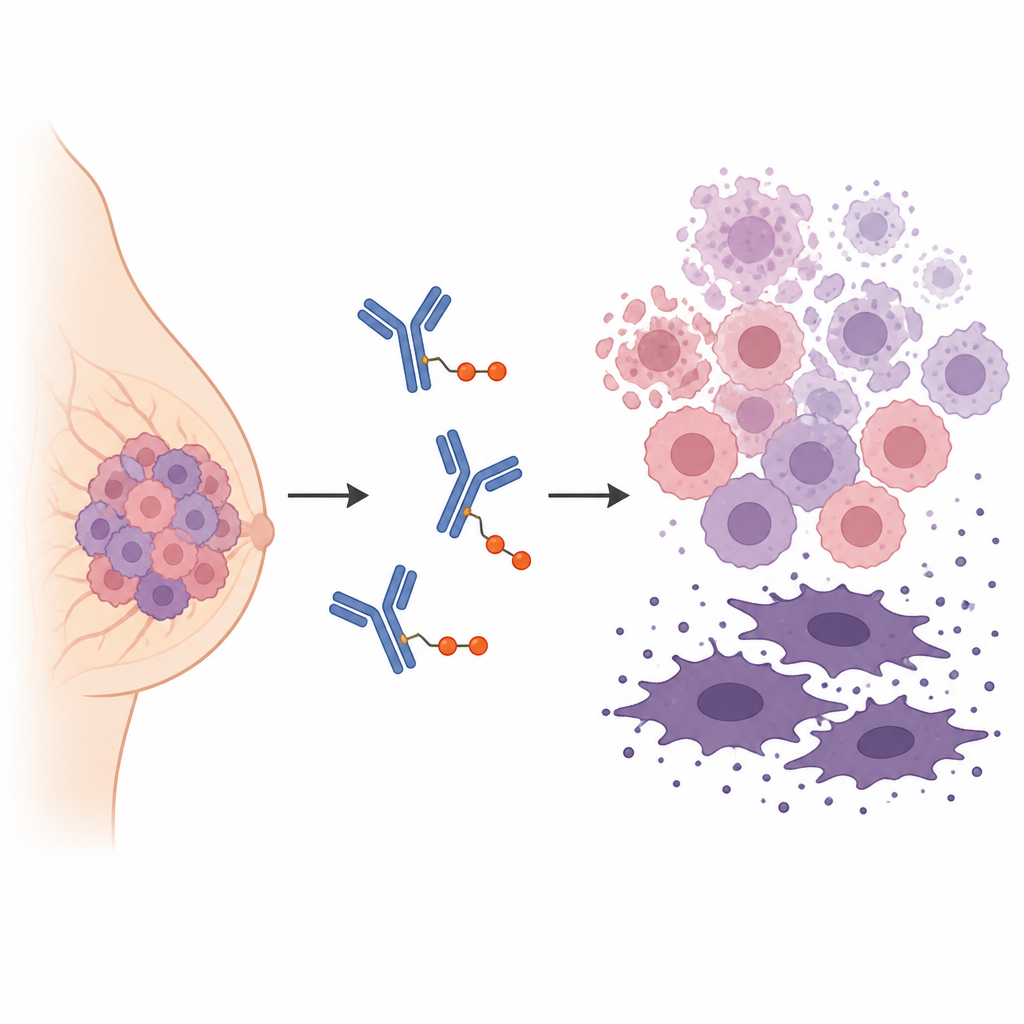
The researchers focused on antibody drug conjugates, or ADCs, which work like guided missiles. A laboratory-made antibody recognizes HER2, a protein often found at high levels on certain breast cancer cells, and delivers a toxic drug directly into those cells. Trastuzumab deruxtecan (T-DXd) is one such ADC and has shown strong benefits for patients whose cancers have already resisted earlier therapies. Its antibody part steers the compound to HER2-positive cells, while its attached drug, based on a molecule called deruxtecan, poisons an enzyme inside the cell that is needed to handle DNA.
How cancer and surrounding cells respond
To better mimic real tumors, the team grew breast cancer cells together with supporting cells such as fibroblasts and blood vessel cells in three dimensional printed scaffolds. This setup let them see not only how the cancer cells reacted to treatment, but also how the neighborhood around the tumor was affected. They found that ADCs could harm these surrounding cells directly, even though they did not display the usual HER2 target on their surface. The drugs appeared to pass from tumor cells to nearby cells through tiny bubbles and delicate cell bridges, revealing a mix of helpful tumor killing and potentially harmful off target effects in the tumor microenvironment.
A hidden escape route through aging like behavior
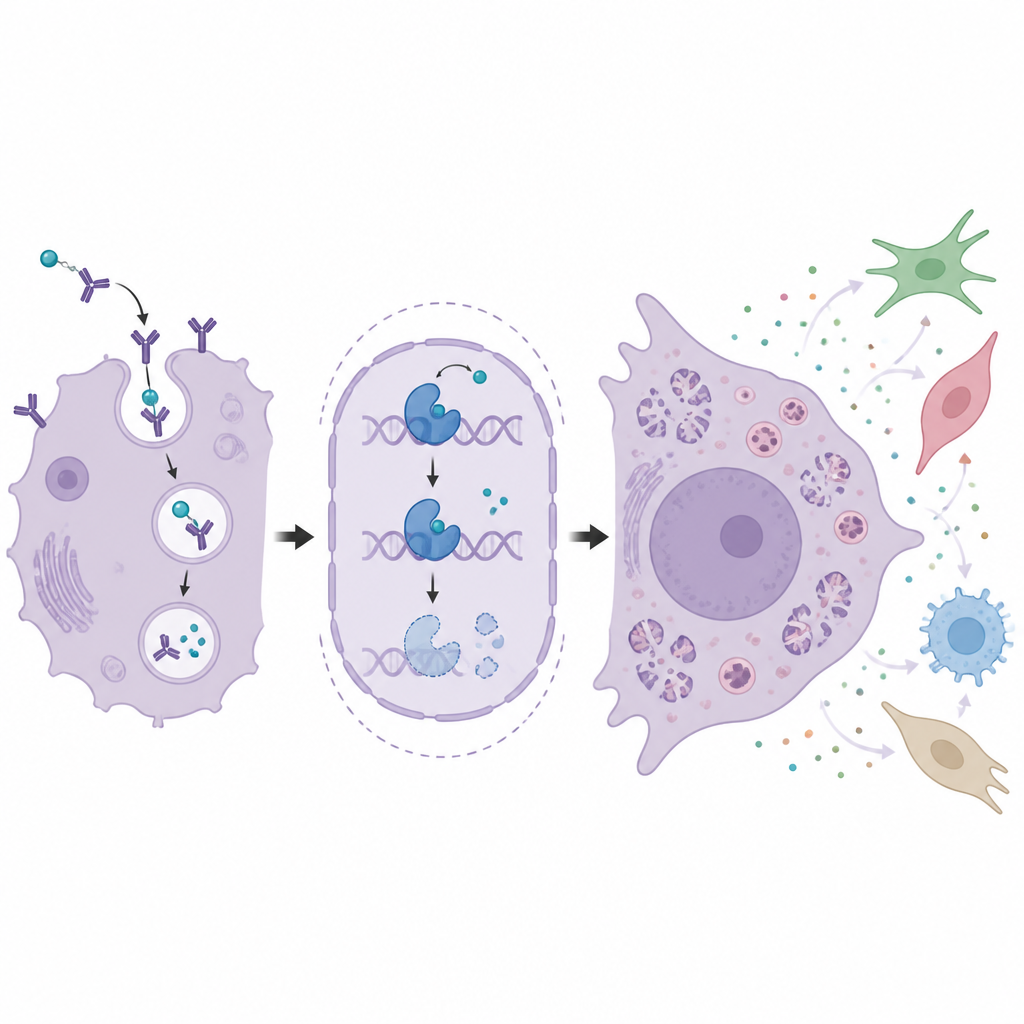
When the scientists treated HER2-positive breast cancer cells with T-DXd, they noticed that many surviving cells became enlarged, flattened, and took on features typical of aged, non dividing cells. Tests confirmed that these cells had entered senescence, a state in which they stop multiplying but remain active and metabolically busy. This change was linked to damage signals inside the cell, activation of the p53 and p21 safety pathways, and a marked drop in the DNA handling enzyme targeted by the drug. Importantly, this senescent state persisted even after the drug was washed away, suggesting a long lasting shift rather than a temporary pause.
Shared effects across related medicines
The team then asked whether this behavior was due to the antibody that finds HER2 or to the deruxtecan drug it carries. By testing deruxtecan alone and another deruxtecan based ADC that targets a different surface protein called TROP2, they found similar patterns: loss of the target enzyme, strong activation of senescence markers, and structural changes in key cell compartments such as mitochondria and recycling centers. Treated cells produced more lactate and reactive oxygen molecules, indicating a shift in how they make energy and a rise in chemical stress. They also released higher levels of signaling proteins, a profile known as the senescence associated secretory phenotype, which can influence neighboring cells and the immune system.
What this means for future treatments
Overall, the study suggests that deruxtecan based ADCs do not only kill cancer cells; they also drive many survivors into a stable, aged like state that secretes a rich mix of signals into the tumor environment. While this may help hold tumor growth in check, it could also contribute to long term drug resistance and an immune setting that favors cancer persistence. Because these changes appear to stem mainly from the deruxtecan part of the drugs, the authors propose that patients whose tumors have become resistant to such ADCs might benefit from additional medicines that selectively remove or tame senescent cells, potentially restoring the effectiveness of treatment.
Citation: Vezzoli, E., Pinos, R., Galbiati, S. et al. Deruxtecan-based antibody–drug-conjugates induce senescence in HER2-positive breast cancer. Sci Rep 16, 16106 (2026). https://doi.org/10.1038/s41598-026-47488-5
Keywords: HER2 breast cancer, antibody drug conjugates, trastuzumab deruxtecan, cellular senescence, tumor microenvironment