Clear Sky Science · en
Task-based interpretation flexibility predicts real-world emotion regulation variability
Why changing your mind matters for your feelings
Every day, we face situations that are unclear: a short text message, a friend’s expression, a comment in a meeting. We quickly form guesses about what they mean, and those guesses powerfully shape how we feel. This study asks a simple but important question: are people who can more easily revise their first impressions also better at managing their emotions in daily life? By tracking people’s thinking in the lab and their moods and coping strategies over two weeks, the researchers show that mental flexibility in reading social situations goes hand in hand with more flexible and balanced emotional lives.
How we make sense of cloudy situations
When we walk into a room or read a message, we do not see the full story at once. We fill in the gaps, then update our view as more details emerge. The researchers focused on this ability, which they call interpretation flexibility—the ease with which someone can revise an initial impression when new evidence appears. Earlier work has linked rigid, hard-to-change interpretations with problems like anxiety, depression, and paranoia. Those findings suggested that being stuck in a fixed story about what is happening may feed emotional distress, but it was not clear how this mental rigidity connects to the way people regulate their emotions in everyday life.
Testing flexible thinking in the lab
To capture interpretation flexibility, the team used a computer task featuring 24 social scenes that gradually become clearer. Each picture starts heavily blurred and is then revealed in two more steps until fully visible. Some scenes end on a positive note, others on a negative one. At each stage, participants rate how plausible several explanations seem. From these ratings, the researchers calculate how much a person shifts toward the explanation that ultimately matches the true outcome as more of the scene is revealed. Larger shifts from one stage to the next signal greater flexibility. Separate scores are created for scenes that turn out well and those that turn out badly, allowing the team to see whether people are more flexible with good news, bad news, or both. 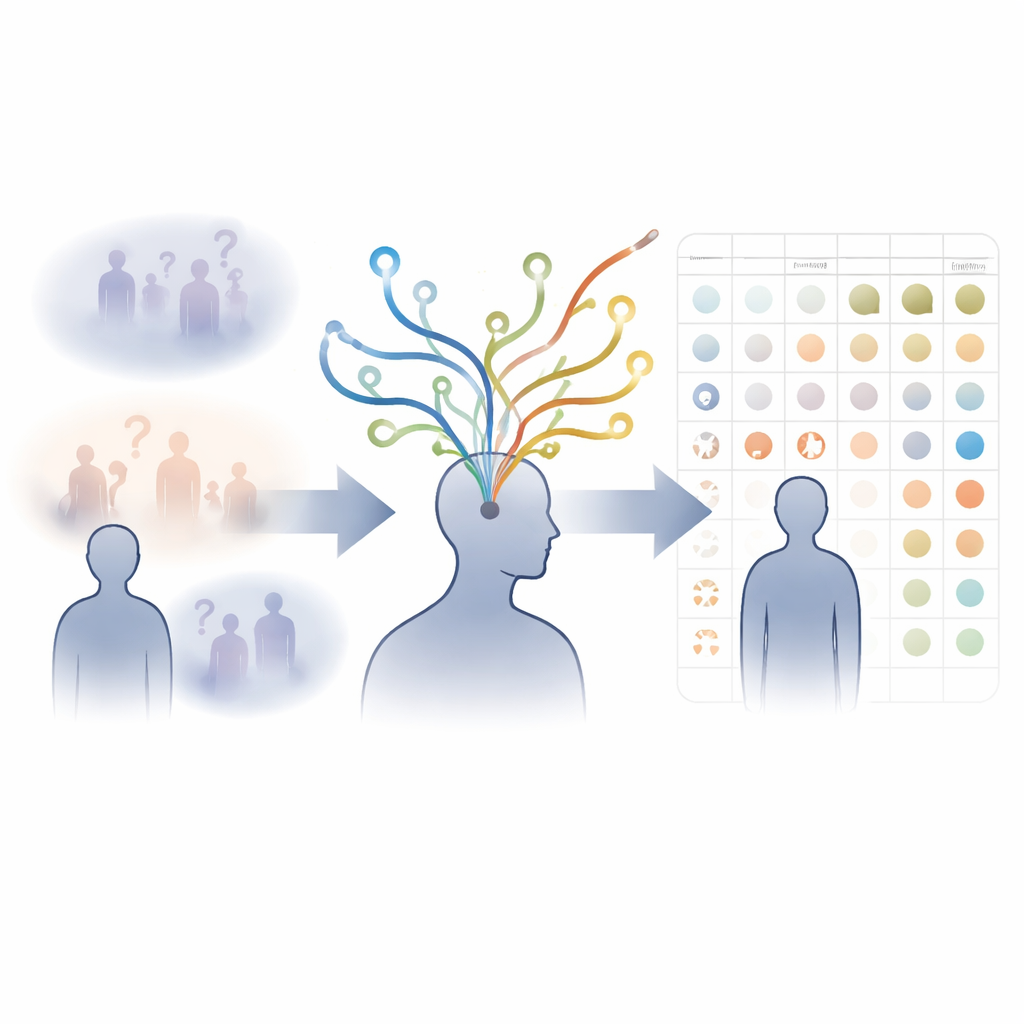
Following emotions and coping in daily life
After the lab session, 90 adults completed online surveys each evening for 14 days. In each survey, they described the most emotional event of the day and rated how much they used a broad set of coping strategies, such as reframing how they thought about the event, distracting themselves, seeking comfort from others, or repeatedly dwelling on what happened. The researchers then calculated how varied each person’s use of these strategies was from day to day—what they call emotion regulation variability. Rather than asking whether a person uses one “good” strategy, this measure reflects how much they adjust the intensity of their chosen strategies across different situations. Participants also reported their levels of positive feelings (such as enthusiasm) and negative feelings (such as nervousness or irritation) each day, allowing the team to link flexible thinking, coping patterns, and emotional intensity.
What flexible thinkers’ emotional lives look like
People who were more flexible in revising their interpretations in the lab showed greater day-to-day variability in how strongly they used different coping strategies. In other words, flexible thinkers did not rely on a single emotional habit; instead, they adjusted their responses depending on what the day brought. This relationship remained even after accounting for self-reported difficulties with emotion regulation, suggesting that the lab task captures a distinct and meaningful capacity. Interpretation flexibility was also linked to feeling less intensely both in terms of negative and positive emotions across the two weeks. Likewise, on days when people showed more variation in their strategy use, they tended to report lower negative feelings. Over the full two-week period, individuals with consistently higher variability in their emotion regulation generally experienced both positive and negative emotions less intensely, hinting at a steadier emotional profile rather than dramatic highs and lows. 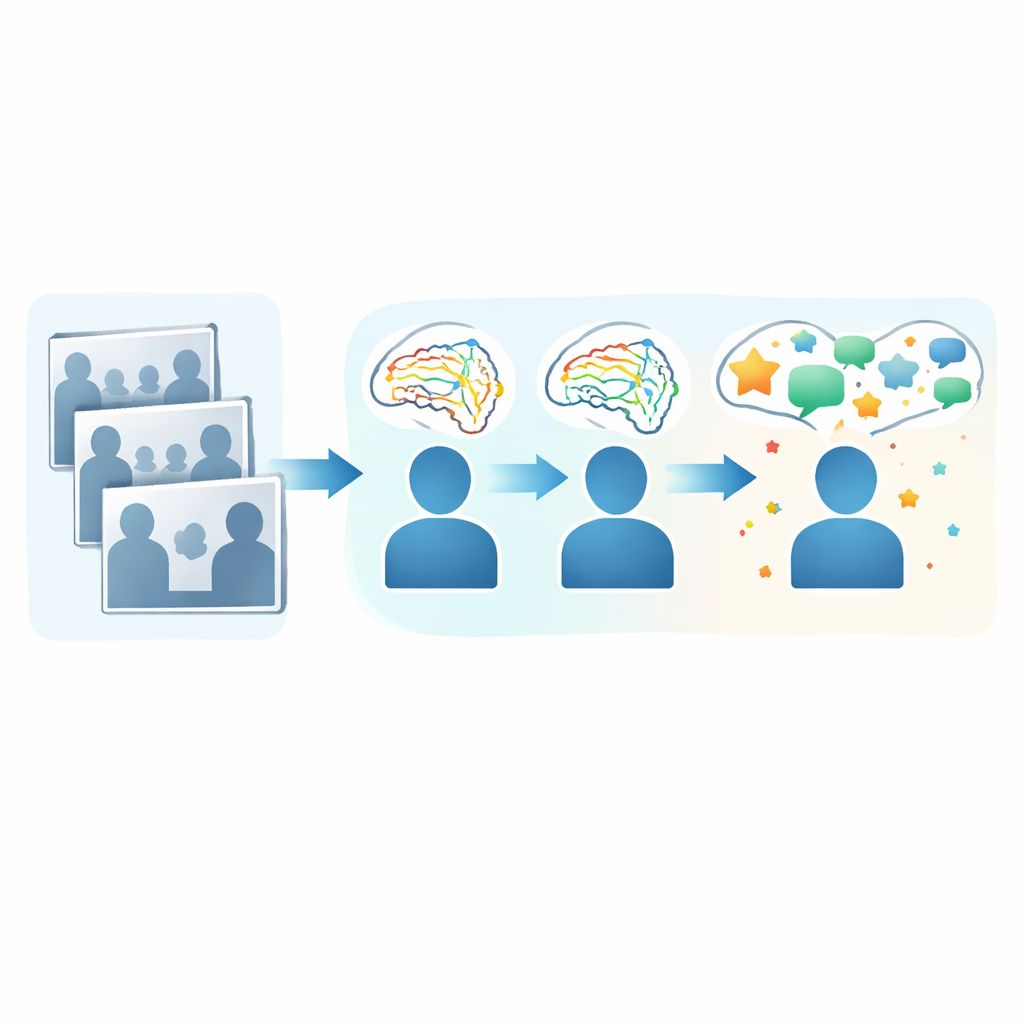
What this means for emotional health
Taken together, the findings suggest that being able to update your view of a situation as new information arrives supports a more flexible and balanced way of handling emotions. Instead of chasing constant happiness or trying to eliminate all distress, mental flexibility seems to promote emotional stability: feelings that are less extreme and coping responses that better fit the moment. Because interpretation flexibility can be measured and potentially trained in a lab setting, it may become a useful target for therapies aimed at improving everyday emotional coping. The study also highlights the value of combining controlled tasks with real-world tracking to understand how the stories we tell ourselves shape our emotional lives over time.
Citation: Deng, W., Zhu, Y., Chen, M.S. et al. Task-based interpretation flexibility predicts real-world emotion regulation variability. Sci Rep 16, 11654 (2026). https://doi.org/10.1038/s41598-026-47441-6
Keywords: emotion regulation, cognitive flexibility, daily mood, coping strategies, mental health