Clear Sky Science · en
Characterization of self-emulsifying macadamia nut oil fermented by Epidermidibacterium keratini mutant EPI-7-i originated from skin flora as a novel cosmetic ingredient
Why this matters for your skin
Many face creams and lotions rely on synthetic surfactants to keep oil and water mixed, but these ingredients can linger in the environment and sometimes bother sensitive skin. This study explores a different path: using a friendly skin microbe to gently transform macadamia nut oil into a self-mixing, antioxidant rich oil that could serve as a cleaner, skin compatible base for future cosmetic products.
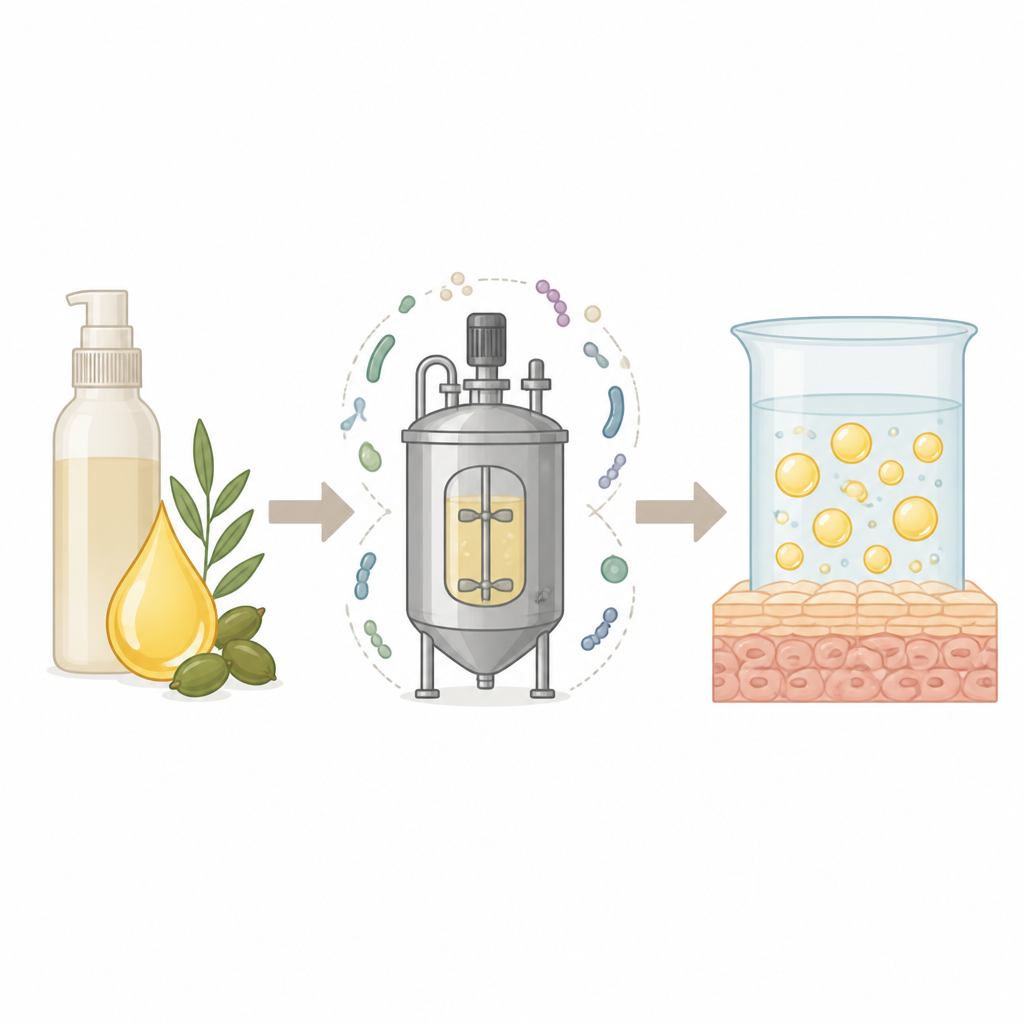
Turning nut oil into a smart ingredient
The researchers started with macadamia nut oil, already known for being kind to skin and rich in moisturizing fats. They grew a mutant strain of a skin dwelling bacterium called EPI 7 i in a liquid that contained this oil. Over two and five days of fermentation, the microbe fed on and reshaped the oil. Instead of simply breaking it down, the bacterium remodeled the fat molecules into a more varied mix, then the team gently extracted the transformed oil from the liquid. For comparison, they also prepared a second type of modified oil using a commercial enzyme rather than live microbes.
How the oil learns to mix with water
Under normal conditions, macadamia oil is made mostly of large, neutral fat molecules that are poor at mixing with water. After fermentation, however, the oil contained many smaller and more polar molecules, including types with both water loving and oil loving parts. These act like natural surfactants and allowed the oil to spontaneously form very fine oil in water mixtures, called nanoemulsions, when blended with water only. The droplets in these mixtures were hundreds of times smaller than a grain of sand and carried a strong negative surface charge, which helped them repel one another and resist clumping, even when stored for weeks at fridge, room, or warm temperatures.
Built in defense against spoilage
One worry with highly unsaturated plant oils is that they can go rancid, especially once mixed into tiny droplets with a lot of surface exposed to air. Surprisingly, the fermented macadamia oil performed better than the enzyme treated oil when the team tracked early oxidation products and related breakdown markers over 28 days. Tests that measure how well a substance can neutralize free radicals showed that the fermented oils gained much stronger antioxidant capacity over time. The scientists traced this to new molecules created by the microbes, including unusual ether linked fats resembling natural protective lipids in our bodies and small cyclic peptides and other compounds that can mop up reactive species.
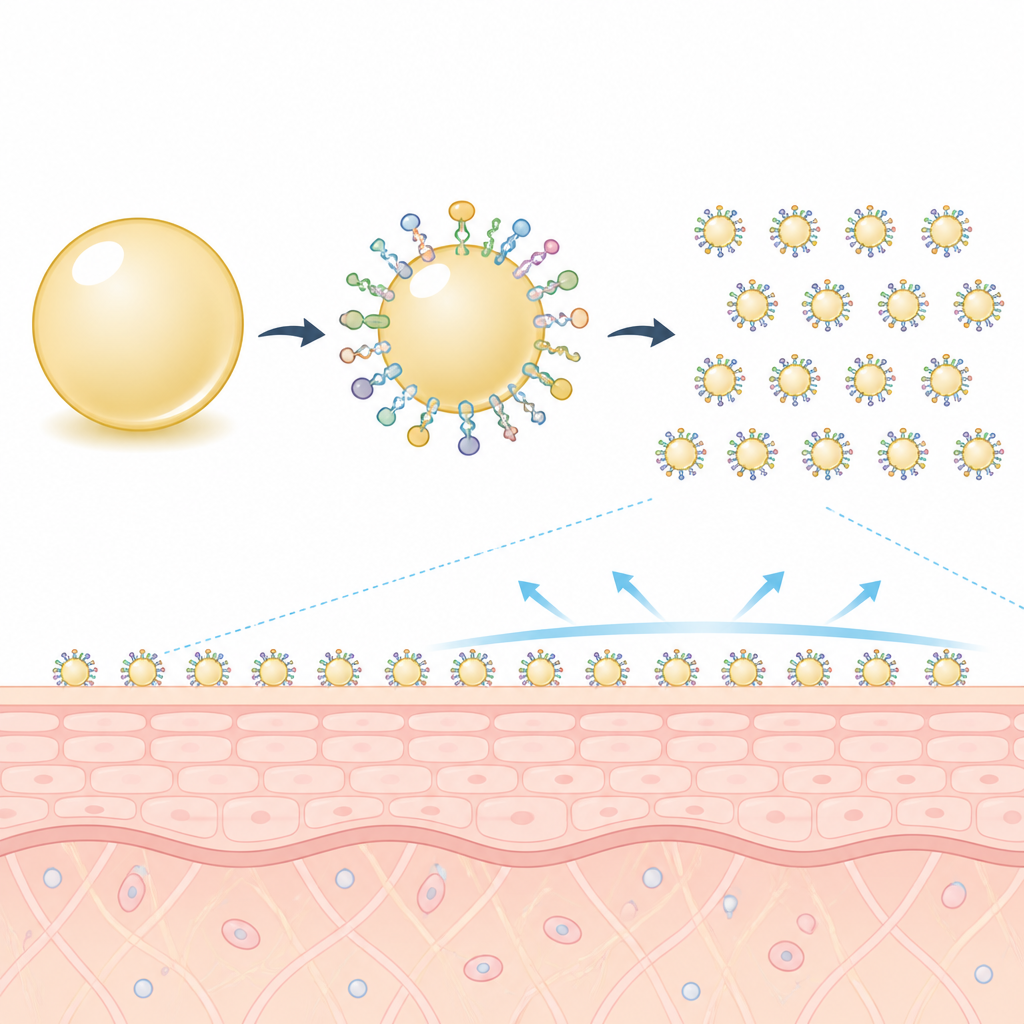
Stable under real world conditions
The team also tested how the new self emulsifying oils behaved across a range of skin relevant pH levels. The nanoemulsions stayed uniform and stable from slightly acidic to mildly alkaline conditions, which matches most leave on and rinse off cosmetics. At very acidic pH, the droplets began to merge, as the surface charge that normally keeps them apart was reduced. Overall, the fermented oils formed small, stable droplets without any added synthetic surfactants, while plain macadamia oil quickly separated under the same conditions. This suggests that fermentation weaves natural emulsifiers directly into the oil phase itself.
What this could mean for future skincare
This work shows that a microbe originally found on human skin can turn a familiar plant oil into a multifunctional cosmetic ingredient that both mixes itself with water and carries its own antioxidant shield. Although more structural studies, sensory testing, and real product trials are needed, the concept points toward creams and serums that rely less on petroleum derived additives and more on microbially crafted, clean label oils that are designed to be gentle on both skin and the environment.
Citation: Kim, HB., Rho, SJ., Nam-gung, H. et al. Characterization of self-emulsifying macadamia nut oil fermented by Epidermidibacterium keratini mutant EPI-7-i originated from skin flora as a novel cosmetic ingredient. Sci Rep 16, 16186 (2026). https://doi.org/10.1038/s41598-026-47367-z
Keywords: macadamia nut oil, skin microbiome, self emulsifying oil, cosmetic nanoemulsion, biosurfactant