Clear Sky Science · en
Characterization of residual kidney function in chronic hemodialysis patients using plasma metabolomics
Why the Last Drops of Kidney Function Matter
For people whose kidneys have nearly stopped working, regular hemodialysis keeps them alive by cleaning waste from the blood. Yet many patients still make a small amount of urine—called residual kidney function—and these last drops are linked to better survival and quality of life. This study asks a simple but important question: does that tiny remaining kidney activity change what is floating in the bloodstream in ways that dialysis alone cannot match, and could those changes help doctors tailor gentler, more personalized treatment?
Two Groups of Patients, One Big Difference
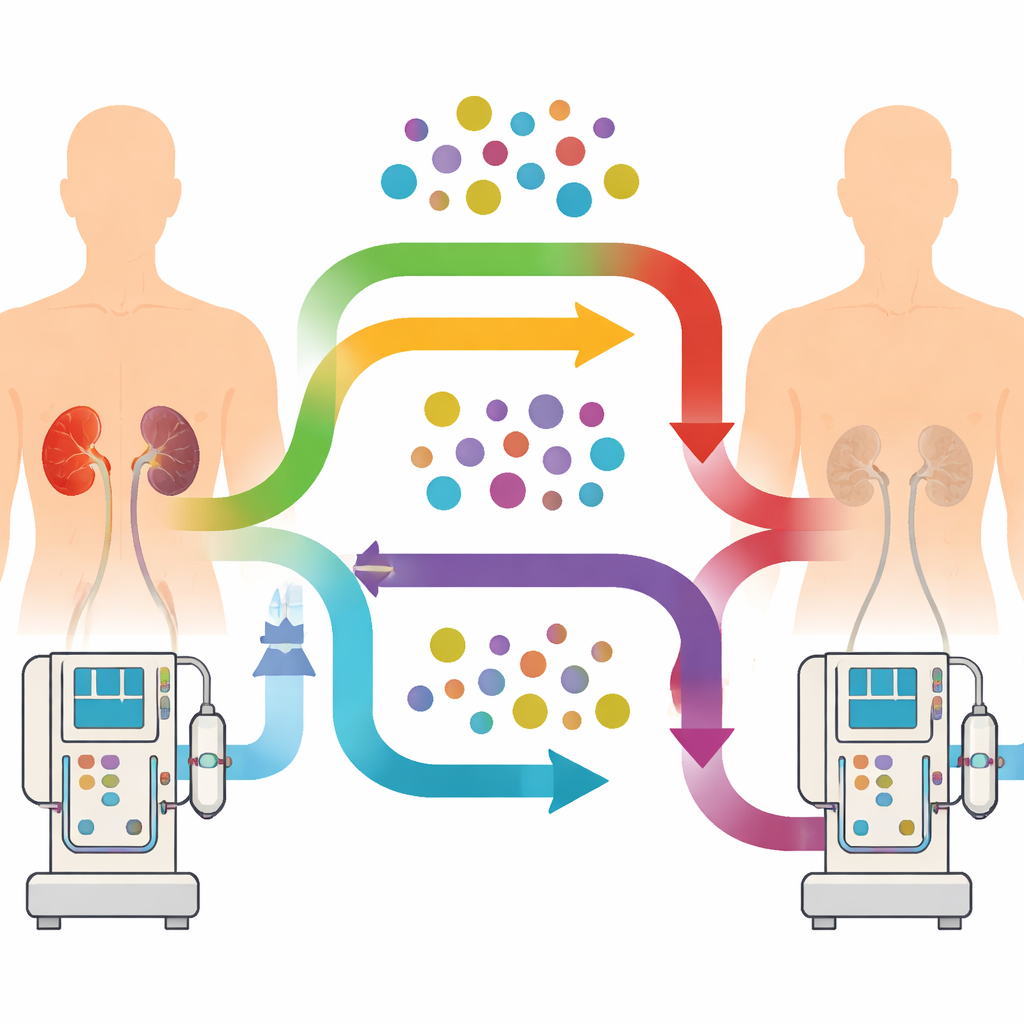
The researchers followed 136 adults receiving long-term hemodialysis in Geneva. All depended on dialysis, but some still produced enough urine to provide a modest natural clearance of waste, while others were essentially anuric, making almost no urine. Using standard measures, both groups ended up with a similar total amount of waste removal once dialysis and any remaining kidney function were added together. That similarity might suggest their internal chemistry should look alike—but the team wanted to probe much deeper than routine lab tests allow.
Reading the Blood’s Chemical Footprint
To do this, the investigators used plasma metabolomics, a technique that scans blood for dozens of small molecules produced by the body or its gut microbes. They focused on 89 preselected substances already suspected to matter in kidney disease and successfully measured 57 of them in every patient. With advanced statistical tools, they compared the “chemical fingerprints” of people with and without meaningful residual kidney function, looking for consistent patterns rather than relying on any single molecule.
Hidden Toxins and Helpful Signals
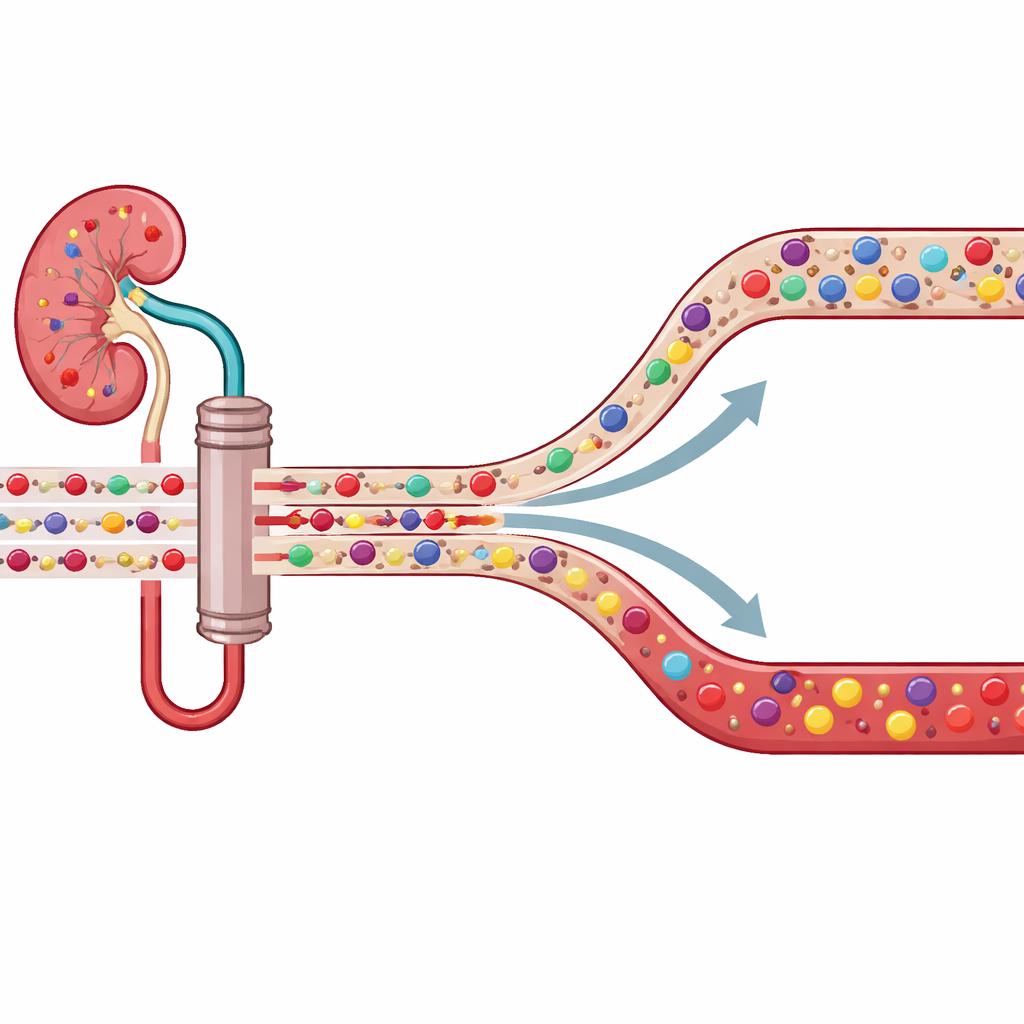
The blood chemistry of patients with preserved kidney function turned out to be strikingly different. Several protein-bound waste products that dialysis removes poorly—such as hippuric acid, kynurenic acid, indoxyl sulfate, and related compounds—were clearly lower when some natural kidney function remained. Many of these molecules are generated by gut microbes and have been linked in experiments to blood vessel damage and inflammation, which can drive heart disease. In contrast, levels of tryptophan, an amino acid whose breakdown products are tied to inflammation and arterial hardening, were higher and more favorable in patients with residual function. Together, these patterns suggest that even a small amount of kidney activity helps to keep a broad range of harmful substances in check in ways a dialysis machine cannot fully imitate.
Turning Chemistry into a Simple Test
Beyond describing differences, the researchers asked whether a small panel of metabolites could reliably flag whether a patient had significant residual kidney function. Using combinations and ratios of the 57 molecules, they built computer models that sorted patients into “enough” or “too little” remaining function. A model using many metabolite ratios correctly classified patients about 93 percent of the time. Remarkably, when they trimmed this down to just three key biomarkers, the accuracy remained high at about 87 percent. This means that a simple blood test could, in principle, replace repeated 24-hour urine collections—procedures that are tedious, error-prone, and burdensome for patients and clinics.
What This Means for People on Dialysis
The study shows that even seemingly modest residual kidney function has a powerful influence on the body’s internal chemistry, beyond what can be achieved by increasing dialysis time or frequency alone. By better clearing stubborn protein-bound toxins and shaping pathways linked to inflammation and cardiovascular risk, the last bit of kidney activity may help explain why patients who still make urine tend to live longer and feel better. These findings support dialysis strategies that aim to preserve remaining kidney function—such as incremental dialysis, where treatment intensity is adjusted to the individual—and point toward future blood tests that could track this hidden reserve without urine measurements, helping doctors fine-tune care for each person.
Citation: Jaques, D.A., Boccard, J., Strassel, O. et al. Characterization of residual kidney function in chronic hemodialysis patients using plasma metabolomics. Sci Rep 16, 11701 (2026). https://doi.org/10.1038/s41598-026-47357-1
Keywords: hemodialysis, residual kidney function, uremic toxins, metabolomics, incremental dialysis