Clear Sky Science · en
Facile green synthesis of selenium nanoparticles using olive (Olea europaea) leaf extract and their antimicrobial and antibiofilm properties
Why tiny particles from olive leaves matter
Doctors are running out of tools to fight germs that no longer respond to common antibiotics. This study explores a simple way to turn everyday olive leaves into tiny particles of the element selenium that can weaken or kill harmful microbes. Because the process uses water and plant material instead of harsh chemicals, it could offer a cleaner and safer path to new germ fighting helpers.
Turning olive leaves into tiny helpers
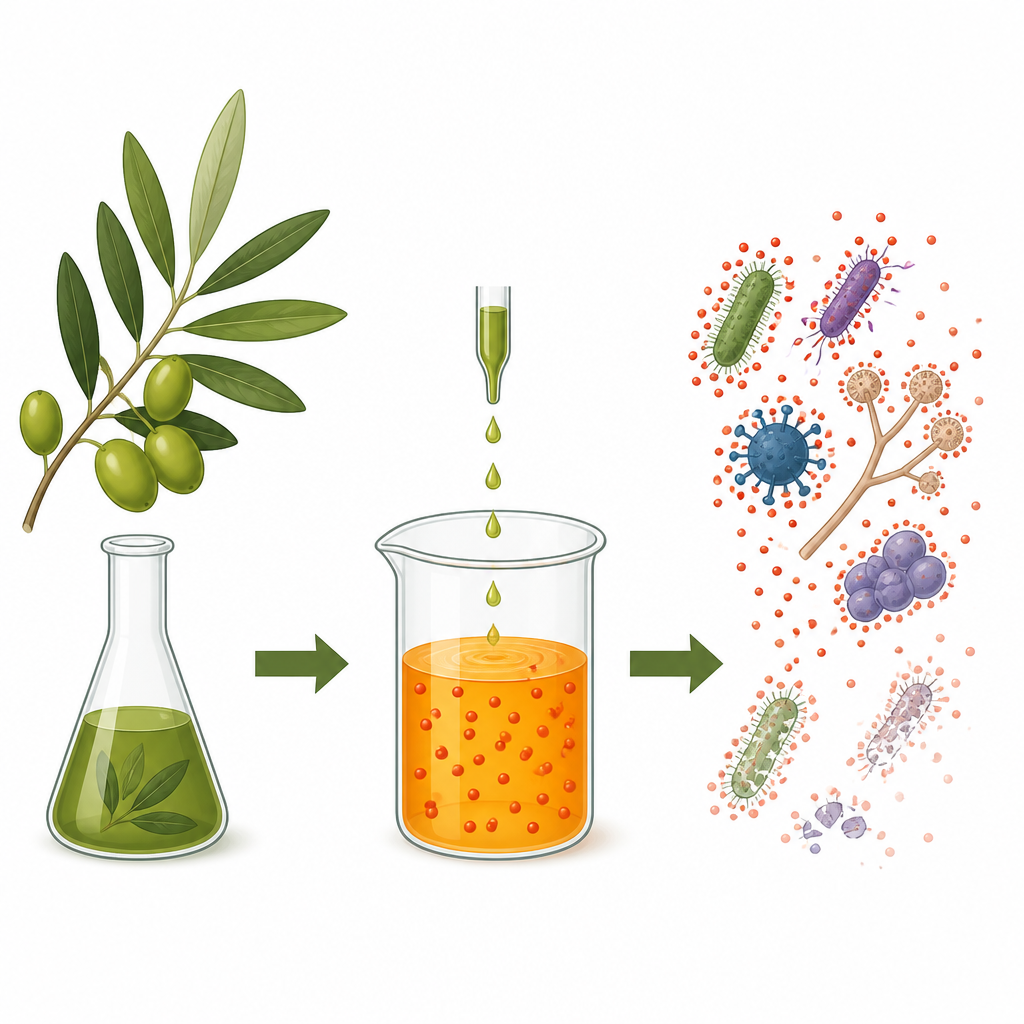
The researchers began with dried leaves from the olive tree, a plant already valued for its health supporting oils and antioxidants. They boiled the chopped leaves in water to pull out natural plant compounds, then mixed this extract with a dissolved selenium salt plus vitamin C and a stabilizing ingredient. Under warm and stirred conditions, the mixture changed color from pale to deep red, a sign that the selenium had been transformed into extremely small, solid particles suspended in water.
Checking the size and shape of the particles
To confirm what they had made, the team used several lab tools that probe light, structure, and surface charge. Light based measurements showed a clear signal typical of selenium in nanoparticle form. Imaging methods revealed that the particles were very small, mostly between about 2.6 and 4.75 billionths of a meter across, and roughly round in shape. Compared with many earlier plant based methods, this olive leaf approach produced especially tiny and evenly spread particles, which is important because smaller particles have more surface area to interact with microbes.
Testing the fight against germs
The scientists then tested whether these olive leaf selenium particles could stop the growth of disease causing microbes. They worked with several common troublemakers, including two types of gut bacteria, a skin related bacterium, and the yeast Candida albicans, which often causes mouth and genital infections. When they placed drops of the nanoparticle solution on plates seeded with these microbes, clear rings formed where growth was blocked. At the highest dose tested, the particles outperformed a standard antibiotic for all species studied, with Candida albicans showing the largest dead zone around the droplets.
Breaking down stubborn microbial films
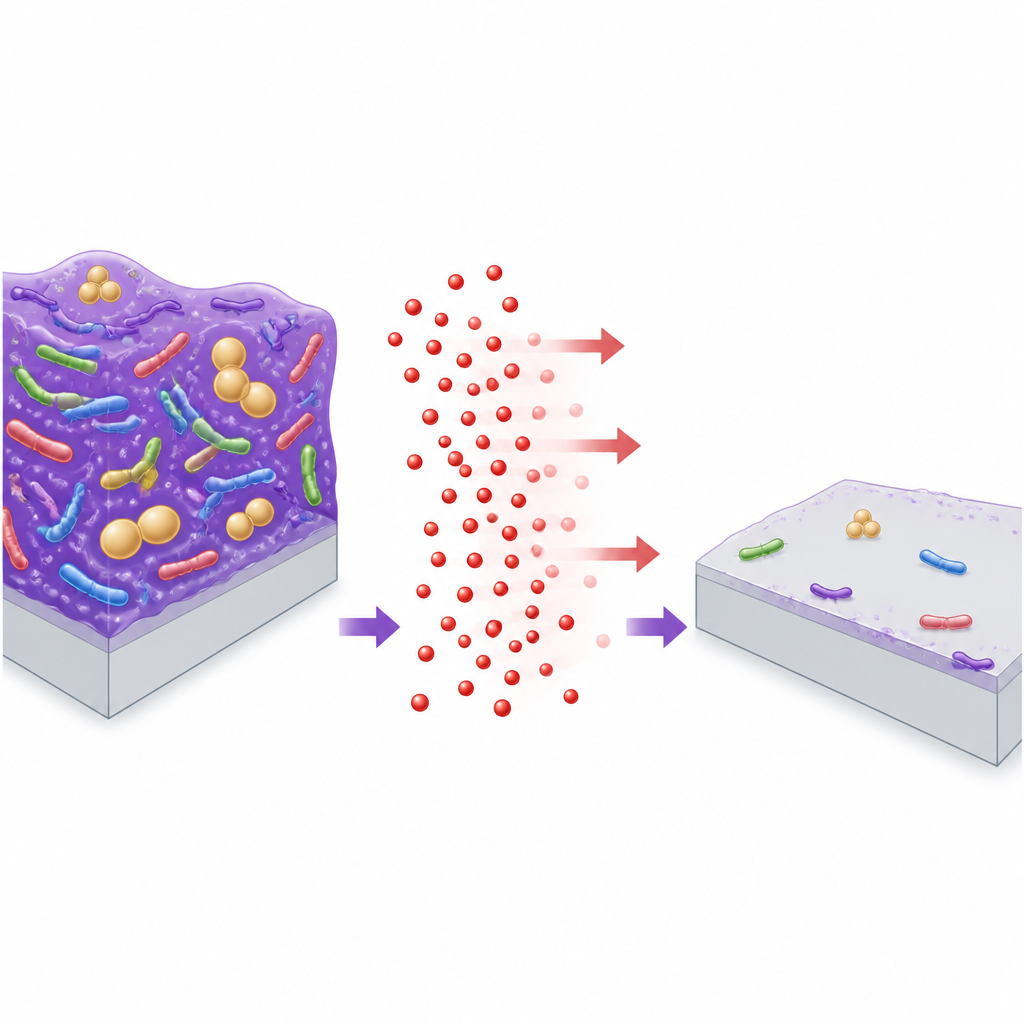
Many microbes protect themselves by building slimy communities called biofilms on surfaces like catheters, teeth, or tissue. These layers make infections harder to treat. The team grew such films in test tubes and exposed them to the selenium particles. Measurements of dye that sticks to the films showed that the particles cut biofilm buildup for all tested species, again with Candida albicans being the most affected and one of the gut bacteria the least. The results suggest that the nanoparticles can interfere both with free floating cells and with cells hidden inside these shielded layers.
What this could mean for future treatments
In simple terms, the study shows that water based extracts from olive leaves can be used to create very small selenium particles that are capable of slowing or stopping a range of problem microbes and weakening their protective films. Because the method avoids harsh chemicals and seems effective at relatively low amounts, these particles may one day be blended into coatings, dressings, or other products to help prevent infections. The authors stress that more work is needed to test safety in living tissues and to understand how stable these particles remain over time, but the findings offer a plant powered strategy worth exploring further.
Citation: Hassan, S.E., Khedr, N.M., Omran, E.M. et al. Facile green synthesis of selenium nanoparticles using olive (Olea europaea) leaf extract and their antimicrobial and antibiofilm properties. Sci Rep 16, 15224 (2026). https://doi.org/10.1038/s41598-026-47329-5
Keywords: selenium nanoparticles, olive leaf extract, antimicrobial, antibiofilm, green synthesis