Clear Sky Science · en
Antiviral activity and chemical characterization of Egyptian Ziziphus spina-christi against human respiratory viruses
Ancient tree, modern viral threat
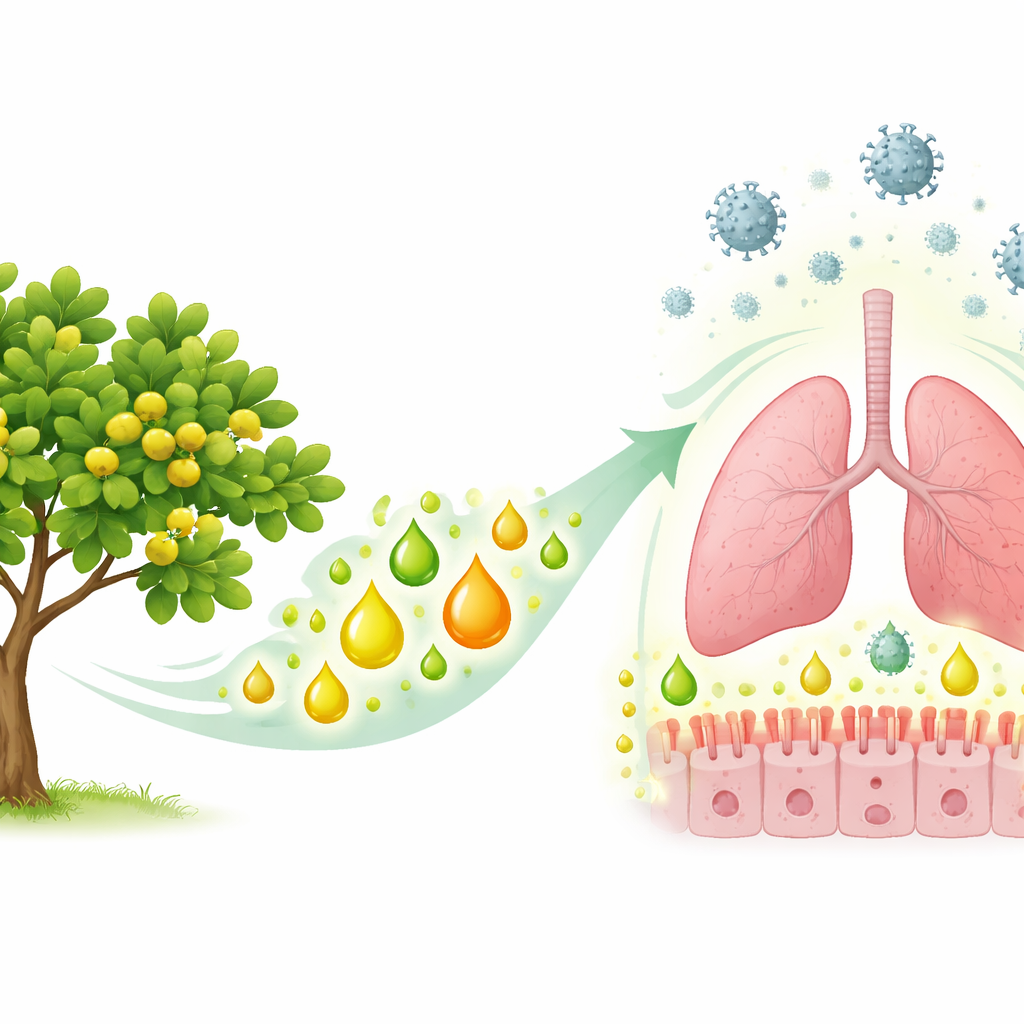
For thousands of years, people in the Middle East have turned to the Nabq, or Sidr tree (Ziziphus spina-christi), to ease pain, fever, and infections. This study asks a timely question: can this familiar desert tree also help in the fight against today’s most worrying respiratory viruses—seasonal flu, Middle East respiratory syndrome (MERS), and COVID‑19? By combining laboratory tests and computer modeling, the researchers explored whether leaf and fruit extracts from the tree can directly stop these viruses from infecting cells.
The health problem in our air
Respiratory infections are among the most common illnesses worldwide and can become life‑threatening when they move deep into the lungs. Influenza viruses and coronaviruses spread easily from person to person and continue to cause large outbreaks, as seen with COVID‑19. Existing antiviral drugs target specific viral enzymes, but viruses mutate quickly, and resistant strains can emerge. Some medicines also come with side effects or are too costly for broad use. These challenges have renewed interest in plant‑based remedies, which often contain diverse natural chemicals with a long history of traditional use.
A closer look at a desert remedy
Ziziphus spina-christi is a hardy tree that thrives in hot, dry regions across Egypt and neighboring areas. Its leaves and fruits are rich in natural compounds such as flavonoids, phenolic acids, and saponins—groups of molecules already known for anti‑inflammatory and antimicrobial effects. In this work, scientists collected leaves and fruits, dried and powdered them, and then prepared several types of extracts using different solvents. They next used a technique called liquid chromatography–mass spectrometry to catalog the many chemicals present. Among the most common were caffeic acid, several quercetin‑like flavonoids, and complex soap‑like saponins including lotoside II and betulinic acid, substances previously linked to antiviral and immune‑modulating actions.
Testing the tree against three major viruses
The team then asked how these extracts behave in living cells. They grew two kinds of animal cells commonly used in virology labs and exposed them to human influenza H1N1 virus, MERS coronavirus, or SARS‑CoV‑2, together with varying doses of each plant extract. By measuring how many cells survived and how much visible damage the viruses caused, they calculated how strongly each extract blocked infection and whether it was toxic to the cells themselves. Several extracts stood out. A crude leaf extract sharply reduced influenza and SARS‑CoV‑2 infection at very low doses, while certain fruit extracts were especially active against SARS‑CoV‑2 or MERS. In many cases, the plant preparations compared favorably with standard antiviral drugs when their effectiveness was weighed against their impact on cell health.
How the extracts seem to block infection
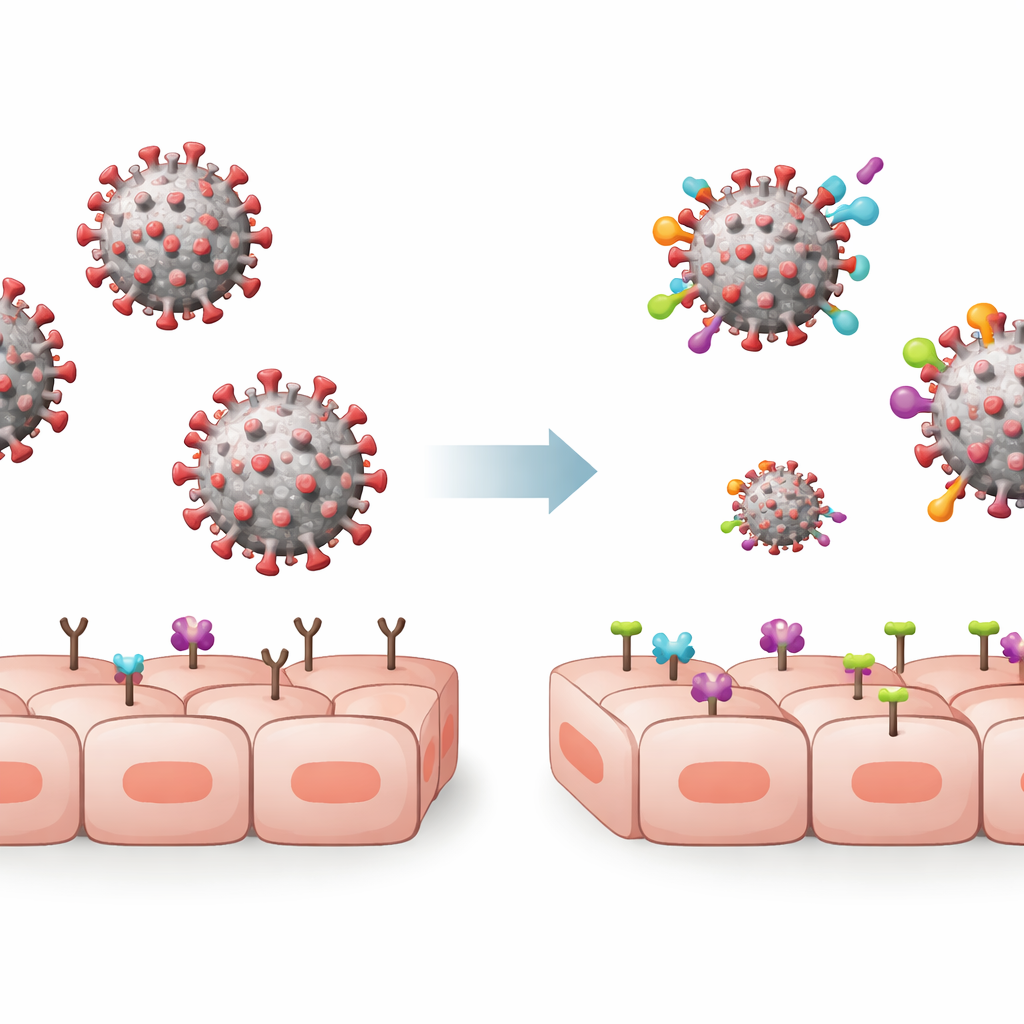
To pinpoint when during the viral life cycle the tree’s chemistry makes a difference, the researchers ran timed experiments. They added extracts either before the virus met the cells, during the initial attachment step, or after infection had started. The strongest effect appeared when virus and extract were mixed together before contact with cells, and when this mixture was then added directly to cell layers. This pattern suggests a mainly “virucidal” action: components of the extract seem to interact with viral surface structures in a way that reduces their ability to latch onto and invade cells, rather than primarily acting inside already infected cells.
Peering inside at the molecular handshake
To explore this idea in more detail, the scientists turned to computer docking simulations. Using three‑dimensional structures of the influenza attachment and release proteins and the spike proteins of MERS and SARS‑CoV‑2, they virtually “fitted” dozens of Ziziphus compounds onto the viral surfaces. Two molecules—lotoside II and a complex derivative of the plant compound genistein—repeatedly showed strong predicted binding at regions of the viral proteins that govern how efficiently viruses attach to cells or release from them. While these simulations cannot prove actual drug action on their own, they highlight specific plant components that may underlie the observed antiviral effects and that merit further testing on their own.
What this means for future medicines
Overall, the study shows that leaf and fruit extracts of Ziziphus spina-christi can directly hinder three important respiratory viruses in laboratory cell cultures, mainly by damaging or blocking the virus particles themselves before they infect cells. The work also narrows the search to a few promising natural molecules that may be responsible. However, these findings are an early step: whole‑plant extracts vary in composition, have not been tested in humans for this purpose, and cannot yet be considered medicines. Still, by bridging traditional knowledge with modern virology and computer modeling, the study suggests that this ancient desert tree could be a valuable starting point for developing new, more accessible antiviral treatments.
Citation: Elkhrsawy, A., Kutkat, O., Moatasim, Y. et al. Antiviral activity and chemical characterization of Egyptian Ziziphus spina-christi against human respiratory viruses. Sci Rep 16, 12749 (2026). https://doi.org/10.1038/s41598-026-47325-9
Keywords: plant-based antivirals, Ziziphus spina-christi, respiratory viruses, SARS-CoV-2 and MERS, influenza H1N1