Clear Sky Science · en
The role of self-efficacy and control beliefs in response to a multimodal headache intervention: results from a prospective observational study with a waiting-list comparator
Why this study matters for people with headaches
Many people living with migraines and other severe headaches try one treatment after another and still feel trapped by pain. This study looked at a different approach: a short, intensive, week‑long program that combines medical care, physical therapy, and psychological training. The researchers wanted to know not only whether this package helps in the long run, but also why some people benefit more than others—especially whether believing you can influence your own symptoms makes a difference.
A week that tackles headache from all sides
The program, called multimodal headache treatment, was offered in a neurological day clinic in Germany. Over five consecutive days, adults with frequent and disabling primary headaches—mostly migraine—spent their days in the clinic and evenings at home. They received medical review and a tailored plan for acute and preventive drugs, alongside physiotherapy for posture and neck and shoulder tension, guided relaxation and mindfulness practice, and sessions based on cognitive‑behavioral therapy. These sessions covered topics such as understanding triggers, managing stress, pacing daily activities, and building practical self‑management skills they could continue using after the week ended. 
Following patients before and after treatment
To see what changed over time, the team followed 65 participants for almost a year. Everyone first spent about three months on a waiting list while continuing their usual care; this period served as a built‑in comparison for natural ups and downs in symptoms. Headache impact on daily life, number of headache days per month, and worst pain intensity were measured at six points: three months before the program, at the start and end of the treatment week, and then three, six, and nine months later. At the same time, participants filled out short questionnaires about how confident they felt in managing their headaches (self‑efficacy) and how strongly they believed their health was ruled by luck or chance.
Headache burden eased and stayed lower
Participants started the study with a heavy burden: on average, they had about 18 headache days per month, and most fell into the most severely affected category on a standard impact scale. During the three‑month waiting period, there was little meaningful improvement. After the program, however, clear benefits emerged and largely persisted over nine months. By the end of follow‑up, monthly headache days had fallen to around 12, and nearly half of the patients achieved at least a 30% reduction. The overall impact of headaches on daily life also dropped, with over a third of patients reaching a change large enough to be considered clinically important. Peak pain intensity showed a similar pattern of gradual, lasting reduction. 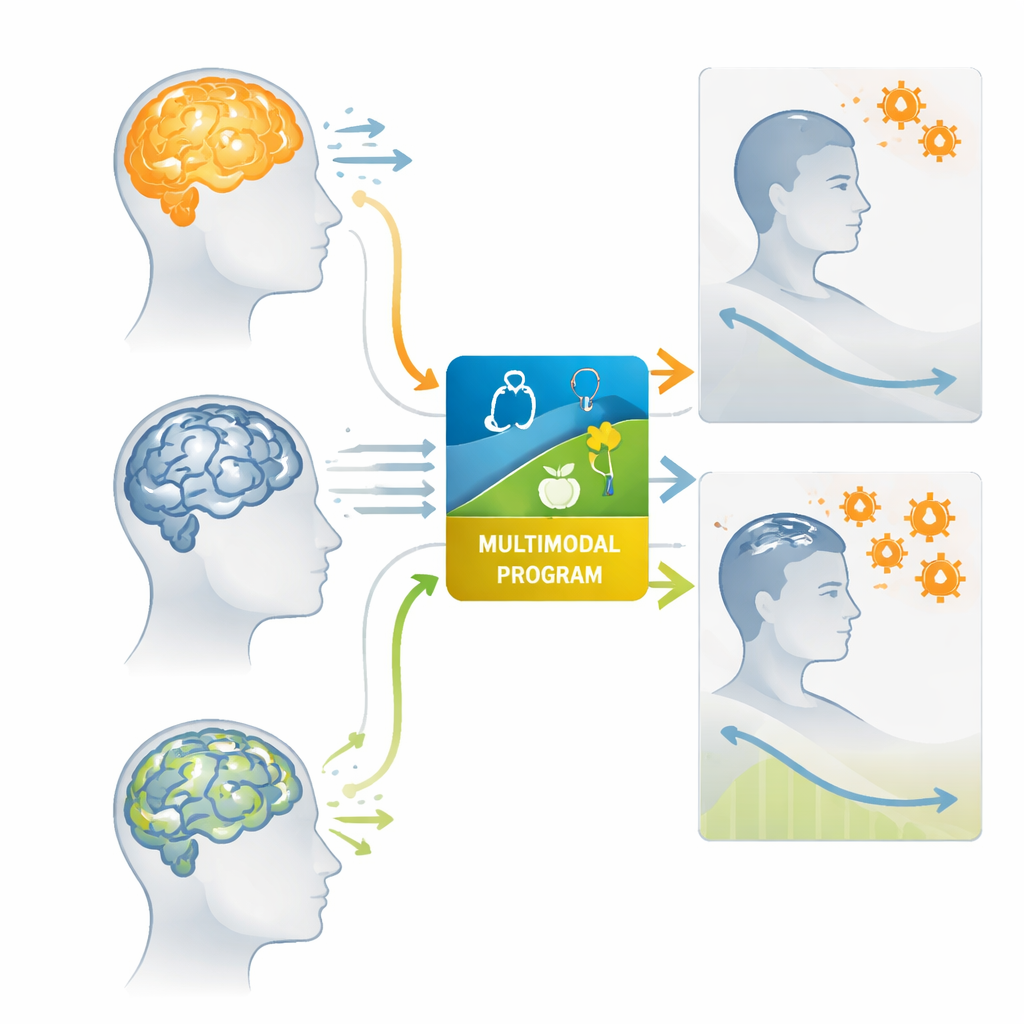
The power of feeling in control
Beyond these average gains, the study probed why some patients improved more than others. A key factor was how strongly people believed they could influence their headaches. Those who started the program with higher self‑efficacy tended to show larger and more sustained drops in headache impact over time. In contrast, people who felt that their health was mostly governed by luck or random events showed smaller improvements, even though they received the same treatment. Interestingly, self‑efficacy rose during and shortly after the program, while beliefs about chance changed little on average, suggesting that skills‑focused training may strengthen a sense of control, but deep‑seated views about luck are harder to shift.
What this means for people with migraine
For patients, the findings offer a hopeful message: a focused, one‑week program that mixes medical care, movement, and psychological tools can lead to meaningful and lasting relief, even in people with very frequent headaches. At the same time, the results highlight that how you think about your illness matters. Believing that your actions can help manage pain appears to make it easier to benefit from treatment, while seeing headaches as something that “just happens” can hold back progress. Although this was not a randomized trial and cannot prove cause and effect, it suggests that future headache care may work best when it not only prescribes medicines and exercises, but also actively builds patients’ confidence that they can shape their own recovery.
Citation: Bartsch, L., Fiebig, N., Klötzer, C. et al. The role of self-efficacy and control beliefs in response to a multimodal headache intervention: results from a prospective observational study with a waiting-list comparator. Sci Rep 16, 12359 (2026). https://doi.org/10.1038/s41598-026-47295-y
Keywords: migraine, multimodal treatment, self-efficacy, headache program, pain coping