Clear Sky Science · en
Identifying Long Covid phenotypes and their association with personal characteristics, healthcare use, and daily life burden: population-based study in Belgium
Why this matters for everyday life
Many people continue to feel unwell for months after a COVID-19 infection, struggling with tiredness, shortness of breath, or brain fog that disrupts work, family life, and finances. This Belgian study looks closely at these long lasting problems, often called Long Covid, to see whether there are different types of illness, who is most affected, and how well the healthcare system is responding. Understanding these patterns can help patients, doctors, and policymakers plan care that better matches real needs.
Different shades of Long Covid
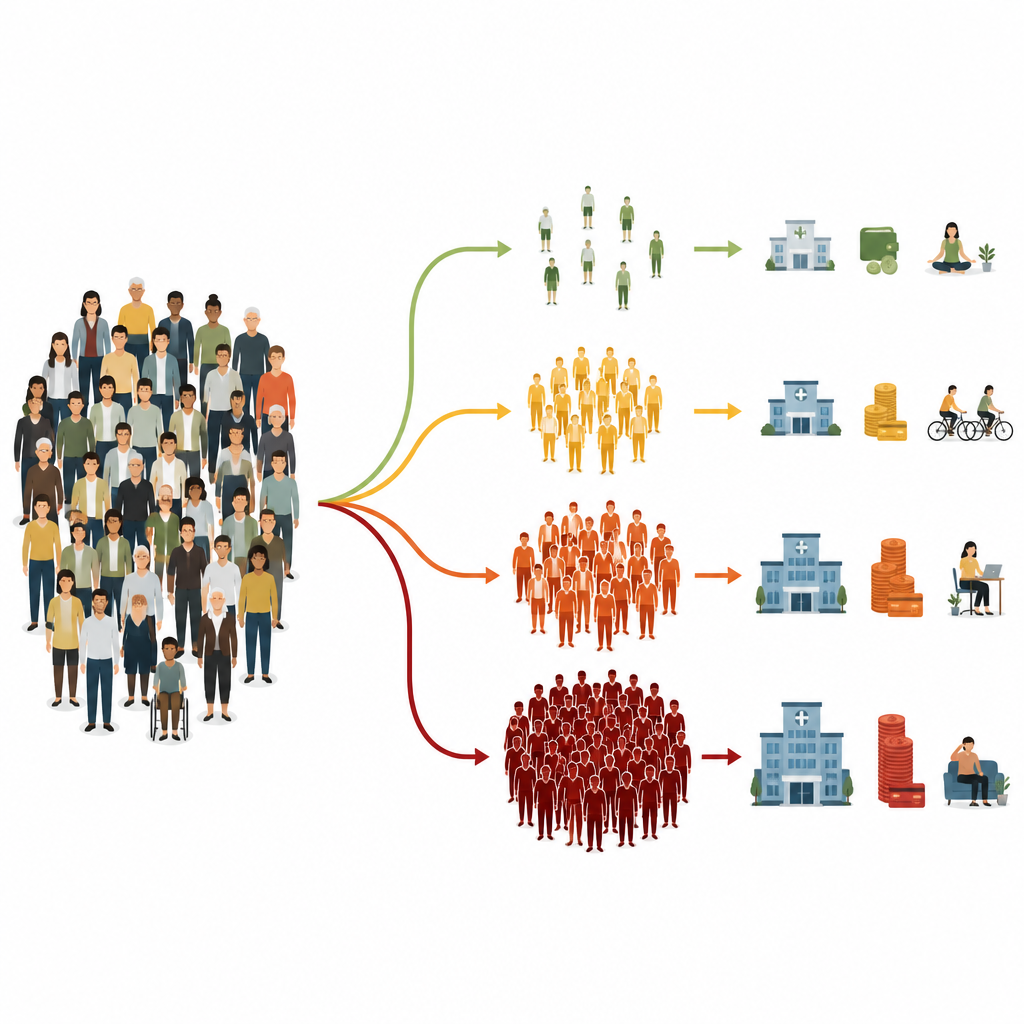
The researchers followed thousands of Belgian adults who had tested positive for the coronavirus and later filled in a detailed online questionnaire. From more than two thousand people who said they had Long Covid, they focused on 1,840 with complete information. Using reported symptoms, how long those symptoms had lasted, and how much they interfered with daily life, they grouped people into four clear types or “phenotypes” of Long Covid. These groups ranged from relatively mild, with shorter illness and limited disruption, to very severe, with many symptoms lasting more than a year and a half.
Four patterns of ongoing illness
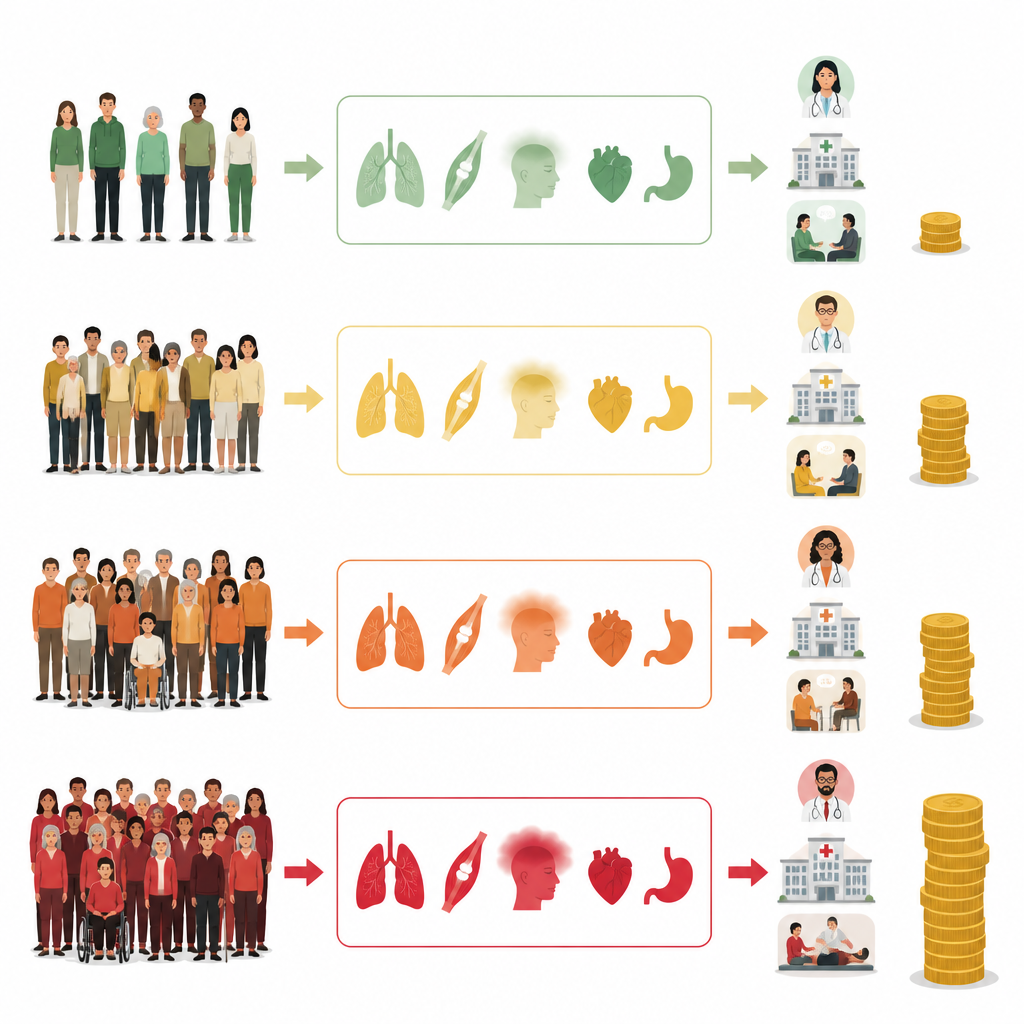
The first group, about one in four participants, had what the authors call mild Long Covid. They were less likely to report many symptoms, more likely to have problems for less than nine months, and half said their condition was not very severe in daily life. Two middle groups had a moderate burden but with different dominant complaints. One moderate group mainly reported thinking and memory problems and brain fog, while the other moderate group was marked by breathing difficulties and muscle or joint pain. In both of these groups, symptoms often lasted many months and were felt as somewhat severe.
When Long Covid becomes very heavy
The fourth group lived with the heaviest burden. They had the highest chance of experiencing a wide mix of problems, including extreme tiredness, breathlessness, headaches, sleep disturbance, mood issues like anxiety and depression, gut problems, and even hair loss. For most of them, symptoms dragged on for over a year and a half, and six in ten described a very severe impact on their daily activities. People in this severe group were more often women, older adults, lower educated, and more likely to live with obesity. They were also more likely to have had a moderate or severe initial COVID-19 illness and to be unvaccinated or only partly vaccinated before infection.
Doctors, care access, and money worries
Across all groups, most people said they had sought some form of healthcare for their ongoing problems, especially from general practitioners, who act as the main gatekeepers in Belgium. Yet only about one in four participants reported receiving an official Long Covid diagnosis, and roughly one in three received any treatment or guidance, such as medicines, exercise programs, or self-management advice. People with moderate or severe Long Covid were more likely to see specialists, physiotherapists, or mental health professionals, but they also more often felt that access to suitable care was not good enough. Around two in five participants had missed work or school because of their symptoms, and financial strain was particularly common and severe in the most affected group.
What this means for patients and policy
By showing that Long Covid is not a single uniform condition but comes in at least four patterns, this study helps explain why some people seem to recover while others remain seriously unwell for years. It also highlights that those with the heaviest burden are more likely to face difficulties getting the right care and to suffer financial hardship. For everyday life, the message is that health services and social support should not offer a one size fits all response. Instead, care plans, advice, and financial protections need to be tailored to how severe a person’s Long Covid is and which symptoms dominate, so that daily functioning and economic wellbeing can be better protected.
Citation: Moreels, S., Smith, P., Charafeddine, R. et al. Identifying Long Covid phenotypes and their association with personal characteristics, healthcare use, and daily life burden: population-based study in Belgium. Sci Rep 16, 15913 (2026). https://doi.org/10.1038/s41598-026-47228-9
Keywords: Long Covid, symptom patterns, healthcare use, daily life impact, Belgium