Clear Sky Science · en
Sustainable corrosion inhibition of carbon steel in hydrochloric acid using repurposed expired clarithromycin as a reverse of mining
Turning Waste Medicine into Metal Protection
Old steel pipes, tanks, and machinery are the hidden workhorses of modern industry, but they quietly dissolve away whenever strong acids are used to clean or process them. At the same time, pharmacies and homes dispose of large amounts of expired medicines each year. This study brings these two problems together, asking a simple question of wide interest: can an expired antibiotic be repurposed to shield steel from acid attack, cutting both industrial damage and pharmaceutical waste?
Why Steel Fails in Harsh Liquids
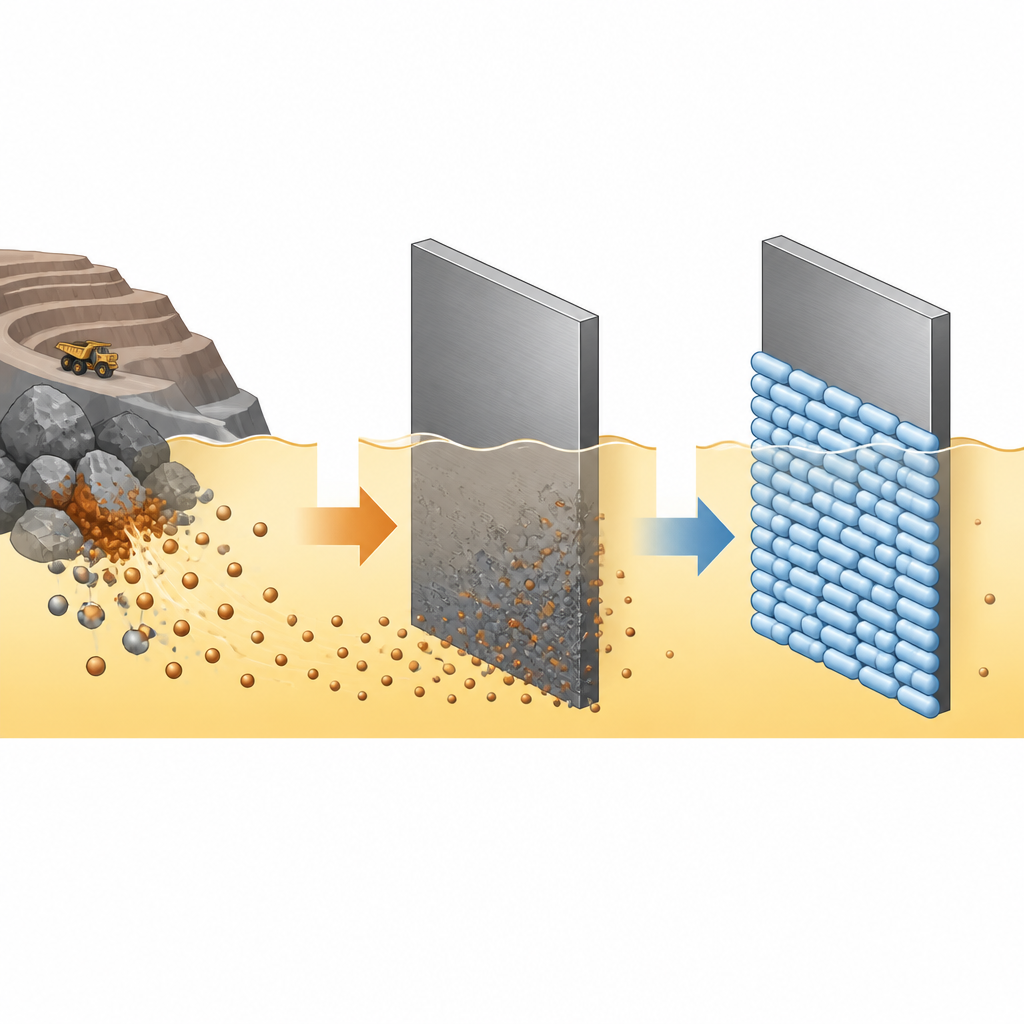
Carbon steel is cheap and strong, so it is everywhere in oil production, construction, and chemical plants. Many of these operations rely on hydrochloric acid to remove rust, clean surfaces, or dissolve minerals. In doing so, the acid also eats away at the steel itself, stripping metal atoms from the surface and releasing bubbles of hydrogen gas. The authors note that this unwanted loss of metal is like a reverse form of mining: instead of dissolving rock to recover metals on purpose, valuable steel structures are slowly dissolved by accident.
Using an Expired Antibiotic in a New Way
The researchers focused on clarithromycin, a common antibiotic whose structure includes several oxygen and nitrogen atoms that can cling to metal. Importantly, they used clarithromycin that had just passed its expiration date, treating it as a chemical resource rather than trash. Pieces of carbon steel were carefully polished and then placed in hydrochloric acid, with and without various small amounts of the expired drug. By tracking how much weight the steel lost, how much hydrogen gas it released, and how easily electric current passed at its surface, they could see whether the drug slowed the damage.
How the Drug Builds a Protective Film
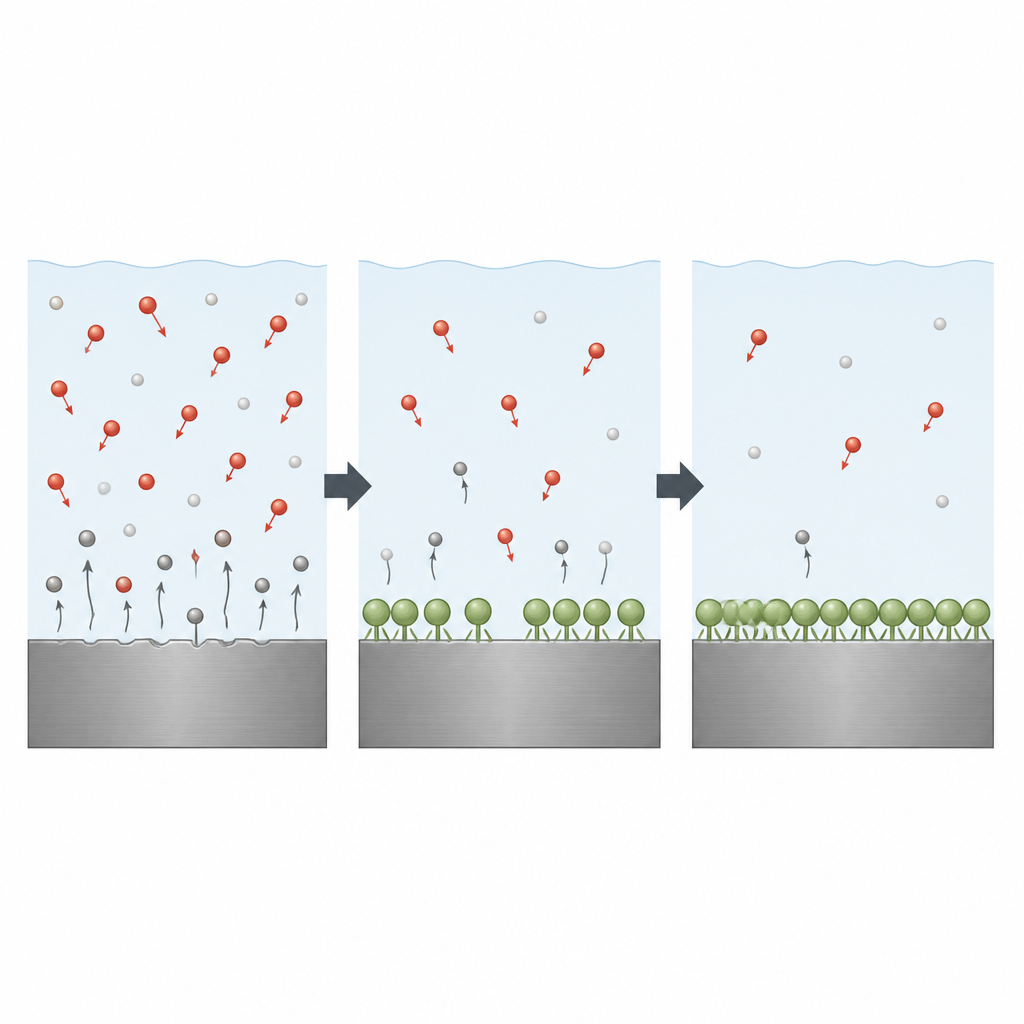
Across all tests, adding clarithromycin cut the corrosion rate sharply. At the highest tested dose, the steel lost less than one tenth as much mass as unprotected samples and showed a similar drop in hydrogen release. Electrical measurements revealed that both the metal loss step and the hydrogen forming step were hindered, meaning the drug acts on both sides of the corrosion reaction rather than just one. Images from electron microscopes showed that bare steel in acid becomes rough and pitted, while steel exposed to acid plus the expired drug remains far smoother, indicating the presence of a thin, protective film.
What Happens at the Atomic Scale
To understand this film better, the team analyzed how well the drug sticks to the steel at different temperatures and concentrations. Their data matched a simple picture in which a single layer of clarithromycin molecules spreads across the metal surface, much like tiles on a floor. Calculations of energy changes showed that this coating forms on its own and is held in place by a mix of physical attraction and partial chemical bonding between the drug and the steel. As the temperature rises, part of the layer loosens and some molecules detach, which explains why the protective effect decreases slightly at higher heat.
From Unused Pills to Safer Infrastructure
In everyday terms, this work shows that a medicine no longer suitable for patients can still perform useful work in industry. Expired clarithromycin forms a self-assembled shield that clings to steel in acid and slows its decay by about 90 percent under typical conditions. By treating unwanted drugs as helpful chemicals instead of waste, companies could protect valuable equipment while easing the environmental burden of discarded pharmaceuticals, offering a practical example of recycling at the molecular level.
Citation: Saleh, M.G., Al-Gorair, A.S., Hawsawi, H.M. et al. Sustainable corrosion inhibition of carbon steel in hydrochloric acid using repurposed expired clarithromycin as a reverse of mining. Sci Rep 16, 15339 (2026). https://doi.org/10.1038/s41598-026-47188-0
Keywords: corrosion inhibition, carbon steel, clarithromycin, pharmaceutical waste, hydrochloric acid