Clear Sky Science · en
Using wearable data to detect depression severity across clinical and non-clinical samples
Why Your Fitness Tracker Might Reveal More Than Steps
Many people now wear smartwatches or fitness bands to count steps and track sleep. This study asks a striking question: could those same gadgets quietly flag when someone might be struggling with depression, even before they seek help? By looking at everyday patterns in heart rate, movement, and sleep, the researchers explored whether consumer wearables could help spot people with higher levels of depressive symptoms in both college students and patients already in treatment.
Two Groups, One Shared Device
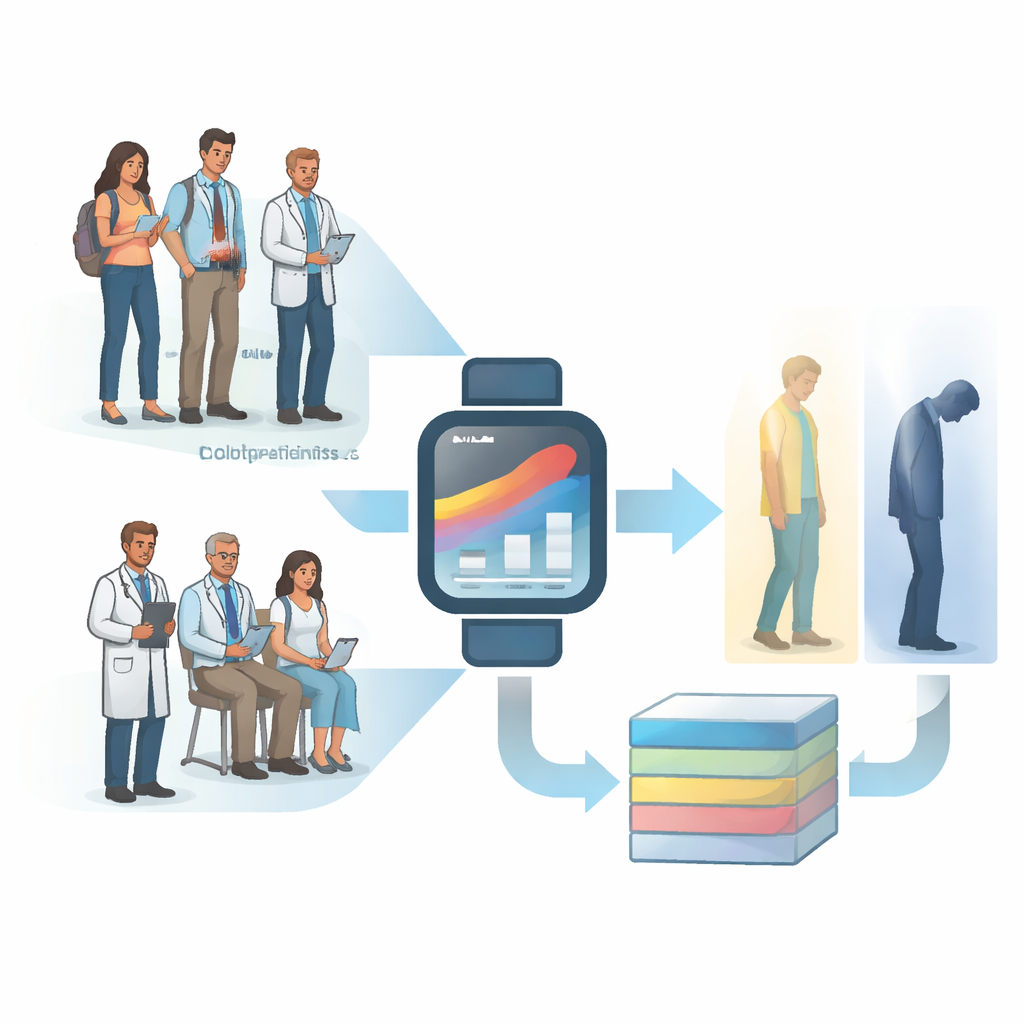
To test this idea, the team combined data from two very different groups who all wore the same Garmin wristband for two weeks. One group consisted of university students in the Netherlands, most of whom were not in treatment for mental health problems. The other came from a German university clinic, where patients were receiving therapy for diagnosed depression. Everyone also completed a brief standard questionnaire about mood, and the researchers used the scores to sort participants into “screen-positive for depression” or “not screen-positive.” This setup allowed them to see whether wearable signals could distinguish between people with higher and lower levels of symptoms across both everyday and clinical settings.
Turning Daily Rhythms Into Signals
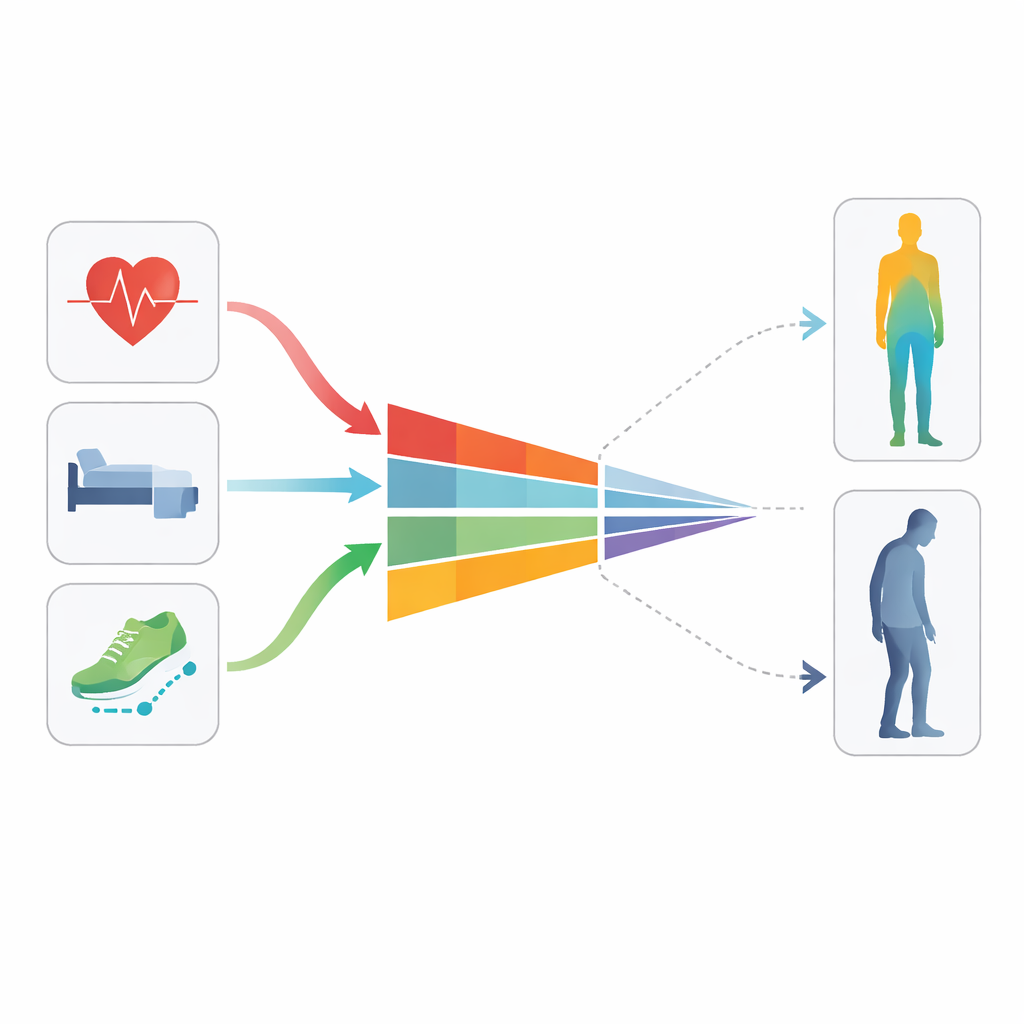
The wristbands recorded basic features that many fitness trackers measure: how many steps people took each day, how long they slept, when they went to bed and woke up, and how their heart rate behaved while awake and asleep. Instead of focusing on single days, the team summarized two weeks of data per person, capturing not only averages but also how much these patterns varied from day to day. They then used a type of statistical model often applied in machine learning, which is designed to handle many related predictors at once, to see whether a mix of these features could correctly classify who screened positive for higher depression severity.
What the Wearables Revealed
Across all 282 participants, the model showed good performance: in the held-out test data, it correctly distinguished higher from lower symptom groups about four out of five times. Three kinds of signals stood out. People with more irregular sleep—bigger swings in how long they slept each night—were more likely to fall in the higher-symptom group. Those who reached lower peak step counts on their most active days also tended to show more severe symptoms, echoing past work linking depression with reduced physical activity. Finally, individuals whose lowest daytime heart rate was especially low were more likely to be in the higher-symptom group, hinting at changes in bodily arousal or energy that may accompany depression.
Beyond Who You Are, Toward How You Live
The researchers also checked how much of the prediction came simply from knowing which group a person belonged to—student or clinic patient. Group membership itself was a strong clue, since the outpatient sample had, on average, much higher depression scores than the student sample. Yet when wearable features were added to models that already knew a person’s group, overall performance improved. In other words, how someone slept, moved, and how their heart behaved still added information on top of basic background factors. Follow-up analyses that adjusted for age, bedtime, or slightly different thresholds on the mood questionnaire showed similar results, although the most important signals shifted somewhat toward sleep timing and resting heart rate patterns.
Promise, With Important Caveats
Although the findings are encouraging, the authors stress that today’s wearable data are not a stand-alone diagnostic tool. Many participants, especially in the clinical group, had to be excluded because their devices did not provide enough data, and the final sample mainly contrasted people with clear depression against mostly healthy students. That means the model is less tested for picking up subtle or early changes in mood. Differences in age, academic stress, and other life circumstances between groups may also have influenced the patterns. The work shows that everyday rhythms captured by common gadgets can reflect meaningful aspects of mental health, but truly reliable, real-world use will require larger and more diverse studies.
What This Means for Everyday Life
For a layperson, the main takeaway is that changes in sleep regularity, movement, and bodily “resting state” leave measurable fingerprints that smartwatches can detect. In this study, such fingerprints helped identify people with higher levels of depression symptoms across both student and patient populations. In the future, similar methods might support early warning systems that alert individuals or clinicians when patterns start to resemble those linked with depression, guiding timely conversations or checkups. For now, the message is hopeful but cautious: your fitness tracker is beginning to see hints of your mental health, but it is not yet ready to replace a trained professional—or your own voice in asking for help.
Citation: Hehlmann, M.I., Tutunji, R., Lutz, W. et al. Using wearable data to detect depression severity across clinical and non-clinical samples. Sci Rep 16, 11380 (2026). https://doi.org/10.1038/s41598-026-47177-3
Keywords: wearable devices, depression detection, sleep and activity patterns, digital mental health, passive sensing