Clear Sky Science · en
Sustainable development evaluation of agri-culture-tourism integration in revolutionary old areas: a case study of Tianshui city
Why farms and villages matter for the future
Many people imagine progress as something that happens only in big cities, but the future of sustainable living also depends on how rural areas grow. This study looks at Tianshui, a historic region in western China, to see how farming, local culture, and tourism can work together so that villages protect their heritage, lift people out of poverty, and care for the environment at the same time.
Bringing together fields, stories, and visitors
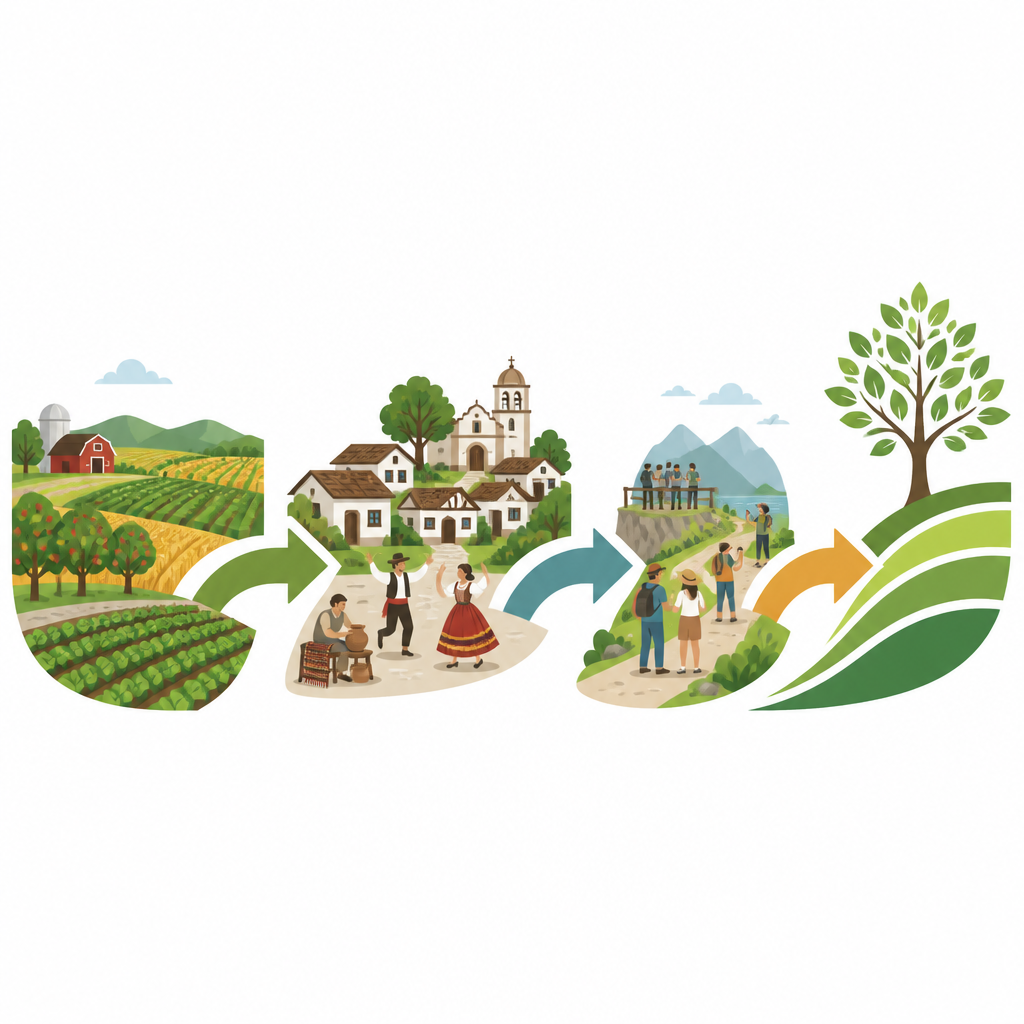
The researchers focus on a development model that links three everyday things: agriculture, culture, and tourism. Instead of seeing farms only as places that grow crops, Tianshui turns orchards, traditional villages, folk crafts, and memories of the revolutionary period into visitor experiences. Travelers can enjoy rural scenery, learn history, and stay in homestays that serve local food. This mix creates new income streams for farmers while keeping local customs alive, offering a path for old revolutionary areas that still struggle with poverty.
Looking through the lens of people, profit, and planet
To judge whether this model is truly sustainable, the study uses the widely known idea that development should balance economic gains, social well being, and environmental care. The team collected ten years of economic data and more than 1,800 questionnaires from visitors. With these, they used statistical tools to see how tightly the farm culture tourism model is linked to different parts of the local economy and which features most encourage visitors to support it. In simple terms, they asked: Which kinds of jobs and services grow when this model succeeds, and what makes tourists more willing to come back and recommend it?
What drives success in Tianshui
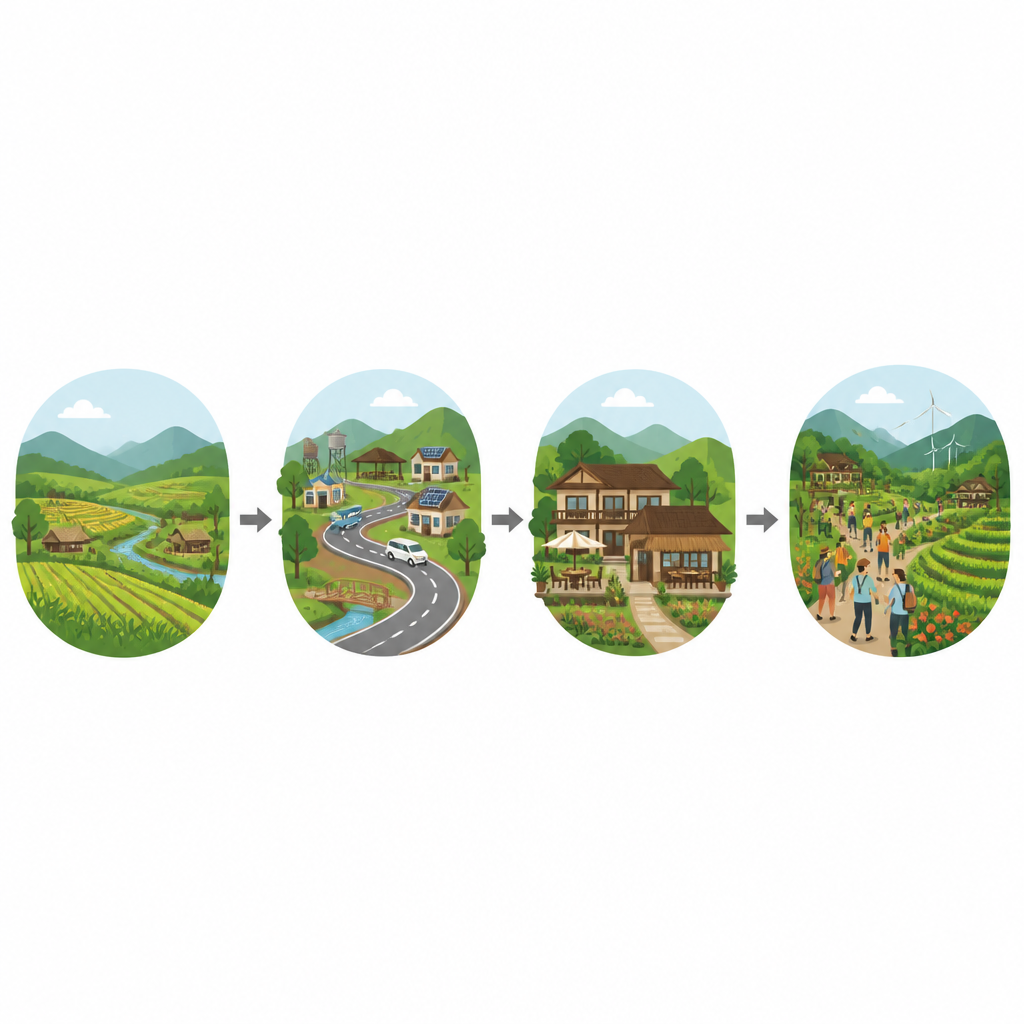
The analysis shows that the strongest partner of farm culture tourism is the service sector, which includes transport, lodging, food, and tour services. Agriculture still matters a lot, but old style industry plays a smaller role. Visitors are most likely to support this kind of tourism when three conditions are met. First, the basic infrastructure works well: it is not hard to get to the village, public facilities are in good shape, and health and safety are assured. Second, the region offers rich and distinctive experiences, such as varied farm activities, creative cultural events, and innovative local products. Third, visitors see that their spending helps local residents escape poverty, giving the trip a deeper social value.
Services, basics, and word of mouth
By examining many survey questions together, the researchers found three groups of factors that especially shape sustainable growth. One group, called secondary services, covers things that enrich the visit, such as special products, new kinds of farm based activities, and the smart use of digital tools. A second group, basic services, includes roads, restaurants, places to stay, and health care, which make a rural trip comfortable and safe. The third group is promotion, ranging from photos and videos to online comments that spread the word. In Tianshui, growth in higher level services has helped upgrade the basics, while stronger promotion has drawn more visitors and investment, creating a cycle of mutual support.
Lessons for other rural regions
The study concludes that old revolutionary areas like Tianshui can move toward sustainable development by weaving together their farming traditions, cultural heritage, and tourism in a careful way. The key is to coordinate three pillars: boost the service economy around tourism, protect and use rural landscapes wisely, and ensure that local communities share in the benefits. When good infrastructure, rich experiences, and clear poverty relief effects come together, rural tourism becomes more than a weekend escape; it turns into a practical route for long term well being for both people and the land.
Citation: Luo, M., Zhang, H., Xuan, M. et al. Sustainable development evaluation of agri-culture-tourism integration in revolutionary old areas: a case study of Tianshui city. Sci Rep 16, 15664 (2026). https://doi.org/10.1038/s41598-026-47156-8
Keywords: rural tourism, sustainable development, agriculture and culture, poverty alleviation, Tianshui China