Clear Sky Science · en
Natural liquid betaine dietary supplementation improves growth performance, immuno-antioxidant responses, and stress resistance in Nile tilapia subjected to acute ammonia challenge
Why fish farmers should care
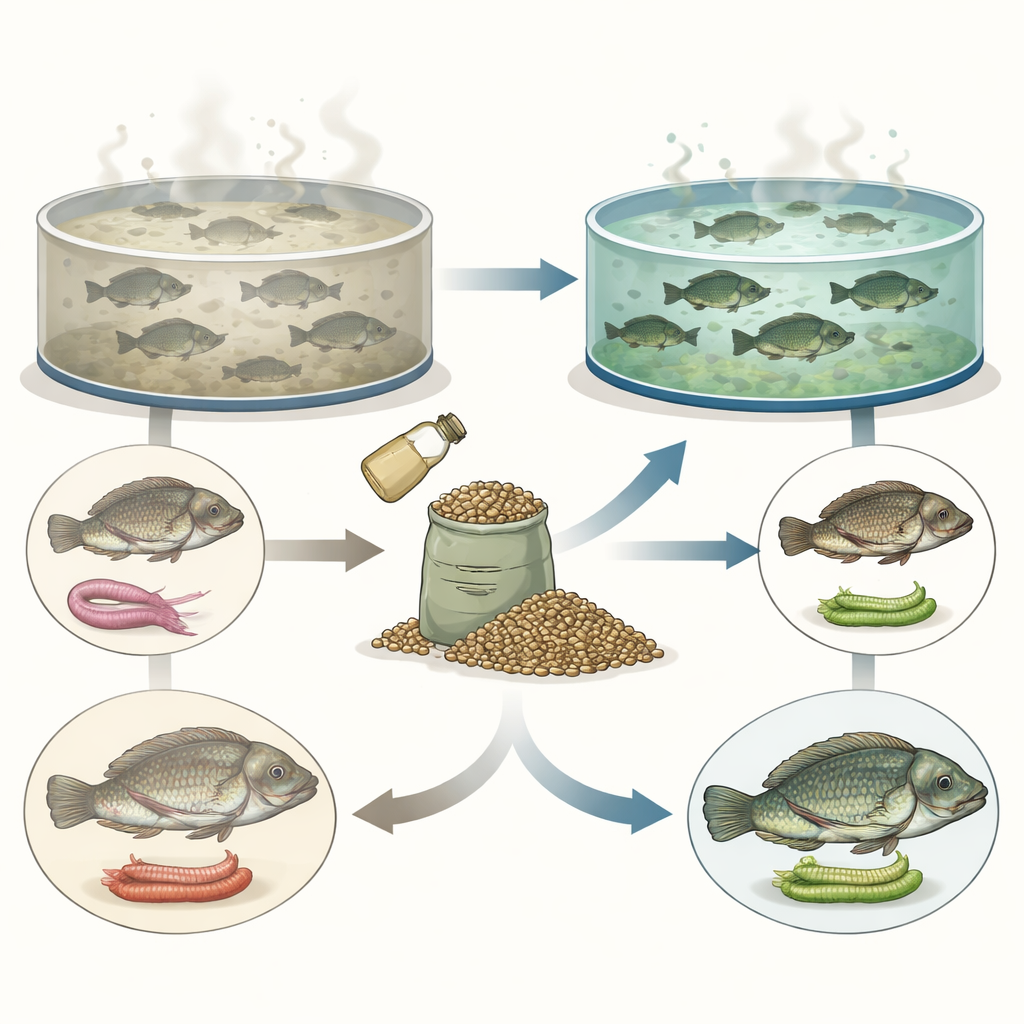
As fish farms become more crowded to meet the world’s demand for affordable protein, waste products such as ammonia can quietly build up in the water. This invisible pollutant stresses fish, stunts their growth, and can even kill them. The study summarized here tests a simple idea with big implications for aquaculture: can adding a natural ingredient called liquid betaine to fish feed help Nile tilapia grow better and withstand sudden spikes of ammonia, without resorting to drugs or complex technology?
Growing fish in a changing world
Nile tilapia is one of the planet’s most important farmed fish, prized for its fast growth and ability to tolerate varied conditions. Yet intensive farming pushes that tolerance to the limit. Ammonia, released from fish waste and leftover feed, accumulates in crowded tanks and ponds. Even short bursts of high ammonia can damage gills, liver, and gut, weaken the immune system, and slow growth. At the same time, farmers are under pressure to produce more fish with less feed and fewer environmental impacts. This has fueled interest in “functional feeds” that not only nourish fish but also help them cope with stress.
The promise of a natural helper
Betaine is a small, naturally occurring compound found in plants such as sugar beet. It helps cells balance their internal water and participates in key metabolic reactions. In land animals and some fish species, betaine supplements have improved growth, feed use, and resilience to stress. Most of that work, however, used synthetic, solid betaine. In this study, the researchers focused instead on a natural liquid form, added directly to commercial tilapia feed at three doses. Over 60 days, young tilapia were fed either an unsupplemented diet or diets containing increasing amounts of liquid betaine, while water quality was carefully kept the same across all tanks.
Stronger growth and healthier blood
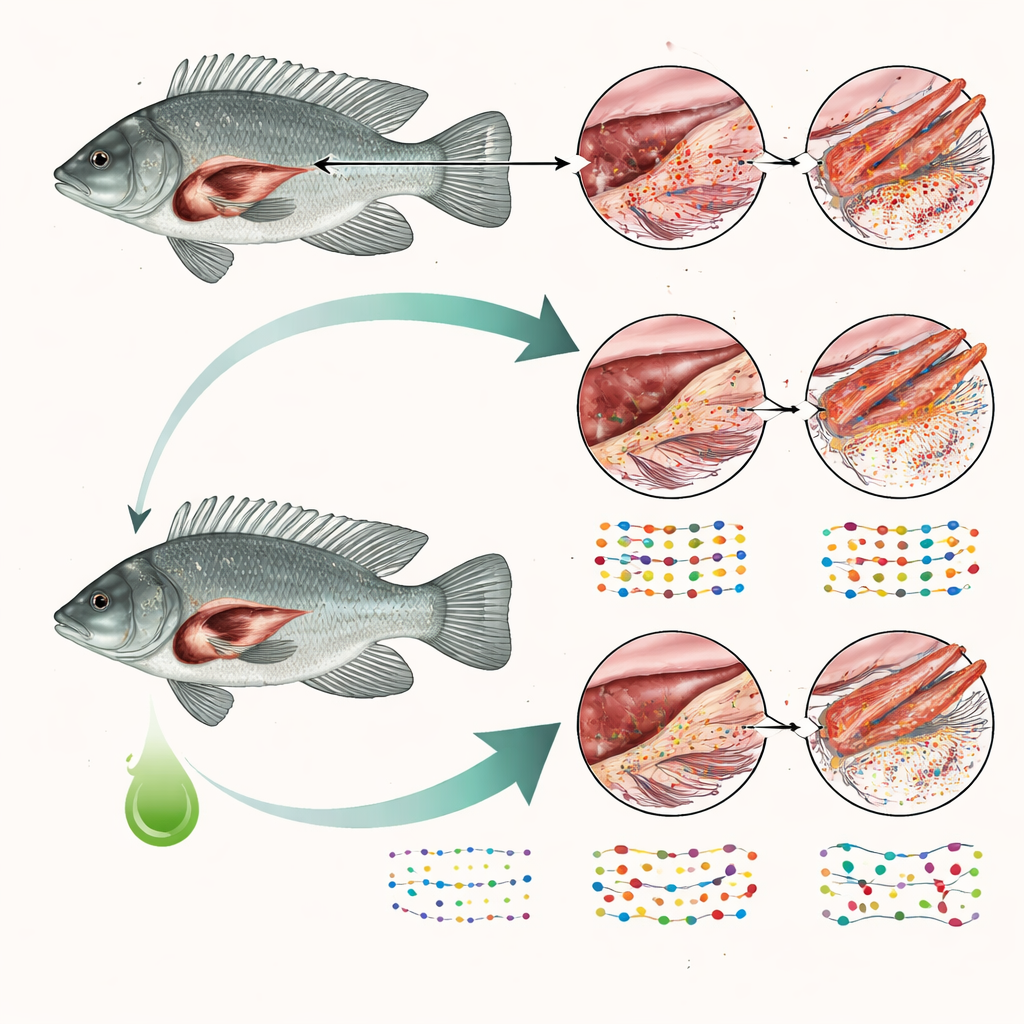
By the end of the feeding period, tilapia receiving liquid betaine clearly outperformed those on the basic diet. Fish given the highest dose gained the most weight, converted feed into flesh more efficiently, and showed higher activity of digestive enzymes involved in breaking down starches and fats. Their blood tests also looked healthier: counts of red and white blood cells increased, total blood proteins and protective globulins went up, while circulating fats and a liver stress enzyme went down. Inside the liver, genes linked to growth, antioxidant defenses, and immune signaling were more active, suggesting that betaine primed the fish’s physiology for both faster growth and better protection.
Facing an ammonia shock
To see whether this preparation translated into real-world resilience, the team then exposed most groups to a severe, short ammonia challenge, mimicking a sudden water quality failure. Fish that had never seen betaine suffered the worst: only about two out of five survived and their liver, gut, and gills showed pronounced damage under the microscope. In contrast, survival rose stepwise with betaine dose, reaching roughly four out of five fish alive in the high-dose group. Their tissues displayed far fewer signs of inflammation, cell death, and structural breakdown. Measurements of antioxidant enzymes and innate immune markers before the challenge backed up these observations: supplemented fish had stronger natural defenses ready to respond.
What this means for farm ponds and plates
For non-specialists, the take‑home message is direct: adding an appropriate amount of natural liquid betaine to tilapia feed helped the fish grow faster, make better use of their food, and arrive at stressful events such as ammonia spikes in a more robust state. The most effective level in this study was 2.4 mL per kilogram of feed, which improved growth, blood health, cellular defenses, and survival during a severe ammonia event. While more work is needed to test long-term and real-farm conditions, these findings suggest that a relatively simple, plant-derived feed ingredient could become a practical tool to boost both productivity and fish welfare in modern aquaculture.
Citation: Elazouny, E.N., El-Nokrashy, A.M., El-Kassas, S. et al. Natural liquid betaine dietary supplementation improves growth performance, immuno-antioxidant responses, and stress resistance in Nile tilapia subjected to acute ammonia challenge. Sci Rep 16, 12706 (2026). https://doi.org/10.1038/s41598-026-47150-0
Keywords: Nile tilapia, aquaculture feed additives, ammonia stress, betaine supplementation, fish health