Clear Sky Science · en
Free energy perturbation-derived identification of natural compounds targeting Mycobacterium tuberculosis thymidylate kinase
Why this research matters for tuberculosis
Tuberculosis remains one of the world’s deadliest infectious diseases, and drug resistance is making it harder to treat. This study explores how nature itself may offer new chemical blueprints for future medicines. Using advanced computer simulations rather than lab animals or infected patients, the researchers searched huge libraries of plant and microbial compounds to find those that might block a key enzyme that tuberculosis bacteria need to grow, pointing to fresh directions for drug development.
A fragile step in bacterial DNA building
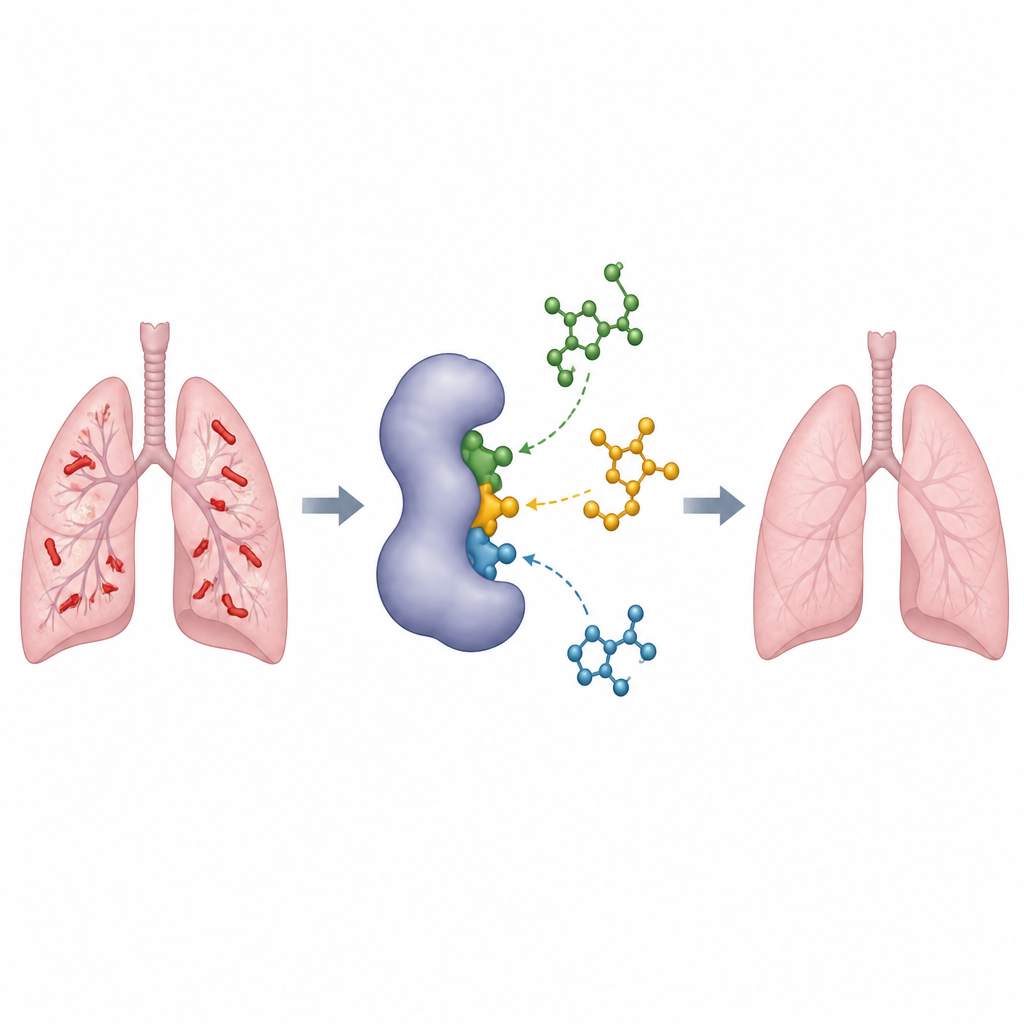
Tuberculosis bacteria rely on a small enzyme called thymidylate kinase to help build the DNA they need to divide and spread in the body. This enzyme works like a factory worker on an assembly line, converting one DNA building block into another in a precisely controlled step. Human cells have a related enzyme, but the bacterial version has a different shape in crucial regions, which means it can be targeted without harming our own cells. If a small molecule wedges into the right pocket on this enzyme and blocks its motion, the bacterium can no longer copy its DNA efficiently, slowing or stopping infection.
Searching nature’s catalog on a computer
Instead of testing compounds one by one in the lab, the team used computer-aided drug discovery tools to sift through known chemicals. They first collected 445 reference molecules already reported to interact with this enzyme and used these to train and check their methods. Sophisticated docking programs tried to “fit” each molecule into the enzyme’s active pocket, estimating how tightly it would bind. To avoid fooling themselves, the researchers also docked thousands of look-alike “decoy” molecules that should not bind, and used statistical tests to confirm that their docking setup could reliably tell likely binders from non-binders.
From thousands of candidates to three standout molecules
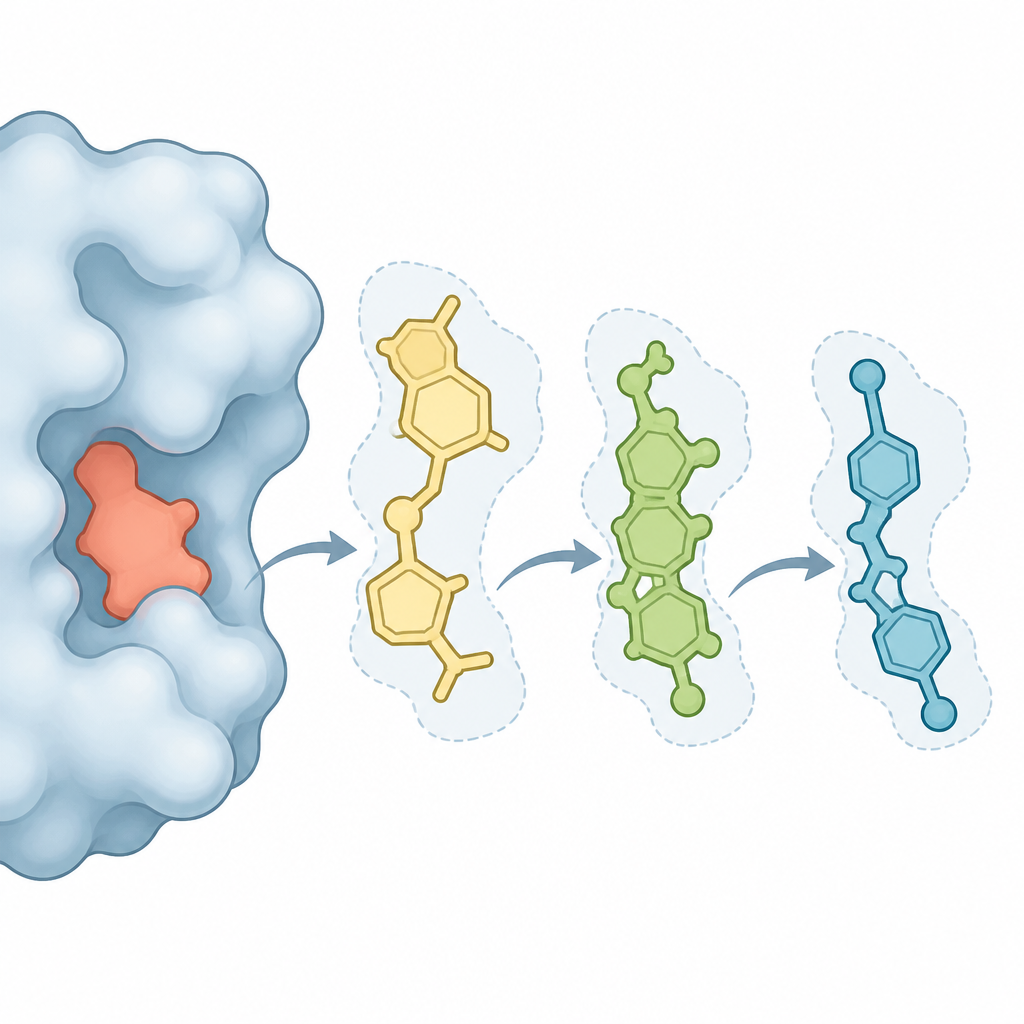
With a reliable docking pipeline in place, the scientists turned to a vast public collection of natural compounds called the COCONUT database. They pulled out almost ten thousand molecules that shared structural features with the best reference inhibitors, then narrowed these down using a map of key chemical features required for binding. Computer models predicted how each candidate might be absorbed, distributed, and cleared by the body, and flagged those likely to be toxic. Step by step, this funnel reduced the list from thousands of molecules to just 122 with acceptable drug-like behavior, and finally to three natural compounds that showed particularly strong and favorable predicted binding to the tuberculosis enzyme.
Watching molecules move and bind in virtual time
To go beyond static snapshots, the team ran long molecular dynamics simulations, which let the protein and each candidate compound move in a virtual water box over 100 billionths of a second. They monitored how much the protein and the bound molecule wobbled, how compact the complex remained, and how many stabilizing contacts such as hydrogen bonds formed. All three natural compounds stayed lodged in the same enzyme pocket as a known reference inhibitor, often making strong hydrophobic contacts and stacking interactions with key amino acids. Additional free energy calculations, which aim to estimate how favorable binding is in energetic terms, suggested that one compound in particular, labeled CNP0217487, should bind even more strongly than the others.
What this means for future TB treatments
In everyday terms, the researchers used powerful computer methods to look for natural molecules that can jam a critical gear in the tuberculosis bacterium’s DNA copying machine. Out of many thousands of possibilities, three compounds emerged as especially promising, with one appearing to grip the enzyme especially tightly and stably. While these findings are still theoretical and must be confirmed in real biological tests, the work shows that nature’s chemical diversity, guided by modern simulation techniques, can reveal new starting points for drugs aimed at drug-resistant tuberculosis.
Citation: Chikhale, R.V., Islam, M.A., Suryawanshi, V.S. et al. Free energy perturbation-derived identification of natural compounds targeting Mycobacterium tuberculosis thymidylate kinase. Sci Rep 16, 16272 (2026). https://doi.org/10.1038/s41598-026-46983-z
Keywords: tuberculosis, natural products, enzyme inhibitor, virtual screening, drug discovery