Clear Sky Science · en
A multi-metric evaluation of a sustainable capillary electrophoresis method for simultaneous therapeutic drug monitoring of Nilotinib and Ofloxacin in oncology clinics
Why measuring medicines in blood matters
People with cancer often need powerful combinations of medicines: one drug to attack the cancer and another to guard against infection. Getting the doses right is a delicate balance—too little and the treatment may fail, too much and side effects can become dangerous. This study describes a new laboratory test that can measure, at the same time, the levels of two important drugs in blood samples using a small, fast, and environmentally friendly technique. 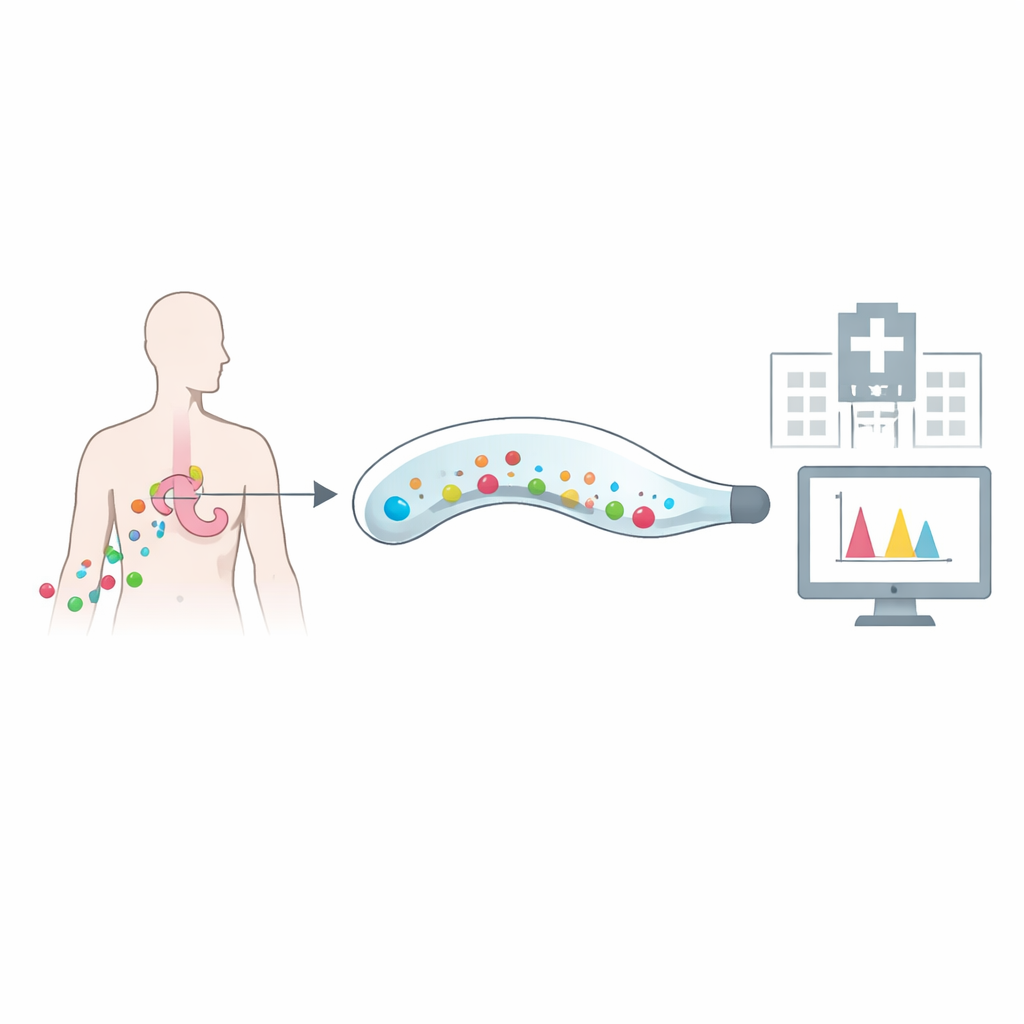
Two key medicines used together
The work focuses on nilotinib, a targeted cancer pill used to treat chronic myeloid leukemia, and ofloxacin, a broad-spectrum antibiotic often given to protect these patients from infections. Because nilotinib can weaken the immune system, combining it with an antibiotic is common in clinics. Yet until now there has been no published method to measure both drugs together in real biological samples, which makes it harder to study how they interact in the body or to adjust doses for individual patients.
A tiny channel that separates chemicals
The researchers turned to capillary electrophoresis, a technique that pushes molecules through a hair-thin glass tube using high voltage. Different compounds move at different speeds, allowing them to separate cleanly even from complex mixtures like blood plasma. In this study, they paired capillary electrophoresis with a photodiode array detector, which senses how much light the separated drugs absorb. By carefully choosing the liquid inside the capillary—a simple borate buffer at a mildly alkaline pH—and fine-tuning factors such as voltage, temperature and injection pressure, they achieved sharp, well-resolved signals for nilotinib, ofloxacin, and a helper compound used as an internal reference.
Turning real blood samples into clear answers
To mimic real clinical work, the team tested rat plasma rather than just pure solutions. They developed a simple sample-preparation step: a small volume of plasma is mixed with acetonitrile to make the proteins clump and fall out, then the clear liquid is analyzed. The method could reliably measure both drugs over a wide range of concentrations, starting well below the typical peak levels seen in blood after dosing. It passed all major U.S. Food and Drug Administration criteria for laboratory tests, including accuracy, precision, and stability. When applied to rats given the drugs separately or together, the test showed that when nilotinib and ofloxacin were co-administered, the blood levels of both medicines rose noticeably, hinting at a drug–drug interaction that deserves closer study. 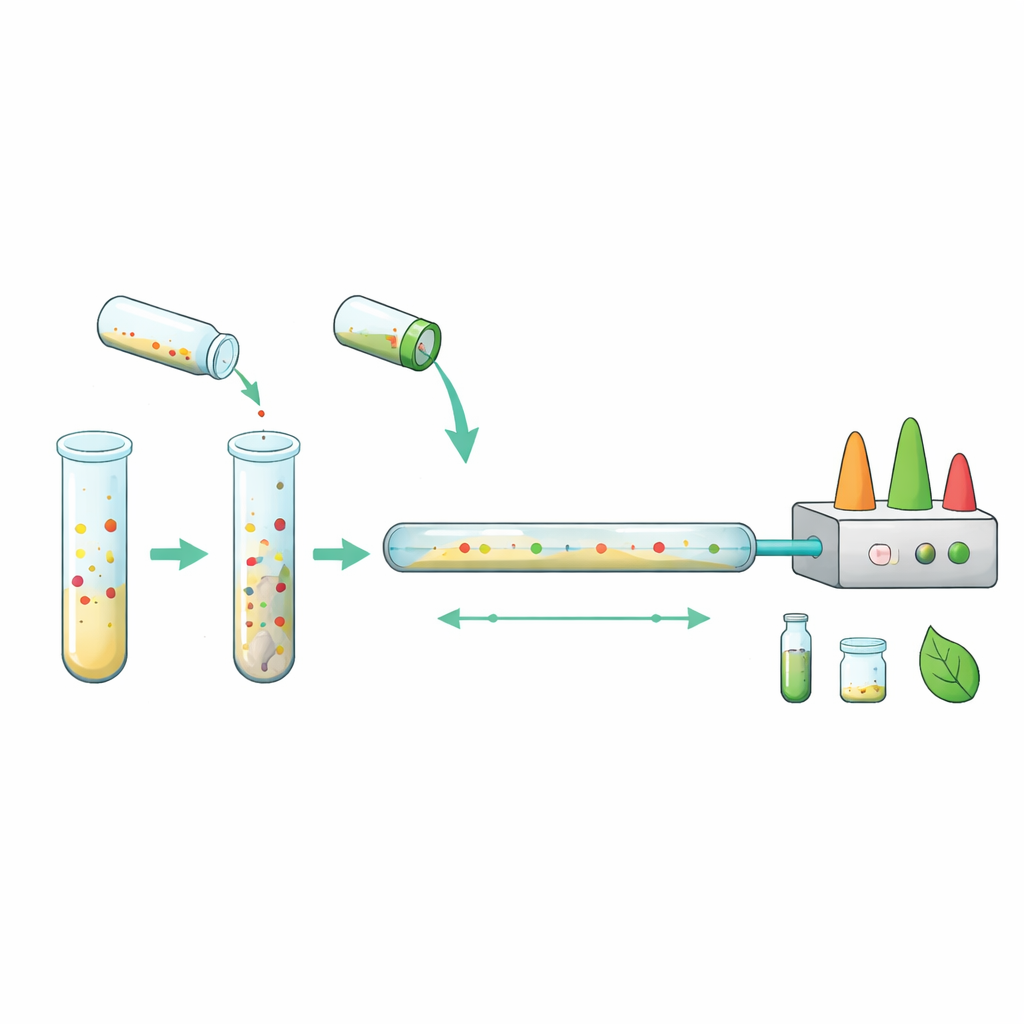
A greener way to monitor treatment
Beyond performance, the authors examined how environmentally friendly their method is, using seven different scoring systems designed for “green” and “white” analytical chemistry. Because capillary electrophoresis uses very small amounts of liquid and does not depend on continuous solvent pumping, the method scored highly for low chemical consumption, low waste, and modest energy needs. The only significant organic solvent used was a small amount of acetonitrile to remove proteins. Overall ratings from tools such as the Analytical Eco-Scale, AGREE, BAGI, and carbon-footprint indices placed the method among the more sustainable options compared with many standard chromatographic techniques.
What this means for patients and the planet
In plain terms, the study delivers a new blood test that can track a cancer drug and its companion antibiotic together using very small samples, in under 12 minutes per run, while generating little chemical waste. This makes it attractive for future use in hospital and research laboratories that want to monitor treatment, study drug interactions, and support safer dosing, especially in vulnerable cancer patients. At the same time, its careful design shows that high-quality medical measurements do not have to come at a high environmental cost, pointing the way toward cleaner, more sustainable laboratory practices.
Citation: Othman, W.M., Alzoman, N.Z., Darwish, I.A. et al. A multi-metric evaluation of a sustainable capillary electrophoresis method for simultaneous therapeutic drug monitoring of Nilotinib and Ofloxacin in oncology clinics. Sci Rep 16, 14392 (2026). https://doi.org/10.1038/s41598-026-46953-5
Keywords: therapeutic drug monitoring, nilotinib, ofloxacin, capillary electrophoresis, green analytical chemistry