Clear Sky Science · en
High glucose fluctuation levels modulate monocyte cytokine expression via oxidative stress mechanism
Why Sugar Swings Matter
People with diabetes are often told to keep their blood sugar from running too high, but this study asks a subtler question: are sharp ups and downs in sugar levels even more harmful than a steady high level? Focusing on monocytes—immune cells that patrol the bloodstream and help defend against infection—the researchers show that rapid sugar swings can overstimulate these cells, driving oxidative stress (a kind of chemical "rusting") and inflammation that may damage blood vessels and raise the risk of complications.
Sugar Highs, Lows, and the Immune Patrol
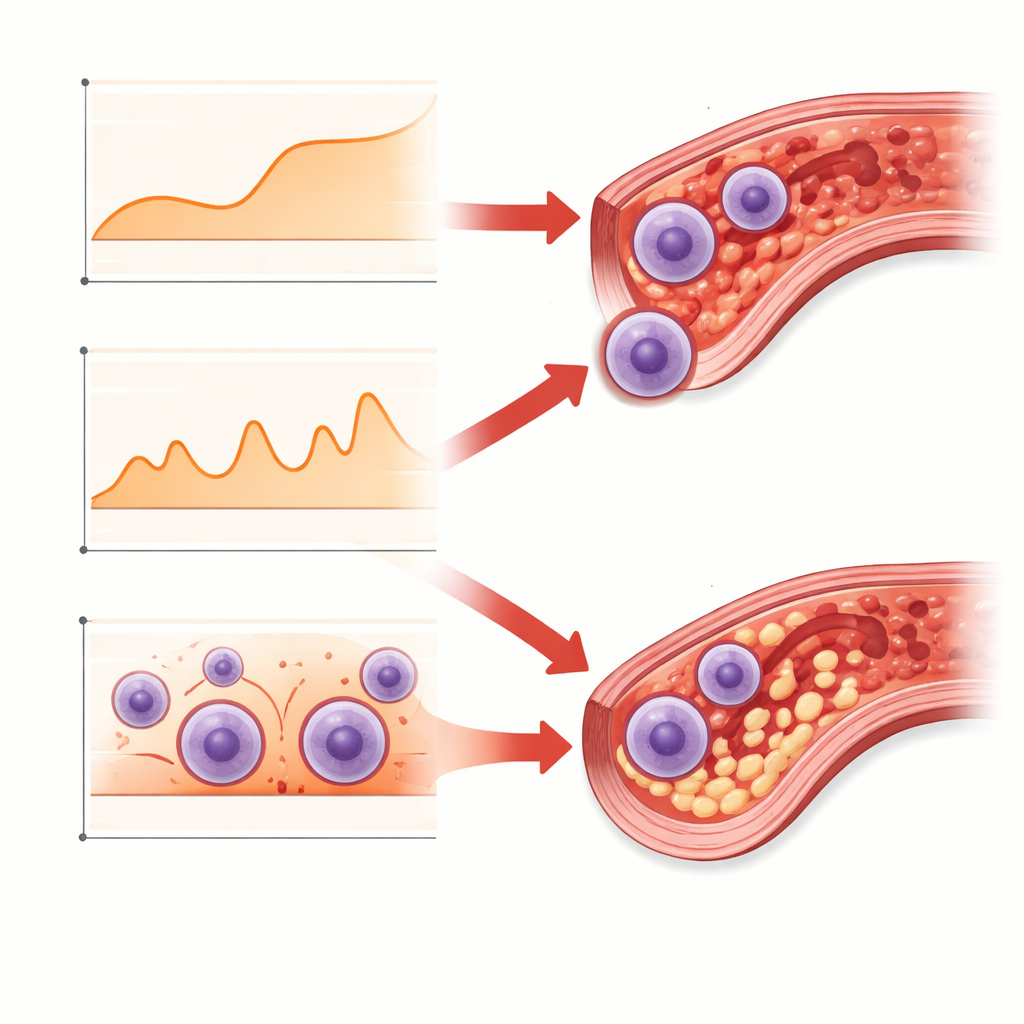
Monocytes circulate through our blood as part of the body’s first line of defense. In diabetes, however, these cells can become overactive and help ignite inflammation in artery walls, setting the stage for atherosclerosis and heart disease. To explore how changing sugar levels affect monocytes, the team used a well-established human cell line grown in dishes. They compared four situations: normal sugar, constantly high sugar, modest sugar swings between normal and high, and larger swings between normal and very high. This setup mimicked the post-meal spikes and in-between troughs that many people with poorly controlled diabetes experience.
Chemical Stress Signals Inside the Cells
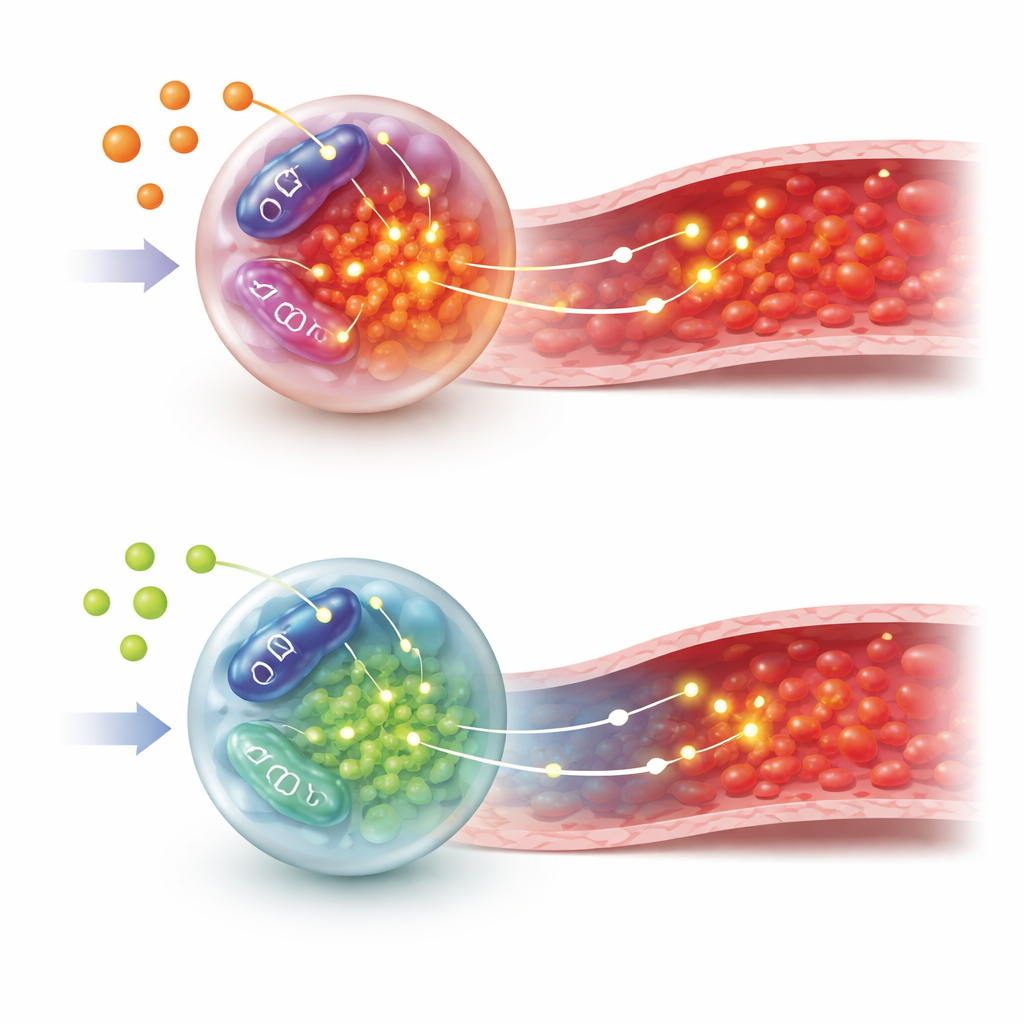
Inside cells, unstable molecules called reactive oxygen species act like chemical sparks. In small amounts they are useful, but in excess they damage proteins, fats, and DNA and trigger alarm signals. The researchers measured several markers linked to this "oxidative stress" in monocytes. They found that both constant high sugar and fluctuating sugar raised these markers compared with normal sugar, but the effect was strongest when sugar levels swung up and down. Cells exposed to big swings produced the most reactive molecules and showed the highest levels of malondialdehyde, a byproduct of oxidative damage, along with a strong rise in heme oxygenase-1, a stress-response enzyme that the cells turn on to defend themselves.
From Stress to Inflammation
The team then asked how this internal chemical stress changes the way monocytes behave. They focused on three signaling proteins—MCP-1, IL-6, and TNF-α—that help attract immune cells to artery walls and keep inflammation smoldering once they arrive. Both steady high sugar and fluctuating sugar made monocytes produce more of these inflammatory signals, at both the gene and protein level. Again, swings in sugar were worse than a constant high level, and larger swings were worse than smaller ones. Over the course of the experiment, oxidative stress and inflammatory signals rose together, suggesting that the chemical overload inside the cells was driving their shift toward a more damaging, vessel-attacking state.
A Protective Role for an Antioxidant
To test whether quenching oxidative stress could calm the cells, the researchers added α-lipoic acid, an antioxidant that works in both watery and fatty parts of the cell and is particularly active in mitochondria, the main source of reactive oxygen. With this treatment, oxidative damage markers fell across all high-sugar conditions. At the same time, production of MCP-1, IL-6, and TNF-α dropped back toward normal, even when sugar levels were still fluctuating. This pattern supports the idea that oxidative stress is not just a bystander but a key link between sugar swings and harmful immune activation.
What This Means for People with Diabetes
Put simply, this study suggests that roller-coaster blood sugar may batter immune cells and blood vessels more than a steady high level. In monocytes, big sugar swings sparked more internal chemical stress and stronger inflammatory signals than constant high sugar, and an antioxidant partly defused this reaction. While the work was done in a cell model rather than in patients, it reinforces a message that goes beyond average glucose values: smoothing out daily highs and lows may be crucial for protecting blood vessels and preserving immune function in diabetes, and treatments that curb oxidative stress could be an important part of that strategy.
Citation: Sun, S., Sun, Z., Huang, Q. et al. High glucose fluctuation levels modulate monocyte cytokine expression via oxidative stress mechanism. Sci Rep 16, 11714 (2026). https://doi.org/10.1038/s41598-026-46915-x
Keywords: glycemic variability, oxidative stress, monocytes, diabetic complications, alpha lipoic acid