Clear Sky Science · en
Prenatal heat stress and predicted postpartum cardiovascular disease risk: a longitudinal cohort study
Why This Matters for New Parents
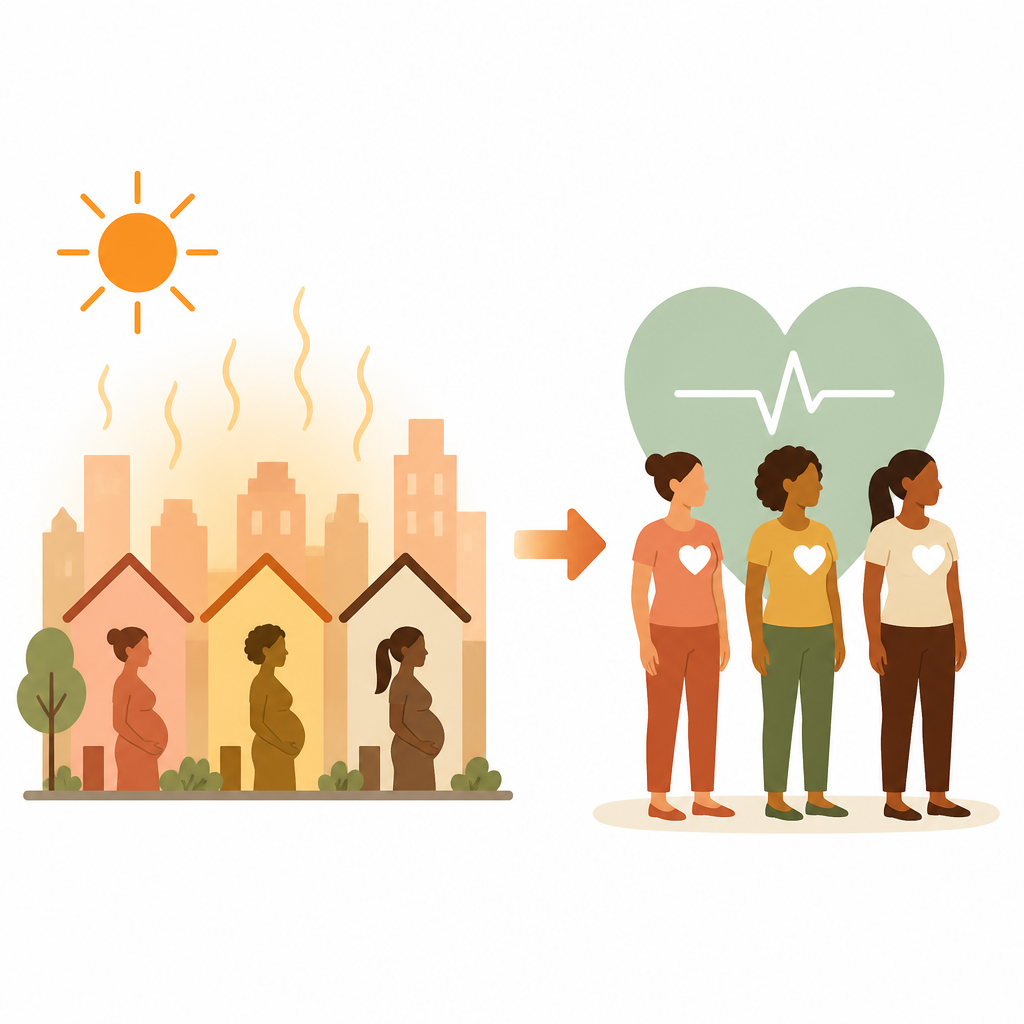
As heat waves become more common with climate change, many expectant parents worry about how hot weather might affect their own health as well as their baby’s. This study asked a simple but important question: does being exposed to higher outdoor heat during pregnancy raise a mother’s risk of heart and blood vessel problems years after giving birth?
Looking at Heat in Real Neighborhoods
Researchers followed nearly 200 pregnant individuals in Los Angeles, most of whom had low incomes and identified as Hispanic. Instead of just using air temperature, they estimated a more realistic measure of heat stress called wet bulb globe temperature, which blends temperature, humidity, sunlight, and wind at each woman’s home address. They tracked where participants lived before and during pregnancy to build a day by day picture of the outdoor heat they likely experienced around their homes.
Checking Early Clues of Heart Disease
After the pregnancies, the team checked in with these mothers once a year for up to six years. At each visit, they measured blood pressure, cholesterol, blood sugar, and body weight, and combined these into a single score known as the PDAY risk score. This score does not diagnose disease, but it provides an early signal of the chance of developing clogged arteries and other heart related problems later in life. By comparing these scores with the levels of heat the women experienced during pregnancy, the researchers looked for patterns that might reveal long term effects of prenatal heat exposure on maternal heart health.
Testing When and How Heat Might Matter
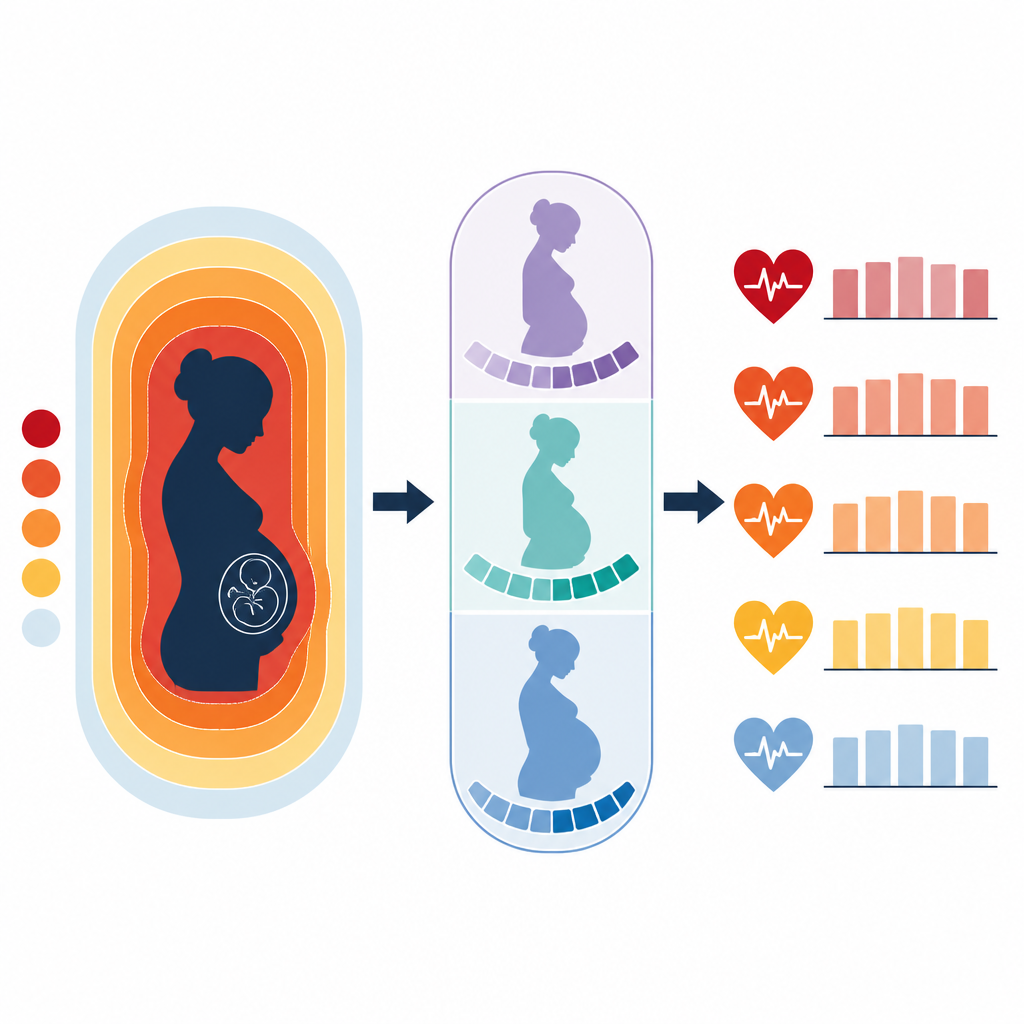
The scientists examined both the average heat over the entire pregnancy and heat during specific trimesters. They also used detailed statistical tools to explore week by week exposure across all 40 weeks of gestation, asking whether there might be a particularly sensitive window when heat could have lasting effects. In addition, they checked whether community factors such as hotter neighborhoods, higher climate vulnerability, and personal stress or depression might change the link between prenatal heat and later heart risk.
What the Data Actually Showed
Overall, the results did not provide clear evidence that hotter conditions during pregnancy led to worse heart risk scores in the six years after birth. For the whole pregnancy, there was a hint that risk scores tended to be higher at the very warmest exposure levels in this group, above about 19 degrees Celsius on the wet bulb globe scale, but there were few women in this range and the uncertainty was large. When the researchers zoomed in on individual trimesters or specific weeks of pregnancy, the statistical curves wobbled around zero and the margins of error overlapped no effect, suggesting that any true relationship, if it exists, is weak or hard to detect in this sample.
Limits and What Comes Next
The study has some important limits. The women lived in a single urban region with relatively mild and similar outdoor heat levels, which made it difficult to see how very hot conditions might affect long term health. Heat exposure was estimated from neighborhood climate models instead of personal sensors, and the number of participants was modest, especially for the highest temperatures. Still, the work shows it is possible to connect detailed residential heat estimates with long term heart risk tracking in new mothers.
Takeaway for Everyday Life
For now, this research suggests that, within the modest range of outdoor heat seen in these Los Angeles neighborhoods, prenatal heat exposure did not clearly raise mothers’ early signs of heart disease in the first six years after birth. That does not mean heat is harmless: we already know that very hot days can trigger short term pregnancy complications and heart problems. Rather, this study highlights how much more we need to learn about whether extreme heat during pregnancy has quiet, lasting effects on mothers’ hearts, especially as climate change pushes temperatures higher in many parts of the world.
Citation: Pardo, N., Yang, X., Hu, Y. et al. Prenatal heat stress and predicted postpartum cardiovascular disease risk: a longitudinal cohort study. Sci Rep 16, 15675 (2026). https://doi.org/10.1038/s41598-026-46829-8
Keywords: prenatal heat stress, maternal cardiovascular health, climate change and pregnancy, cardiometabolic risk, urban heat exposure