Clear Sky Science · en
Safety evaluation of a ketamine–dodecyl maltoside combination using angiogenesis and embryonic development models
Why this research matters
Cancer drugs need to hit tumors hard without harming healthy, growing tissues. This study looks at a new way to deliver ketamine, a common anesthetic that also shows cancer-fighting potential, together with a helper ingredient called dodecyl maltoside. Using developing chicken embryos as a window into early life, the researchers asked a simple but crucial question: can this drug mix attack cancer cells without disturbing normal blood vessel growth and embryo development?
Testing a drug idea in a growing embryo
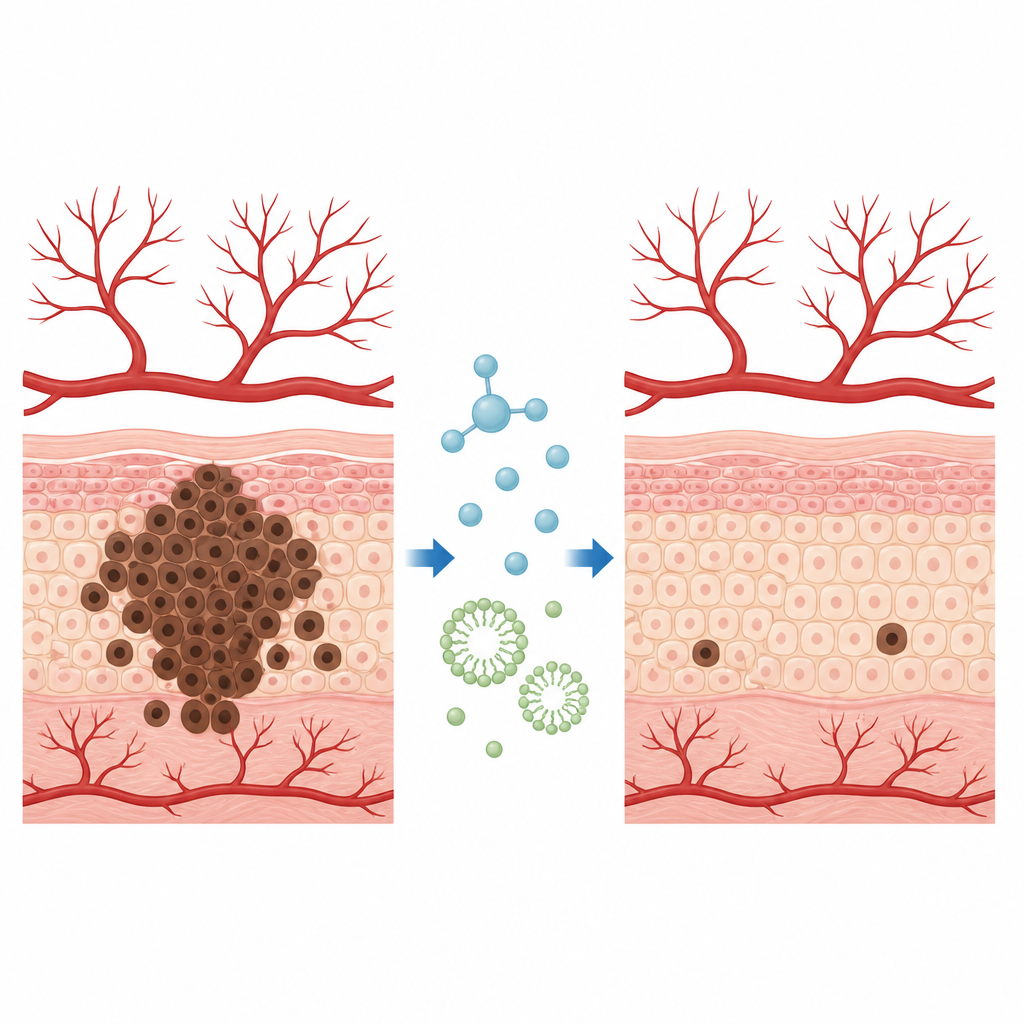
The team had previously found that ketamine becomes more toxic to melanoma cells when paired with dodecyl maltoside, which helps drugs cross biological barriers. Before such a mix could ever move toward patient use, its safety needed to be checked in living, developing tissue. Chicken eggs offer a practical model because their embryos grow quickly and form rich networks of blood vessels that are easy to observe. In this work, the authors focused on the chorioallantoic membrane, a thin, highly vascular sheet that lines the inside of the eggshell, and on the embryos themselves.
Watching tiny blood vessels for warning signs
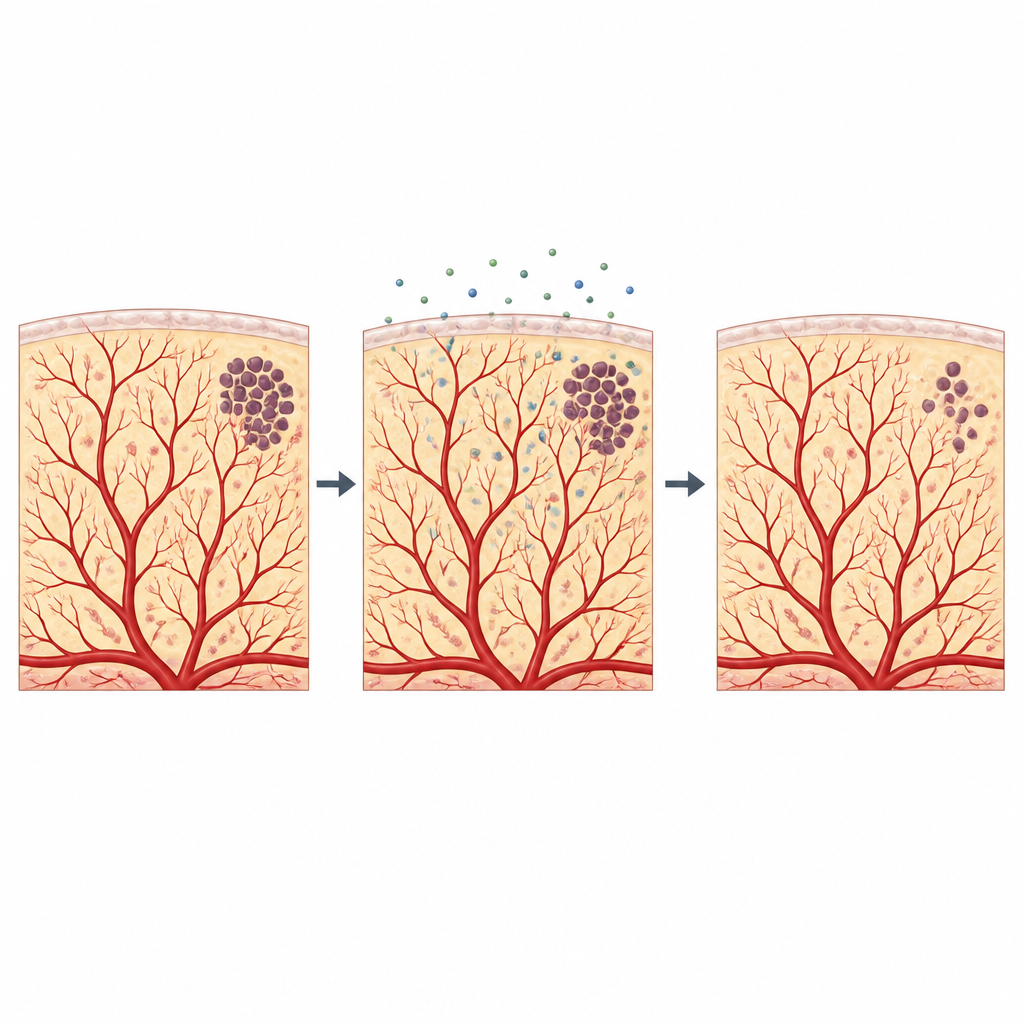
To see whether the drug combination disrupts normal blood vessel growth, the researchers placed small drops of ketamine, dodecyl maltoside, or both together onto the membrane surface of five-day-old embryos. After two days, they captured microscopic images and used software to measure how many vessels formed, how long they were, and how often they branched. Across all of these measures, the membranes treated with ketamine alone or with the ketamine plus helper mix looked the same as untreated controls. The fine capillary network stayed dense and well organized, suggesting that, at the tested doses, these treatments did not starve growing tissue of blood supply.
Checking embryo health from the outside in
The scientists then turned to younger, three-day-old embryos to examine overall development after five days of exposure. Embryos given ketamine alone or the ketamine plus helper mix survived at rates similar to untreated embryos and showed no obvious deformities. In contrast, embryos exposed only to the helper ingredient were more likely to die, hinting that this surfactant can be harmful on its own at the chosen concentration. The team dissected major organs from surviving embryos and measured the activity of genes linked to cell death and vessel formation. For the most part, these genetic signals were unchanged, reinforcing the visual impression that normal growth processes remained intact under ketamine or the combination treatment.
Do normal cells tolerate the treatment?
Because a safe cancer strategy should spare healthy cells, the researchers also studied primary fibroblasts, a type of normal support cell taken from chicken embryos. They exposed these cells in dishes to a range of ketamine concentrations, to dodecyl maltoside, and to the combination. After two days, they measured cell metabolism and inspected cell shape. None of the treatments, including the combined one, reduced cell viability or altered the typical spindle-like appearance of the fibroblasts. These findings match earlier work in which the same drug mix damaged melanoma cells under similar conditions, hinting at useful selectivity between cancerous and normal cells.
What this means for future cancer treatments
For non-specialists, the take-home message is that pairing ketamine with a delivery helper appears compatible with early embryo growth and normal blood vessel formation in this bird model, while remaining gentle on healthy cells in the lab. Although the helper alone showed some harm to embryos, that effect was not seen when it was combined with ketamine, suggesting a more complex interaction that still needs to be unraveled. These results do not mean the treatment is ready for human use, but they offer early reassurance that this drug mix can be explored further as a targeted cancer approach, provided that its safety is tested more deeply and across additional animal systems.
Citation: Idoudi, S., Hassan, A.F., Kheraldine, H. et al. Safety evaluation of a ketamine–dodecyl maltoside combination using angiogenesis and embryonic development models. Sci Rep 16, 15892 (2026). https://doi.org/10.1038/s41598-026-46828-9
Keywords: ketamine, dodecyl maltoside, angiogenesis, embryonic development, melanoma therapy