Clear Sky Science · en
Intelligent MPPT-based energy management for hybrid renewable energy grids using trans Z-source quadratic boost converter
Why cleaner power needs smarter hardware
Solar panels on rooftops and wind turbines on hills are now a common sight, but quietly connecting all that variable energy to the grid without flicker, waste, or damage is a hard engineering puzzle. This paper explores a new way to combine sun, wind, batteries, and power electronics so that homes and cities can draw steady, high quality electricity from sources that naturally rise and fall with the weather. 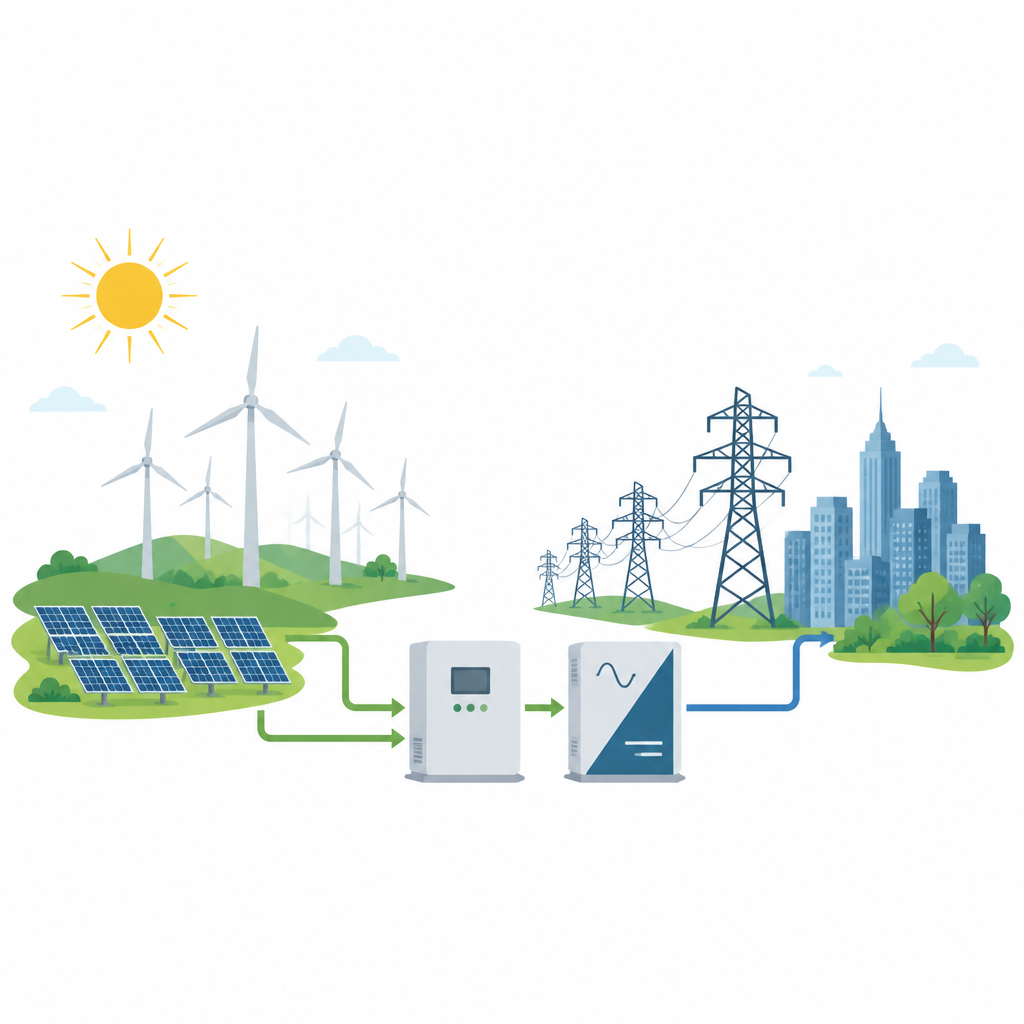
Bringing sun and wind together
The study looks at a hybrid renewable energy system that blends a solar array, a wind turbine generator, a battery pack, and the public grid into one coordinated setup. Solar panels and a wind machine share a common direct current bus, which then feeds a standard three phase inverter to supply alternating current to the grid. A battery and its own converter step in to store extra energy when nature provides more than needed, and to release it when clouds or calm air reduce production. Simple control units, based on well known proportional–integral rules, keep voltages at the right levels and ensure that the inverter’s output stays in step with the grid waveform.
A new way to boost solar power
At the heart of the proposal is a special circuit called a trans Z source quadratic boost converter. In plain terms, this is an advanced step up device that takes the relatively low voltage from solar panels and raises it to the much higher level required by the grid side electronics, while keeping energy losses and electrical stress on its parts low. By cleverly arranging coils and capacitors, the converter spreads energy storage across several elements, which smooths the current, reduces ripple, and avoids the extreme switching conditions that plague many traditional boost circuits. Tests show that the device can raise the voltage by a factor of eight while still using a moderate switching pattern and keeping both diode and switch stresses below those of rival designs.
Teaching the system to chase the best operating point
Solar panels only give their full potential at a particular combination of voltage and current, and that sweet spot shifts with every change in sunlight and temperature. To keep the panels operating near this point, the authors design an intelligent tracker called a puffer fish optimized fuzzy neural network. This control method blends fuzzy rules, which can handle vague and changing conditions, with a simple neural network whose settings are tuned by a nature inspired search process modeled on the defensive behavior of puffer fish. Instead of relying on a fixed table or slow trial and error, the tracker constantly adjusts itself so that the solar array stays close to its maximum power point, even when clouds pass quickly or the day heats up. 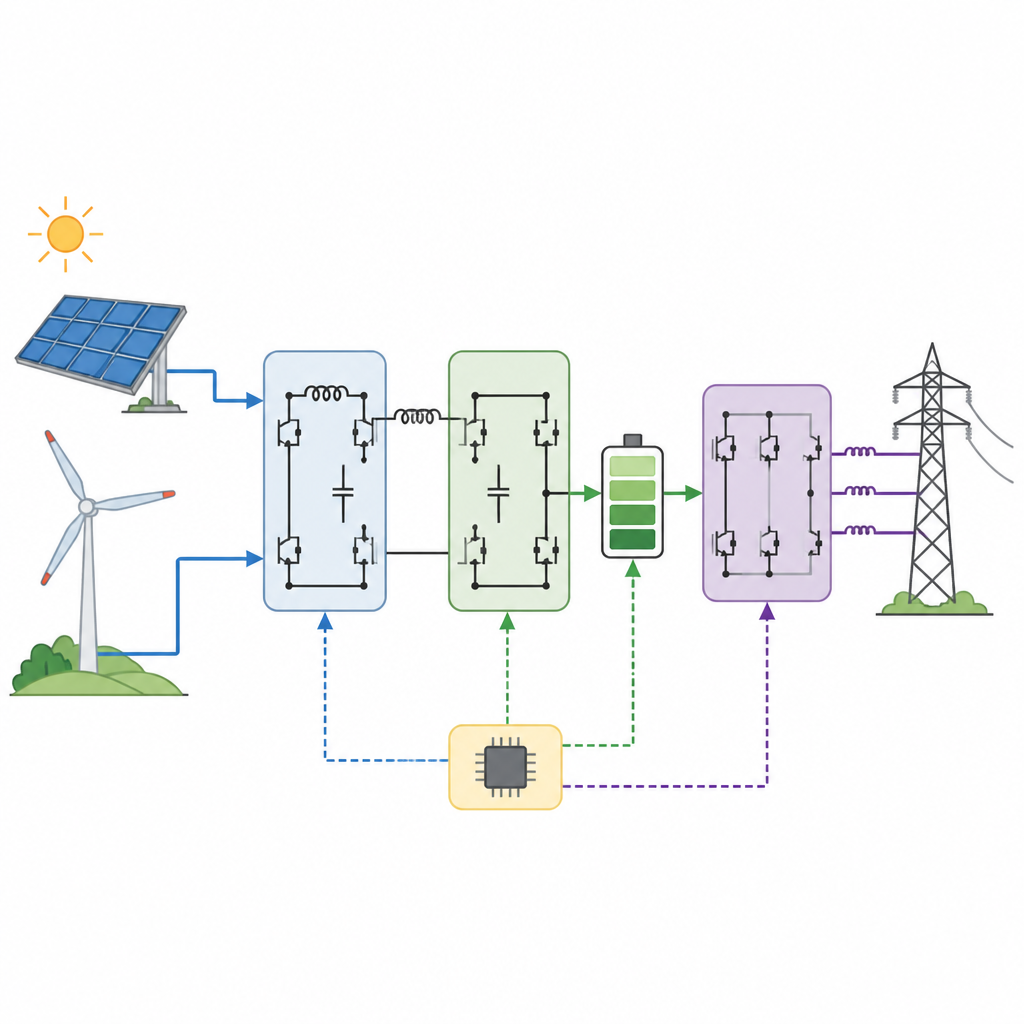
How the full system behaves in real and simulated tests
The researchers test their design in detailed computer simulations and on a hardware prototype. In simulations, they explore four situations: steady sunlight and temperature, both changing together, only sunlight changing, and only temperature changing. Across all cases, the converter holds its output near 600 volts, keeping the grid side electronics calm while conditions on the solar side jump in steps. The intelligent tracker reaches high efficiency, with more than 99% of the available solar power captured and very small power ripples once settled. When connected to the grid, the inverter delivers smooth three phase currents with low harmonic content, meaning the waveforms are close to ideal sine waves and cause little interference to other equipment.
What this means for future renewable grids
For a non specialist, the main message is that the paper offers a smarter electrical backbone for mixed solar and wind systems. By pairing a high gain, gentle on components booster with a self tuning control brain, the setup can squeeze more useful energy from panels and turbines while feeding the grid with cleaner, more stable power. The hardware tests suggest that such systems can be built with practical parts and standard control chips today. Future work will need to examine how this approach behaves under harsher grid conditions, but the current results point toward hybrid renewables that act less like fickle weather devices and more like dependable power plants.
Citation: Manickam, S., Padma, S. Intelligent MPPT-based energy management for hybrid renewable energy grids using trans Z-source quadratic boost converter. Sci Rep 16, 15533 (2026). https://doi.org/10.1038/s41598-026-46815-0
Keywords: hybrid renewable energy, solar and wind power, maximum power point tracking, power converters, grid integration