Clear Sky Science · en
Clinical profile, treatment patterns, and early outcomes of colorectal cancer at Kassala Police Hospital, Eastern Sudan: a 10-year retrospective cohort study
Why this study matters to everyday people
Colorectal cancer is often thought of as a problem of wealthy countries, but it is increasingly affecting people in low income regions, often at younger ages and with fewer treatment options. This study from Eastern Sudan tracks ten years of colorectal cancer care at a single referral hospital, revealing who gets sick, how they are treated, and what happens to them afterward. The findings help explain why patients in resource limited settings face higher risks and point to practical changes that could save lives.
Cancer showing up late and in crisis
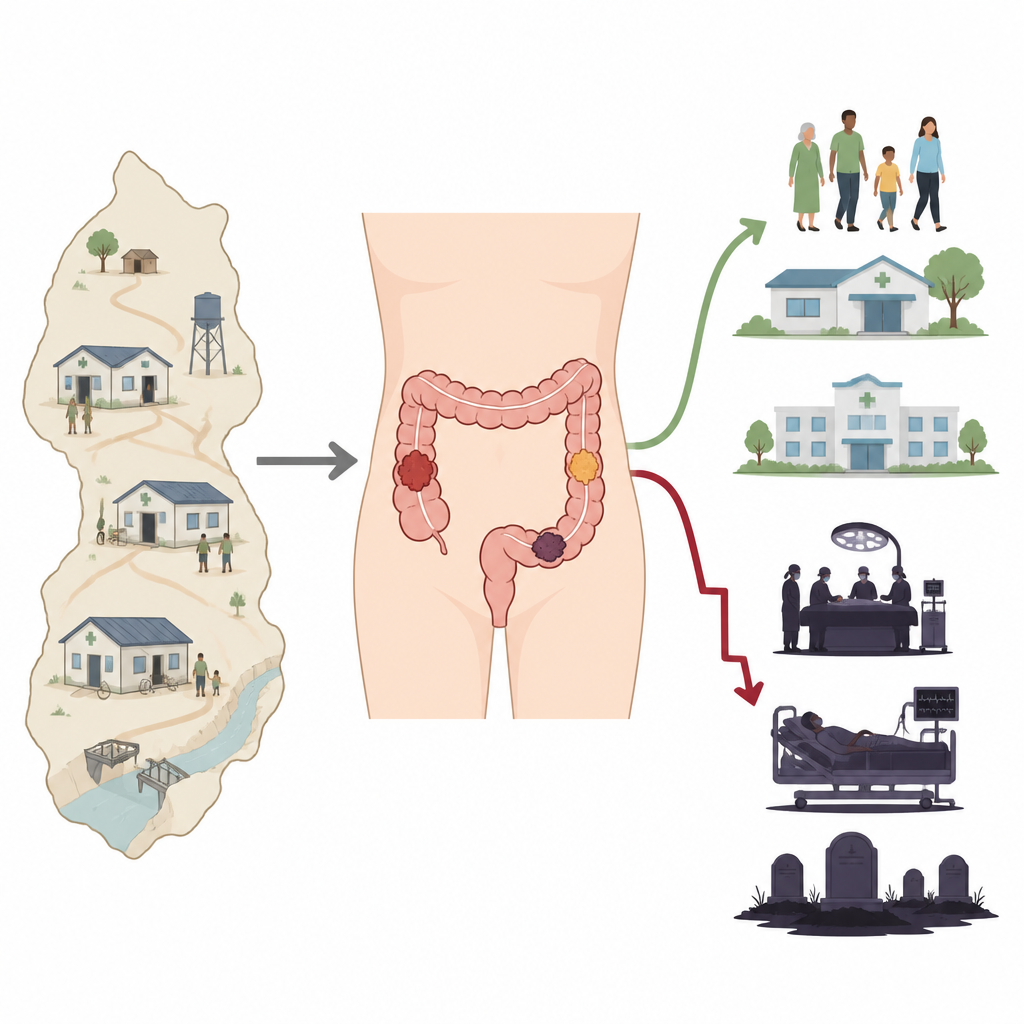
The researchers reviewed records of 604 adults who had surgery for colorectal cancer at Kassala Police Hospital between 2013 and 2023. The average patient was only in their early fifties, and nearly one third were younger than 50, highlighting the growing burden of cancer in working age adults. Many people first came to care with dramatic symptoms such as bowel blockage or even a hole in the intestine. About one in four needed emergency surgery, often after long delays in diagnosis linked to limited access to colonoscopy, specialist care, and organized screening.
How care was delivered in a low resource hospital
Most patients had tumors in the left side of the colon or in the rectum, the last part of the bowel. Surgeons usually removed the diseased segment and rejoined the bowel, but more than a quarter of patients required a stoma, an opening on the abdomen that diverts waste into a bag. Stomas were especially common in emergency cases and in rectal cancers, where surgery is technically harder and patients are often sicker. Nearly all patients who were candidates received chemotherapy after surgery, a notable strength compared with many hospitals in similar settings. In contrast, radiation and chemotherapy before surgery, which are standard for many rectal cancers in high income countries, were used in fewer than one in ten rectal cancer patients because radiotherapy services were scarce.
Early complications and hospital outcomes
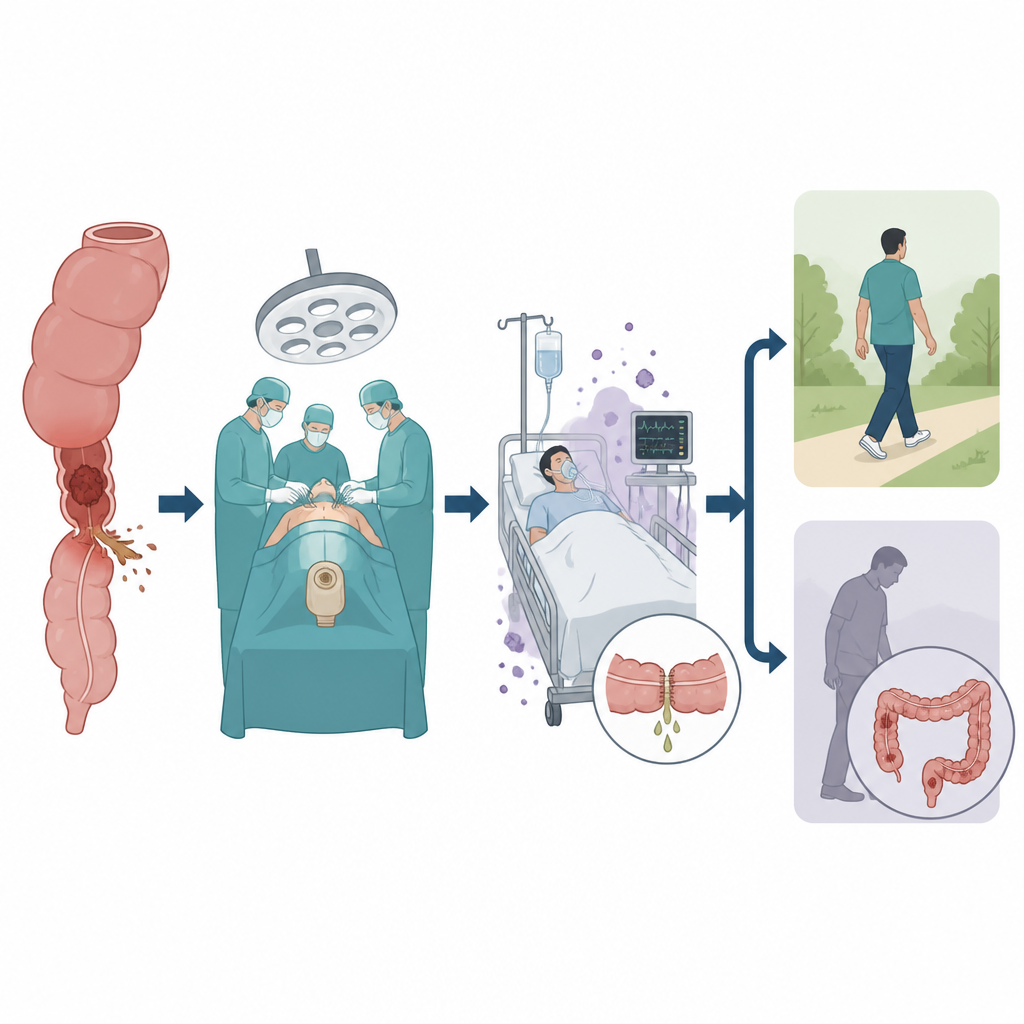
Even with careful surgery, complications were frequent. About one in nine patients developed significant problems within 30 days, and leaks at the bowel join occurred in nearly one in twelve. These leaks were strongly linked to worse outcomes. Roughly one in eight patients died in the hospital or within a month of surgery, with deaths concentrated among older people, those with advanced tumors, and especially those who arrived in crisis. Emergency surgery, perforated tumors, and serious postoperative problems greatly increased the need for intensive care and the risk of death. Right sided tumors tended to have fewer leaks, likely because operations in that region place less stress on the bowel join.
What happened in the years after surgery
Patients were followed for up to five years, with a typical follow up of three years. Overall survival and time without the cancer coming back were reasonably good for people with earlier stage disease and planned operations. However, outcomes were much poorer for those with advanced tumors or emergency surgery. About one in eight patients experienced a return of their cancer, and two thirds of these recurrences occurred in stage III disease. Rectal cancers had the highest recurrence rate, reflecting both the biological difficulty of treating tumors in the pelvis and the limited use of combined surgery, radiation, and chemotherapy. Most deaths and recurrences happened within the first two years after surgery, making this period a particularly vulnerable window.
What this means for patients and health systems
To a layperson, the message is clear: in Eastern Sudan, colorectal cancer often arrives late, in crisis, and at an age when people are still supporting families. When the first contact with the health system is an emergency operation for a blocked or perforated bowel, the chances of complications, cancer return, and death rise sharply. The study shows that when patients can be treated earlier and receive consistent chemotherapy, survival improves despite limited resources. The authors conclude that the most effective steps are not high tech; they include raising public awareness, improving access to basic diagnostic tools, building smoother pathways for urgent but planned surgery, expanding radiotherapy for rectal cancer, and closely monitoring patients in the first two years after their operation.
Citation: Elnaim, A.L.K., Ali, S.S.H.M., Ahmed, R.S.M. et al. Clinical profile, treatment patterns, and early outcomes of colorectal cancer at Kassala Police Hospital, Eastern Sudan: a 10-year retrospective cohort study. Sci Rep 16, 16176 (2026). https://doi.org/10.1038/s41598-026-46785-3
Keywords: colorectal cancer, emergency surgery, Sudan, rectal cancer, cancer outcomes