Clear Sky Science · en
Impact of dietary protein quantity on the non-dysbiotic human microbiome: a controlled feeding study
Why your gut bacteria care about your dinner plate
Many people tweak their diet to feel healthier, but it is not always clear how specific changes, like eating more or less protein, affect the trillions of microbes living in the gut. This study asked a simple question with big everyday relevance: if healthy adults sharply increase or decrease the amount of protein they eat for a short time, does it noticeably reshape their gut microbiome or its chemical products?
Two carefully planned menus
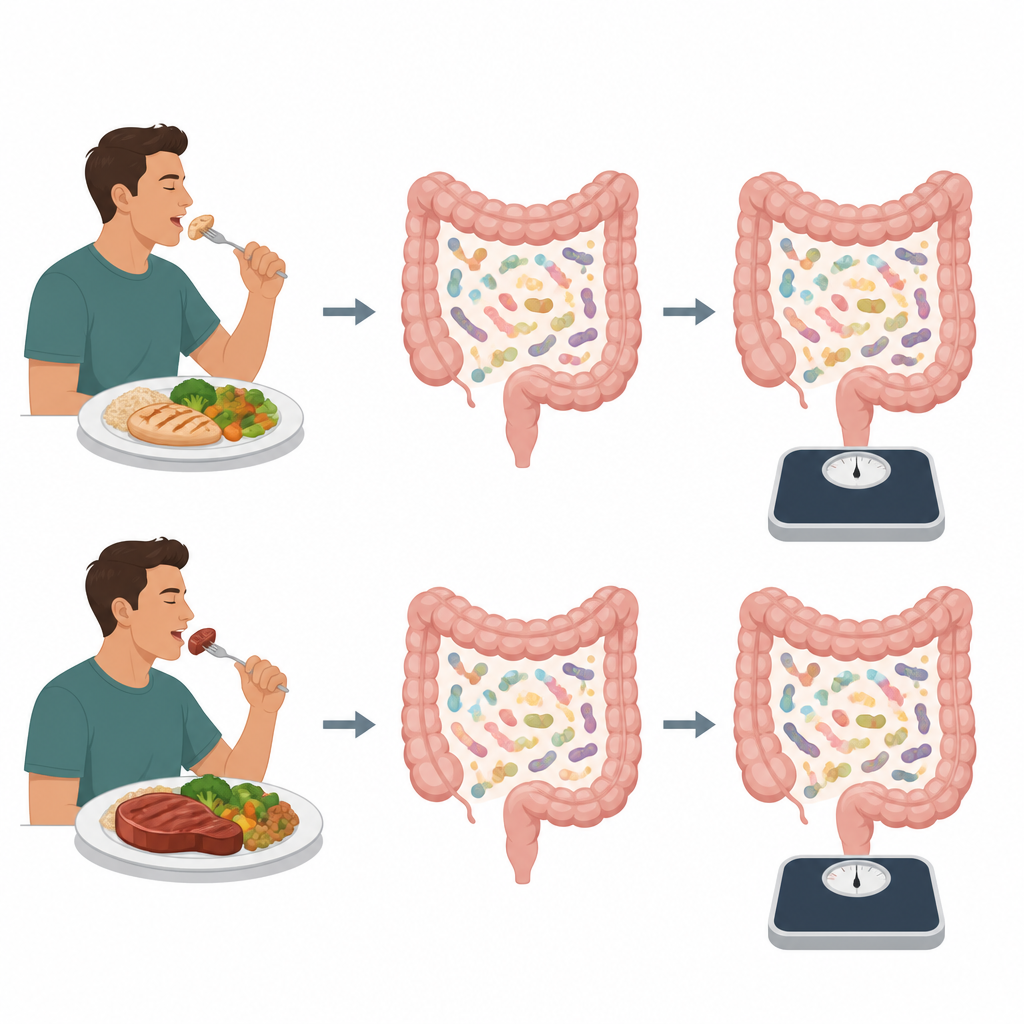
To probe this question, researchers enrolled ten healthy young adults and provided all of their food for the study. Each person followed two special 10 day diets in random order, separated by a month of eating their usual meals. Both study diets began with three days of the same moderate protein menu, followed by seven days of either a lower protein diet or a higher protein diet. The lower protein plan supplied about one tenth of total calories from protein, while the higher protein plan supplied about one quarter, with total calories and fiber held steady so that only protein levels differed.
Watching weight, comfort, and bathroom habits
Throughout the trial, the team tracked body weight, reported symptoms, and satisfaction with the meals. On average, body mass index dropped slightly but significantly after the higher protein week, a pattern in line with earlier work linking protein rich diets to modest weight loss. Most participants tolerated both diets well, though one person experienced constipation on the high protein plan, and several reported mild digestive changes or a bit more fatigue on the low protein plan. Overall, people rated both menus as reasonably satisfying.
A surprisingly steady gut community
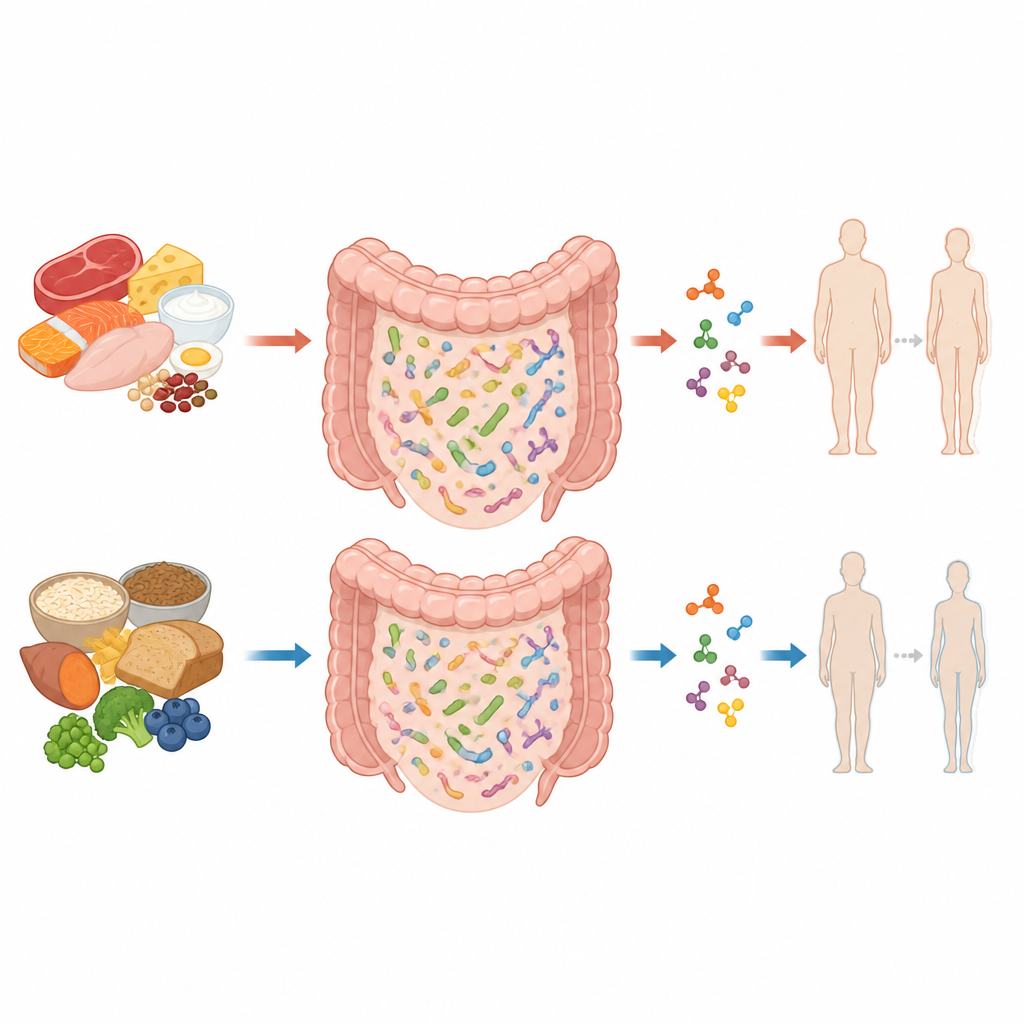
The central focus was the gut microbiome, assessed through genetic sequencing of bacteria in stool samples collected before and during each diet. The researchers also measured short chain fatty acids, small molecules produced when gut microbes break down food and often linked to gut and metabolic health. When they compared results, they found that each person’s microbiome looked much more like their own samples taken at other times than like anyone else’s, regardless of diet. Individual identity explained the vast majority of the differences in microbial makeup, while protein level accounted for only a tiny fraction. Measures of diversity, imbalance scores, and short chain fatty acid levels all remained essentially unchanged between the low and high protein phases.
Why the gut stayed resilient
The lack of major shifts suggests that, in healthy adults with stable gut communities, short term swings in protein intake within a typical range do not easily disturb the microbiome. Several features of the study may help explain this resilience. Fiber intake, a key fuel for many beneficial microbes, was deliberately kept constant, likely providing a steady food supply for the community. The intervention lasted only a week for each protein level, which may be too brief for slower moving changes to emerge. In addition, the protein sources reflected a common Western style mix of animal and plant foods, rather than extreme or highly specialized diets that might drive larger microbial changes.
What this means for everyday eating
For generally healthy people, these findings indicate that short lived changes in how much protein they eat are unlikely to dramatically reshape their gut microbiome, as long as overall eating patterns, especially fiber intake, stay similar. The microbiome appears to be a robust partner that does not easily budge when one nutrient shifts over a week or so, even though body weight can respond. Future studies will need to test longer dietary changes, different protein sources, and people with gut related illnesses to see when and how protein intake can meaningfully influence the gut ecosystem.
Citation: Hunter, A.K., Adair, K., Horgan, A. et al. Impact of dietary protein quantity on the non-dysbiotic human microbiome: a controlled feeding study. Sci Rep 16, 16195 (2026). https://doi.org/10.1038/s41598-026-46663-y
Keywords: gut microbiome, dietary protein, microbiome diversity, short chain fatty acids, controlled feeding study