Clear Sky Science · en
Molecular characterization of extended-spectrum β-lactamase (ESBL) and virulent genes in multidrug-resistant Escherichia coli isolated from pharmaceutical and environmental Wastewaters in Dhaka, Bangladesh
Why dirty water near drug factories matters
Most people think of antibiotic resistance as something that happens in hospitals, but this study shows that part of the problem can begin in the drains of medicine factories. The researchers looked at wastewater from six pharmaceutical sites around Dhaka, Bangladesh, and the nearby ponds and canals where this water ends up. They discovered that these waters carry tough strains of Escherichia coli, a common gut bacterium, that are not only hard to kill with many antibiotics but in some cases also equipped with genes that can cause severe diarrhea.
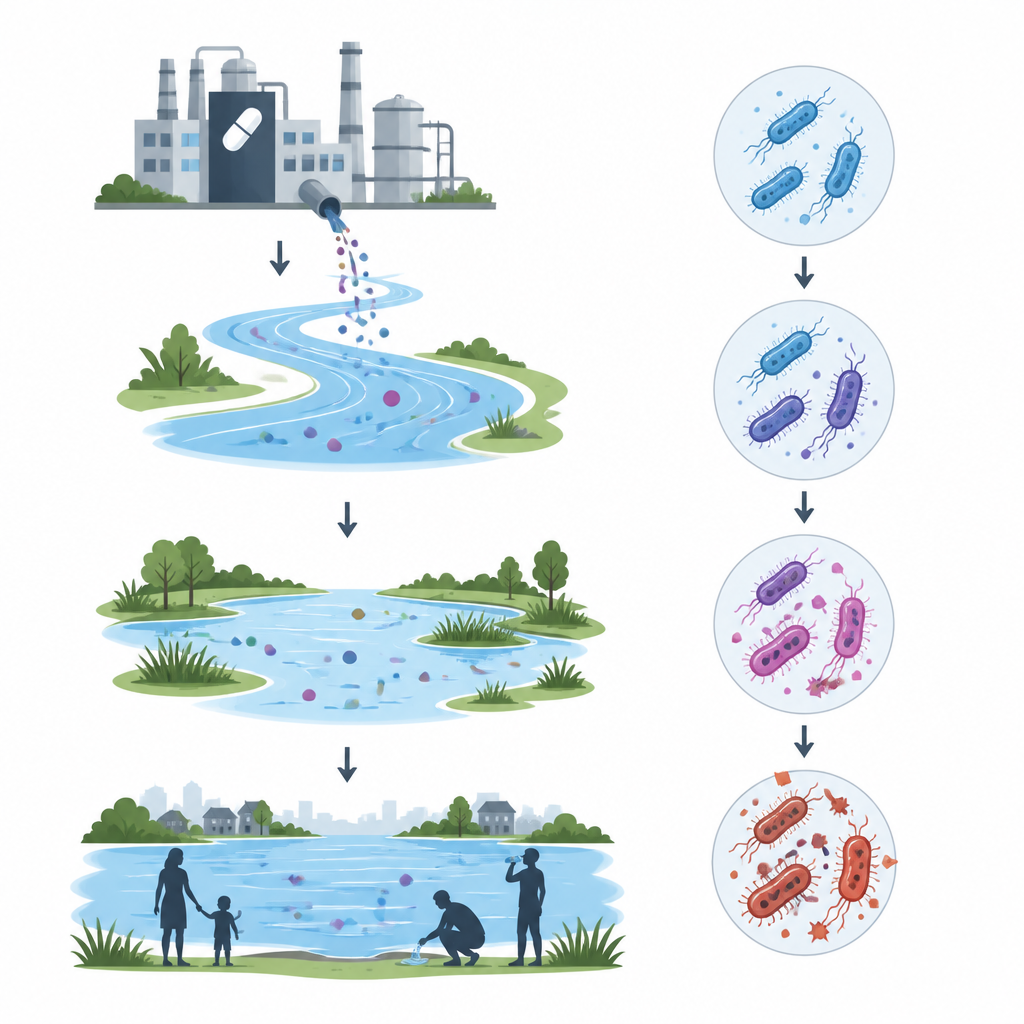
Where the water and germs were collected
The team collected water samples from effluent treatment plants, the facilities that are supposed to clean pharmaceutical waste before it is released, as well as from surrounding ponds, lagoons, drains, and household water bodies. From these samples they isolated 90 strains of E. coli, confirming their identity with genetic testing. This allowed a direct comparison between bacteria found right at the source of factory discharge and those living in the broader environment where people may bathe, fish, or draw water for daily use.
Testing which medicines still work
Each E. coli strain was tested against 11 commonly used antibiotics from eight different drug families. Factory effluent strains were clearly tougher: more than 85 percent were resistant to the widely used drug ampicillin, and about half resisted eight different antibiotics. In contrast, bacteria from the surrounding ponds and drains were less resistant overall, though many still qualified as multidrug resistant. Encouragingly, two powerful “last resort” drugs, colistin and meropenem, remained effective against nearly all of the bacteria in both kinds of water.
Hidden resistance and disease genes
To see what made these microbes so hardy, the scientists searched for specific resistance genes. In factory effluent, nearly eight out of ten E. coli strains carried a gene called blaNDM, which can block the action of many important antibiotics in the beta lactam family. In nearby environmental waters, a different resistance gene, blaTEM, was more common. The team also looked for genes that turn ordinary E. coli into diarrhea causing strains. Surprisingly, none of the effluent bacteria carried these disease genes, but many environmental strains did. Genes linked to two major diarrheal types, known as ETEC and EPEC, were found in a large share of pond and canal isolates, meaning these waters can harbor bacteria that are both drug resistant and able to cause illness.
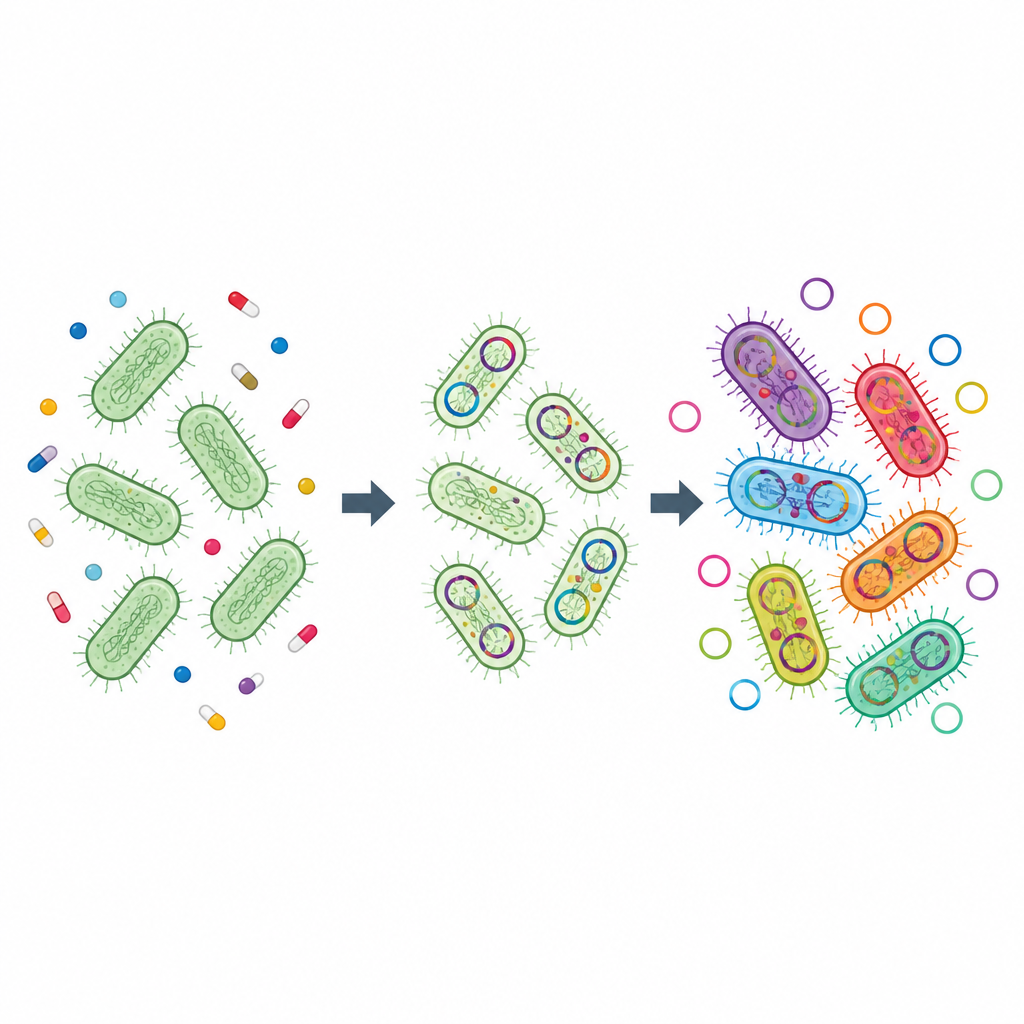
How the bacteria are spreading and changing
By using DNA fingerprinting methods, the researchers showed that E. coli strains tended to cluster by location and resistance pattern. Bacteria from the same site often shared similar resistance genes, suggesting that local water conditions shape which traits thrive. The team also found that many strains carried plasmids, small circles of DNA that can hop between bacteria and spread resistance genes. The diverse mix of plasmids and gene patterns indicated that the problem is not just one bad strain taking over, but many different strains sharing resistance tools in the water.
What this means for public health
In simple terms, the study shows that wastewater from medicine factories in Dhaka acts as a breeding ground for E. coli that can shrug off multiple antibiotics. As this water flows into nearby ponds and drains, some of these hardy bacteria pick up extra genes that allow them to cause diarrhea, raising the risk that people who use these waters may be exposed. While a few strong antibiotics still work, relying on them alone is risky. The findings point to the need for stricter control of pharmaceutical wastewater, better monitoring of resistance in the environment, and coordinated “One Health” efforts that treat human, animal, and environmental health as tightly linked parts of the same problem.
Citation: Fuad, M., Mahmud, Z., Mishu, I.D. et al. Molecular characterization of extended-spectrum β-lactamase (ESBL) and virulent genes in multidrug-resistant Escherichia coli isolated from pharmaceutical and environmental Wastewaters in Dhaka, Bangladesh. Sci Rep 16, 15633 (2026). https://doi.org/10.1038/s41598-026-46554-2
Keywords: antimicrobial resistance, pharmaceutical wastewater, multidrug resistant E. coli, Bangladesh water quality, ESBL resistance genes