Clear Sky Science · en
Synergistic role of CSPBP and SGS1 in sporozoite entry into Aedes aegypti salivary glands
Why stopping malaria in mosquitoes matters
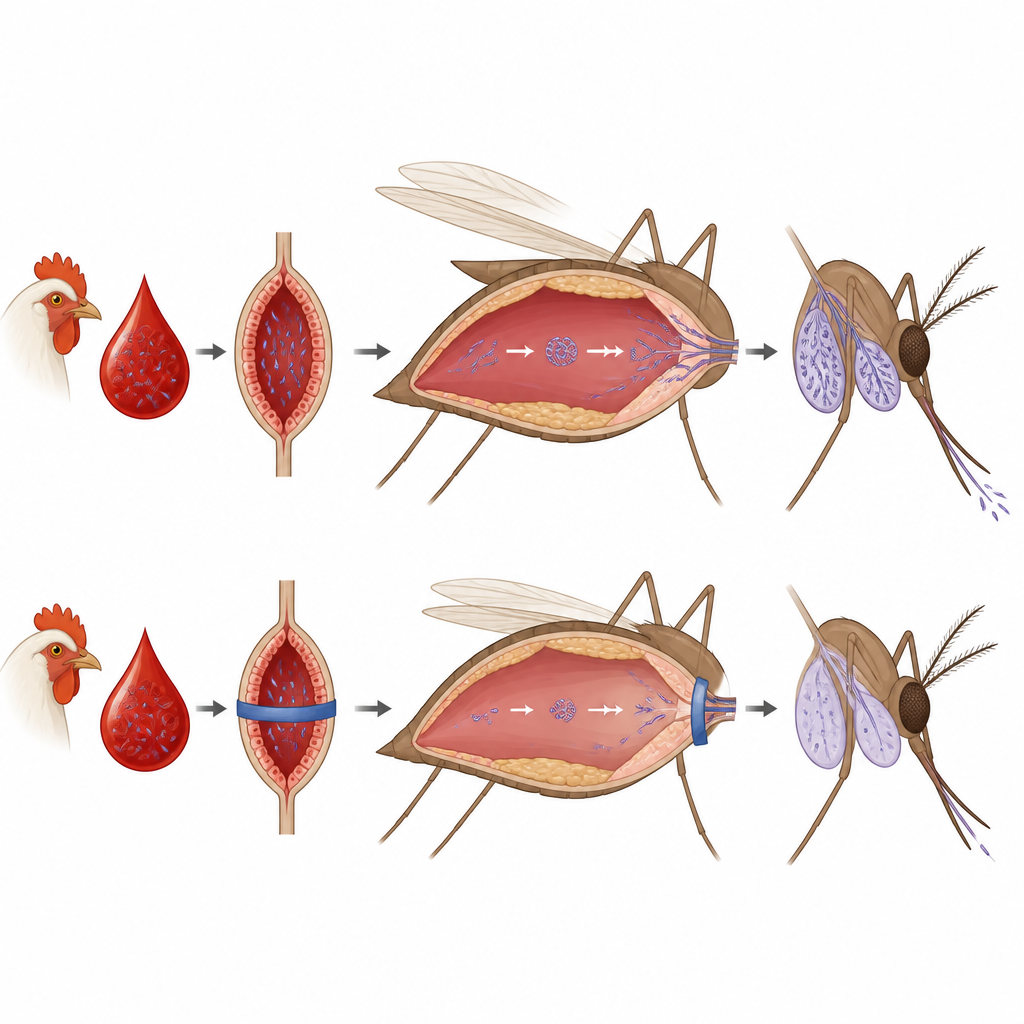
Most efforts to fight malaria focus on treating people or killing mosquitoes, but there is another option: stopping the parasite inside the mosquito before it can be passed on. This study looks at how malaria parasites move into the salivary glands of Aedes aegypti mosquitoes, a key step needed for transmission during a bite, and tests whether blocking two specific mosquito proteins can choke off this route.
The parasite’s hidden journey inside the insect
After a mosquito takes an infected blood meal, malaria parasites go through several stages inside its body. They first develop in the midgut, then form oocysts on the gut wall, and finally release thousands of tiny, mobile forms called sporozoites into the mosquito’s body fluid. For the disease to spread, these sporozoites must invade the salivary glands, where they wait to be injected into the next host. This last step acts as a bottleneck: only a fraction of parasites make it through, so even small changes in how they invade the glands can have a big impact on transmission.
Two mosquito proteins that help parasites get in
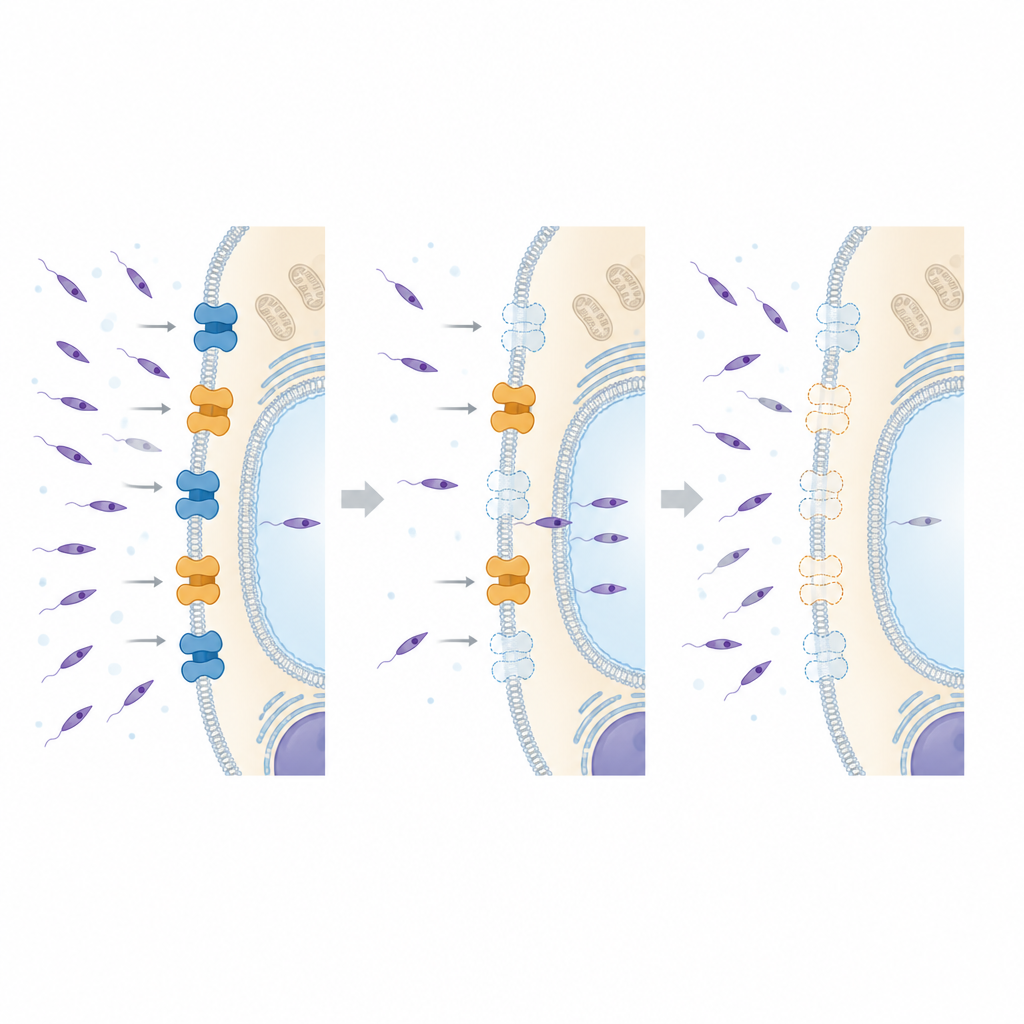
Previous work had already shown that a mosquito protein called SGS1 in Aedes aegypti helps malaria parasites colonize both the midgut and the salivary glands. Here, the authors investigated another protein, called AaCSPBP, that appears to be the Aedes equivalent of a known parasite-binding protein from a different mosquito species. Using computer-based comparisons of protein sequences and 3D structures, they showed that AaCSPBP closely matches its counterpart in Anopheles mosquitoes, especially in a region linked to the control of RNA messages inside cells. This suggested that AaCSPBP might either directly interact with the parasite surface or influence other factors that make invasion easier.
Turning off genes to test their role
To find out what AaCSPBP does, the researchers used RNA interference, a method that temporarily reduces the activity of a chosen gene. They infected Aedes aegypti mosquitoes with an avian malaria parasite, Plasmodium gallinaceum, a well-established stand-in for human malaria in the lab. At a precise time point, they injected double-stranded RNA to silence AaCSPBP and then counted how many sporozoites ended up in the salivary glands and in the mosquito’s body fluid. They also tested what happened when they silenced AaCSPBP and SGS1 together, carefully timing two injections so that both proteins would be reduced when parasites tried to invade the glands.
Less protein, fewer parasites in the glands
When AaCSPBP alone was silenced, the number of parasites inside the salivary glands dropped by about 62 percent on average. At the same time, more parasites were found floating in the body fluid, suggesting that they were getting stuck before entering the glands rather than dying off. This pattern supports the idea that AaCSPBP helps the parasites cross the gland barrier. When both AaCSPBP and SGS1 were silenced together, the effect was far stronger: salivary gland parasite numbers fell by about 94 percent compared with control mosquitoes, and this drop was greater than expected if the two proteins acted independently.
A team effort that points to new control strategies
The combined results indicate that AaCSPBP and SGS1 act cooperatively to help malaria parasites invade mosquito salivary glands. By showing that blocking both proteins has a stronger-than-additive effect, the study suggests that targeting multiple mosquito factors at once could be a powerful way to reduce parasite transmission without necessarily harming the mosquito itself. In the long run, genes that weaken or disrupt these proteins could be spread through wild mosquito populations using genetic tools, adding a new line of defense in the broader effort to control malaria.
Citation: Morvay, A., Araújo, H.R.C., Capurro, M.L. et al. Synergistic role of CSPBP and SGS1 in sporozoite entry into Aedes aegypti salivary glands. Sci Rep 16, 15972 (2026). https://doi.org/10.1038/s41598-026-46444-7
Keywords: malaria transmission, mosquito salivary glands, Aedes aegypti, sporozoite invasion, genetic vector control