Clear Sky Science · en
Assessing sustainable development and environmental pollution dynamics in Somalia
Why Somalia’s Cities and Energy Choices Matter
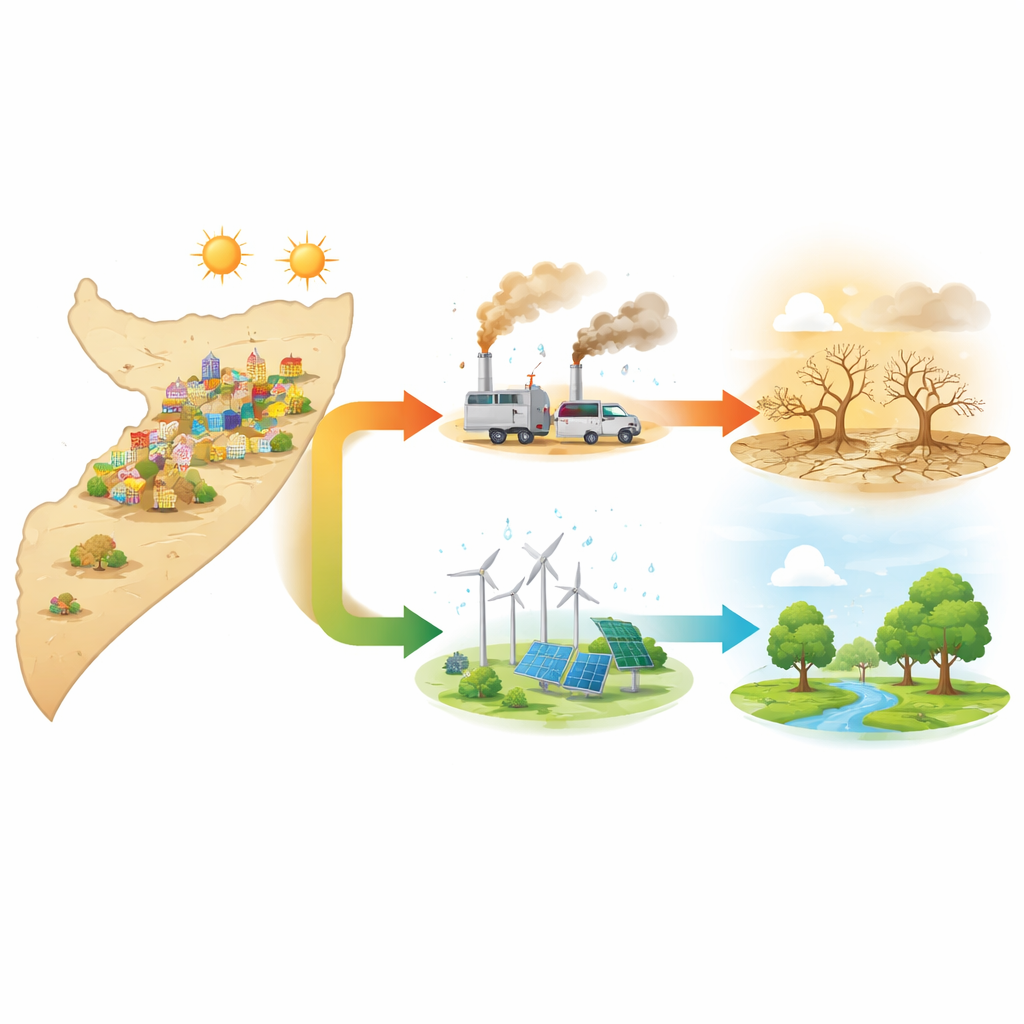
Somalia is changing fast. Its cities are growing, its economy is slowly rebuilding after years of conflict, and more people need electricity, transport, and housing. All of this raises a critical question: can the country grow without locking itself into a future of heavy pollution and climate risk? This study takes a close look at how urban growth, links to the global economy, renewable energy, and economic expansion together shape Somalia’s carbon dioxide emissions over the past three decades.
Looking at Three Decades of Change
The researchers examined data from 1990 to 2020 to understand what drives pollution in Somalia. They focused on four main forces: the share of the population living in cities (urbanization), how deeply Somalia is connected to global trade and flows of people and capital (globalization), how much of its energy comes from renewable sources like solar power, and how rapidly the economy is growing. Carbon dioxide emissions per person were used as the main indicator of environmental stress. To tease out cause and effect in a small and noisy dataset, the team used several complementary statistical approaches designed for time‑series data, checking that their results were stable and consistent over time.
When Growing Cities Add to Dirty Air
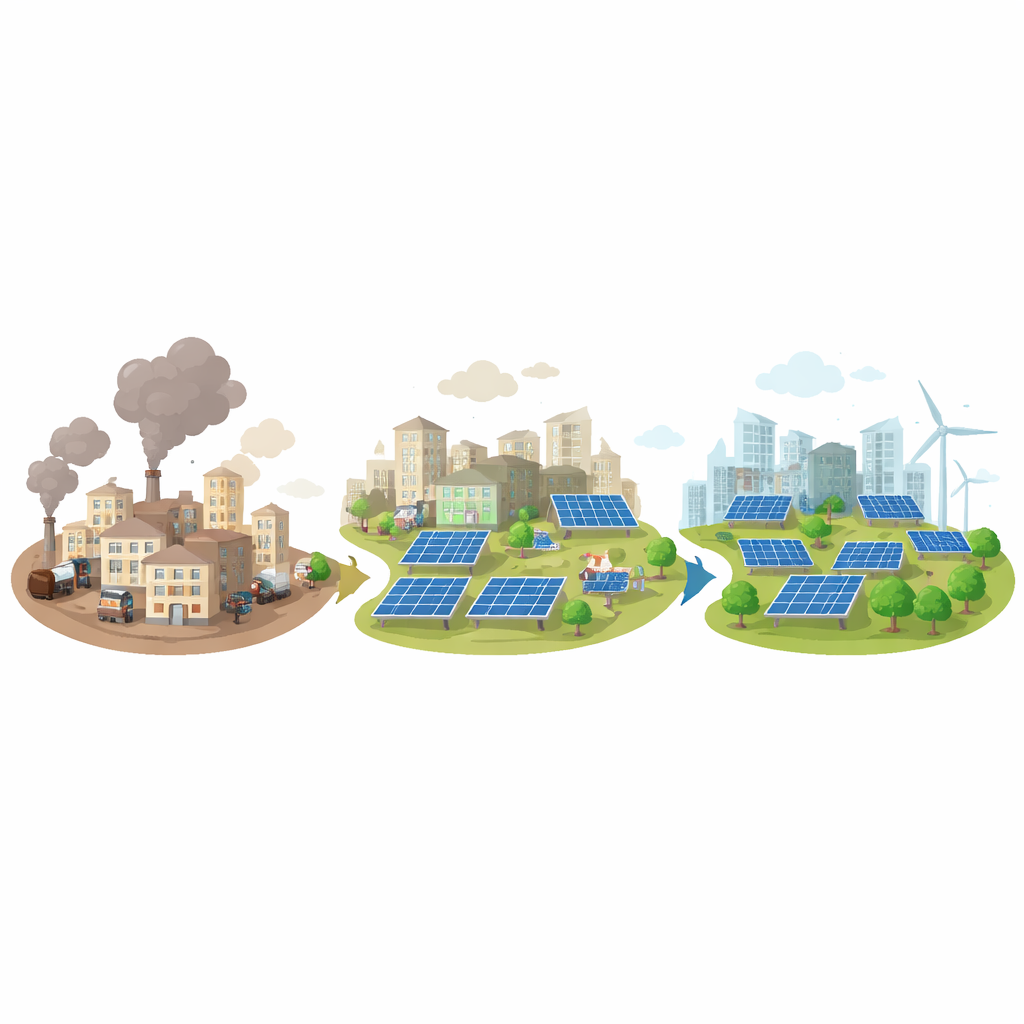
One of the clearest findings is that, over the long run, urbanization is tied to higher carbon emissions in Somalia. As more people crowd into cities, demand rises for electricity, transport, and construction materials, most of which are currently supplied by diesel generators and other fossil fuels. The study suggests that Somalia is in an early stage of urban development where cities expand in an unplanned way, with inefficient energy use and traffic congestion. Interestingly, there is also a short‑term period in which early urban growth can slightly reduce emissions, likely reflecting initial improvements in infrastructure or more compact settlement patterns. But as the urban build‑up continues without careful planning, the long‑term effect is clearly toward more pollution.
Clean Power as a Hidden Opportunity
In stark contrast, renewable energy stands out as a powerful tool for cutting emissions in both the short and long term. Even though Somalia’s current renewable efforts are modest—largely small solar installations rather than a national grid—the data show that every increase in the share of renewables is linked to noticeably lower carbon output. This reflects a simple but important substitution: whenever clean power displaces diesel and other fossil fuels, less carbon is released. Given Somalia’s abundant sunshine and active private energy market, the study argues that much larger cuts in pollution are possible if policies, investment security, and basic energy infrastructure are strengthened to support solar and other renewables.
Global Links and Growth with a Light Footprint
The roles of globalization and economic growth turn out to be more subtle. Over the long term, neither appears to have a strong direct impact on Somalia’s emissions. This contrasts with many industrialized countries, where export‑oriented factories and heavy industry boost pollution as economies integrate into the world market. In Somalia, globalization mostly shows up as trade, remittances from abroad, and telecommunications rather than smoke‑stack industries. Likewise, economic growth is driven largely by services and small enterprises instead of big factories. As a result, higher income does not automatically translate into more fossil fuel use. Short‑term shifts in growth can even coincide with slight reductions in emissions, hinting at efficiency improvements or structural change rather than classic “grow first, clean up later” patterns.
Choosing a Cleaner Path Forward
For lay readers, the bottom line is clear: in Somalia today, the biggest environmental pressures come less from globalization or rapid industrial expansion and more from how cities grow and how energy is produced. If urbanization continues to rely on diesel‑powered generators and unplanned sprawl, pollution will rise. But if city planning encourages efficient buildings and transport, and if renewable energy—especially solar power and hybrid mini‑grids—replaces fossil‑fuel systems, Somalia can expand its economy while keeping carbon emissions in check. Because the country is still early in its development path, it has a rare chance to leapfrog over the dirtiest phase of growth and move directly toward a lower‑carbon future, before high‑pollution habits become locked in.
Citation: Abdullahi, A.M., Ahmed, M.Y. Assessing sustainable development and environmental pollution dynamics in Somalia. Sci Rep 16, 10874 (2026). https://doi.org/10.1038/s41598-026-46418-9
Keywords: Somalia, urbanization, renewable energy, carbon emissions, sustainable development