Clear Sky Science · en
Comparison of fang replacement rate in Viperidae snakes
Why Snake Fangs Matter
Venomous snakes may seem like creatures from a horror film, but their fangs are remarkable pieces of natural engineering. These long, hollow teeth are essential tools for hunting and defense—and, like our own teeth, they wear out and must be replaced. This study asks a deceptively simple question with big evolutionary implications: how often do different groups of vipers grow new fangs, and what does that say about how they live, hunt, and evolved?
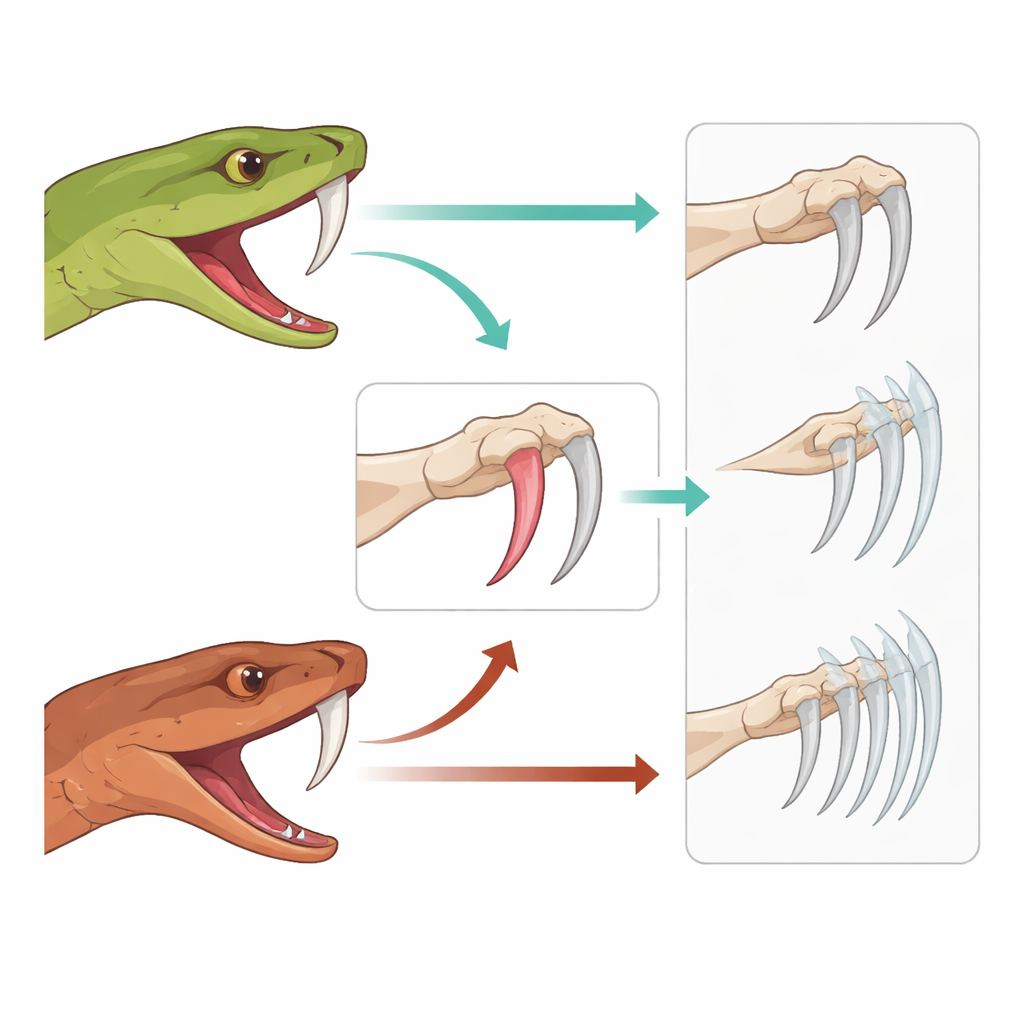
Two Families, Two Ways of Being a Viper
Vipers come in two major branches. Pit vipers, found in both the Old and New Worlds, carry heat-sensing pits between the eye and nostril that help them home in on warm-blooded prey, even in the dark. True vipers, largely in Africa and Asia, lack these pits but are famous for exceptionally long fangs, such as those of the Gaboon viper. Both groups fold their fangs back when the mouth is closed, then swing them forward in a lightning-fast strike. After a bite, some species cling to their victims, while others inject venom and let the prey run, tracking it later by scent.
Measuring How Fast Fangs Turn Over
The researchers examined museum specimens of six true viper species and combined these data with previous work on 14 pit viper species. For each skull, they noted which fang sockets held a solid, working fang and which held a looser, growing replacement. From the proportion of snakes caught “in the act” of replacing a fang, they estimated how long each fang typically remains in service. They also measured overall body length and fang length, and used modern evolutionary statistics to account for shared ancestry among species when comparing traits.
Fang Replacement Is Busy but Unsynchronized
In true vipers, nearly two-thirds of individuals were replacing at least one fang, and many had two fully functional fangs on the same side of the jaw for a brief transition period. Yet replacement did not occur in lockstep: the right and left sides of the upper jaw behaved independently, and new fangs alternated between inner and outer sockets. This pattern mirrors earlier work on pit vipers and suggests a built-in safety system—there is almost always at least one working fang ready, even if another breaks or is shed.
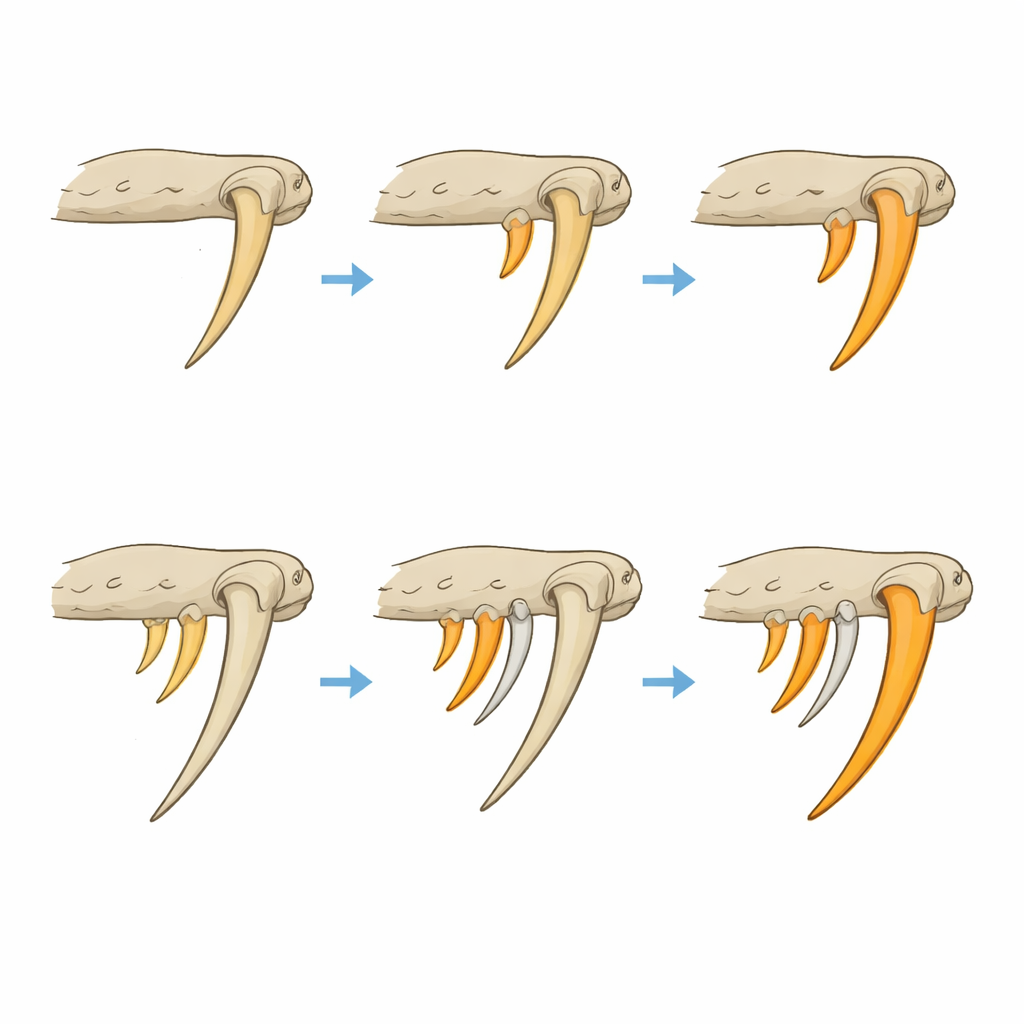
Longer Fangs, Faster Turnover—but With a Twist
Across the entire group of species, true vipers tended to have longer fangs for their body size than pit vipers, and they also replaced them much more quickly—on average about two and a half times faster. That fits the idea that long, fragile fangs, crucial for deep venom injection and tackling large prey, must be renewed frequently to keep the weapon system ready. But when the team looked within each family separately, they found the opposite pattern: species with relatively longer fangs tended to replace them more slowly, especially among true vipers. This suggests that once a lineage evolves very long fangs, those fangs may also become better reinforced or used in ways that reduce damage, so they do not need to be swapped out quite as often.
What This Means for Snake Evolution
For a layperson, the takeaway is that vipers face a constant trade-off: they need fangs that are long and sharp enough to subdue dangerous prey, but those same fangs are prone to damage. This study shows that true vipers have evolved both longer fangs and a generally faster replacement system than pit vipers, highlighting different evolutionary “solutions” to the same problem. At finer scales, however, the link between fang length and replacement speed becomes more complicated, probably shaped by details of prey type, bite behavior, and how the fangs are built. In short, viper fangs are not just scary—they are dynamic, evolving tools whose growth and renewal help determine whether a snake lives to bite another day.
Citation: Sivan, J., Tesler, I., Hadad, S. et al. Comparison of fang replacement rate in Viperidae snakes. Sci Rep 16, 10730 (2026). https://doi.org/10.1038/s41598-026-46398-w
Keywords: viper fangs, fang replacement, venomous snakes, snake evolution, predator–prey interactions