Clear Sky Science · en
Microinjection of CART peptide into the nucleus accumbens medial shell attenuates methamphetamine-induced anxiety-like behaviors via restoration of GABAB receptor membrane expression
Why this research matters
Methamphetamine abuse is a growing global problem, and many people who use the drug long term develop crippling anxiety that can persist even when they are not high. Current medicines do a poor job of treating both the addiction and the anxiety that follows it. This study in rats uncovers a brain circuit where a natural brain peptide can calm methamphetamine-driven anxiety, pointing toward a fresh way to help people who struggle with this drug.
The brain’s reward hub under stress
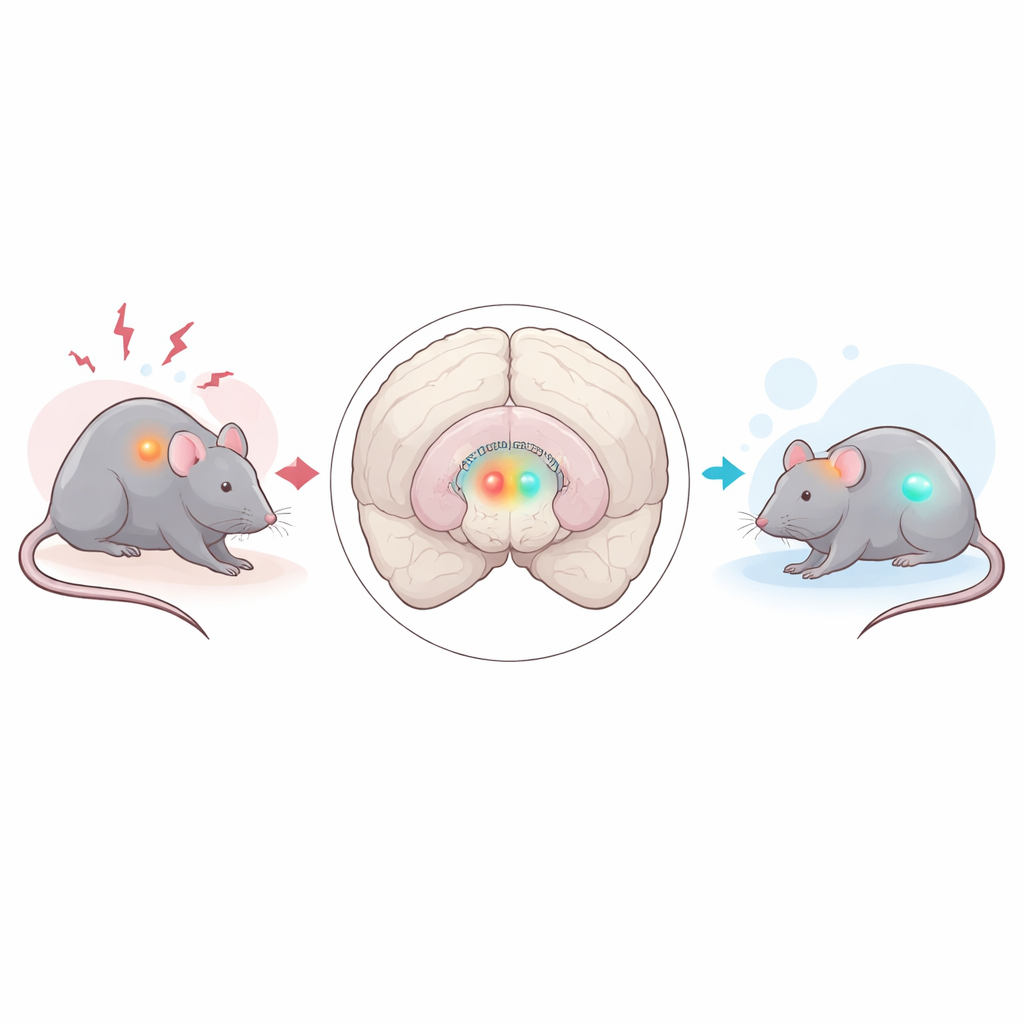
The work centers on a small region deep in the brain called the nucleus accumbens, a key part of the reward system that shapes motivation, pleasure, and emotional state. Within this structure, the “medial shell” is especially important for how animals respond to stimulant drugs. The researchers repeatedly gave rats methamphetamine and then allowed a withdrawal period before a final challenge dose, mimicking cycles of use and abstinence. They tested the animals in standard mazes that measure how willing a rat is to explore open, exposed spaces. After chronic methamphetamine exposure, rats traveled differently and avoided open areas, behaviors that together signaled a strong rise in anxiety, even though signs of depression did not change.
A peptide signal that fights back
Looking inside the brain, the team saw that methamphetamine strongly activated neurons in the medial shell of the nucleus accumbens and boosted levels of a small protein called CART peptide, which is naturally produced in this area. At the same time, there was a drop in certain receptors for the calming brain messenger GABA on the surface of these neurons. These receptors, called GABAB receptors, help keep neural activity in check. The combination of overactive cells, higher CART levels, and fewer inhibitory receptors suggested that this local circuit was pushed out of balance during chronic drug use.
Putting peptide directly into the brain
To test whether CART peptide could be harnessed to restore balance, the scientists surgically implanted thin guide tubes aimed at the medial shell. After chronic methamphetamine treatment, they infused tiny amounts of purified CART peptide directly into this region. This local boost of peptide made a clear difference in behavior: treated rats moved less frantically and spent more time exploring open spaces, indicating that their anxiety-like behavior had eased. At the cellular level, neurons in the medial shell showed less activity, and the surface levels of GABAB receptors returned toward normal, especially on cells that naturally contained CART.
How the calming effect is carried
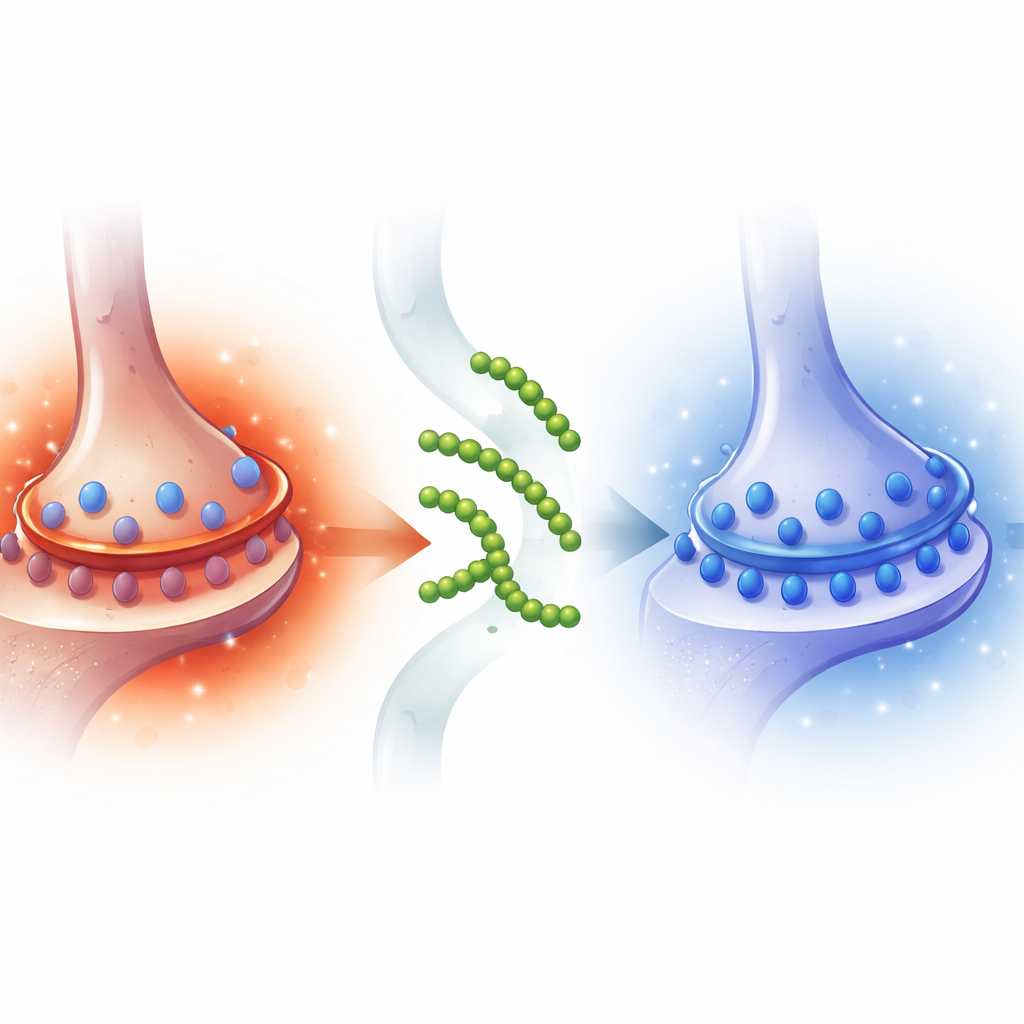
Digging deeper, the researchers used computer modeling and biochemical techniques to ask whether CART peptide and GABAB receptors might physically interact. Their docking simulations suggested multiple contact points between the peptide and one subunit of the receptor, and antibody-based pull-down experiments in tissue supported the idea that the two molecules can bind. To prove that GABAB receptors are essential for the behavioral effect, they gave some rats a drug that blocks these receptors after the CART infusion. In these animals, the benefits vanished: anxiety-like behaviors came back, and neuronal activity in the medial shell rose again. This showed that CART’s calming action depends on functional GABAB receptors.
What it could mean for people
In simple terms, this study suggests that when methamphetamine repeatedly overstimulates the brain’s reward hub, a homegrown peptide signal in that region tries to push back by helping restore a key “brake” receptor on nerve cells. Giving extra CART peptide directly into the nucleus accumbens medial shell strengthened this natural defense in rats, reduced the overactivity of local neurons, and eased anxiety-like behavior—but only when GABAB receptors were able to respond. While much more work is needed before any treatment for humans can be developed, the findings spotlight the CART–GABAB system as a promising new target for easing the emotional fallout of methamphetamine addiction.
Citation: Zhang, H., Yu, Z., Fu, Q. et al. Microinjection of CART peptide into the nucleus accumbens medial shell attenuates methamphetamine-induced anxiety-like behaviors via restoration of GABAB receptor membrane expression. Sci Rep 16, 10719 (2026). https://doi.org/10.1038/s41598-026-46389-x
Keywords: methamphetamine, anxiety, nucleus accumbens, CART peptide, GABAB receptor