Clear Sky Science · en
Production, characterization, and functional properties of protein concentrate from Momordica cochinchinensis seeds
From Kitchen Waste to Future Food
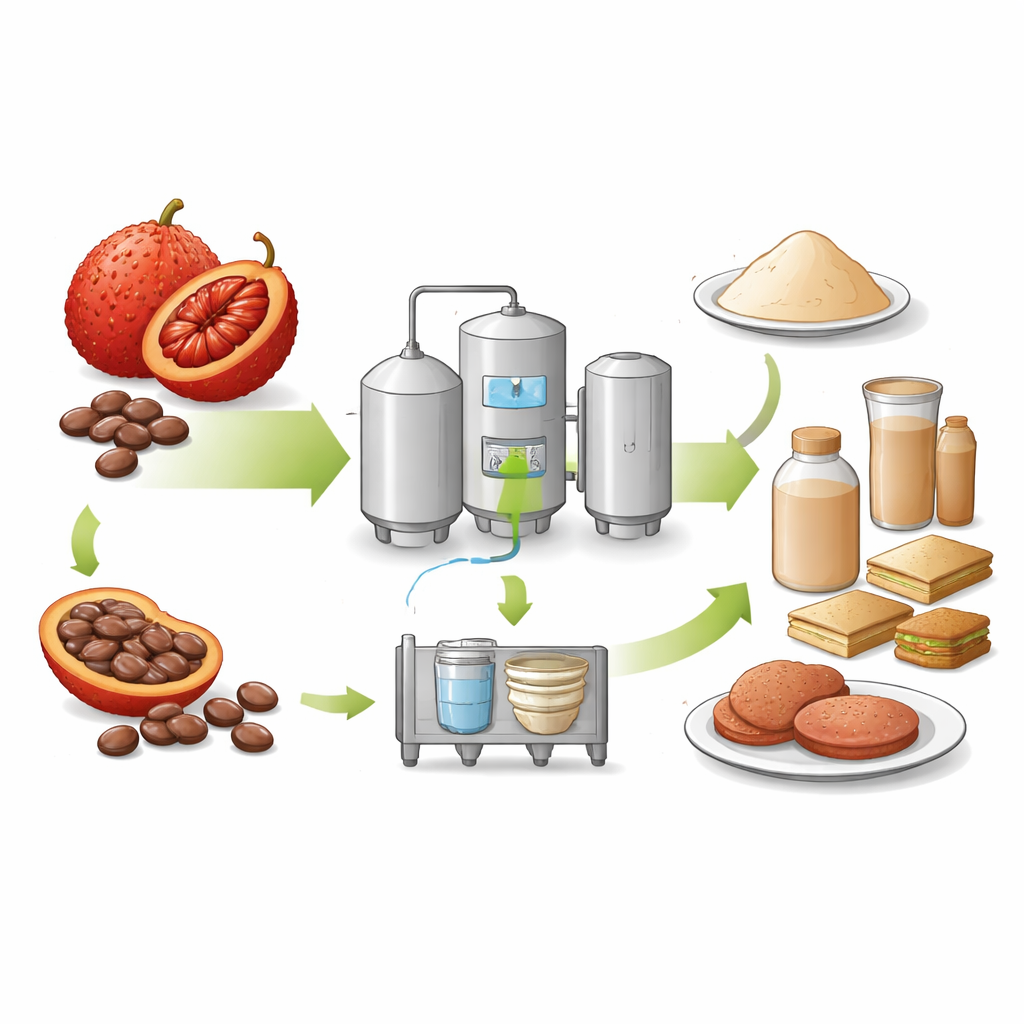
As more people look for planet-friendly ways to get enough protein without relying on meat and dairy, foods once treated as trash are getting a second look. This study focuses on the seeds of the Gac fruit, a spiky red tropical fruit popular in Southeast Asia. The colorful pulp around the seeds is already valued for its nutrients, but the seeds themselves usually end up in the garbage. Here, researchers show how these discarded seeds can be turned into a concentrated protein ingredient with properties that make it attractive for meat substitutes, health drinks, and other modern foods.
Hidden Value Inside Gac Seeds
Gac seeds are an agricultural by-product: after the bright red pulp is processed, the seeds are typically thrown away. Yet earlier work hinted that the seeds are rich in protein and biologically active compounds, including small proteins with potential anti-tumor and nerve-protective effects. What had not been explored was whether the whole seed protein could be recovered efficiently and used as a functional food ingredient, not just as a source of isolated medical compounds. The team began by carefully drying, partially removing the oil, and grinding the seeds, confirming that the resulting flour contained protein levels comparable to or higher than many common oilseed leftovers such as soybean or sunflower meal.
Finding the Sweet Spot for Extraction
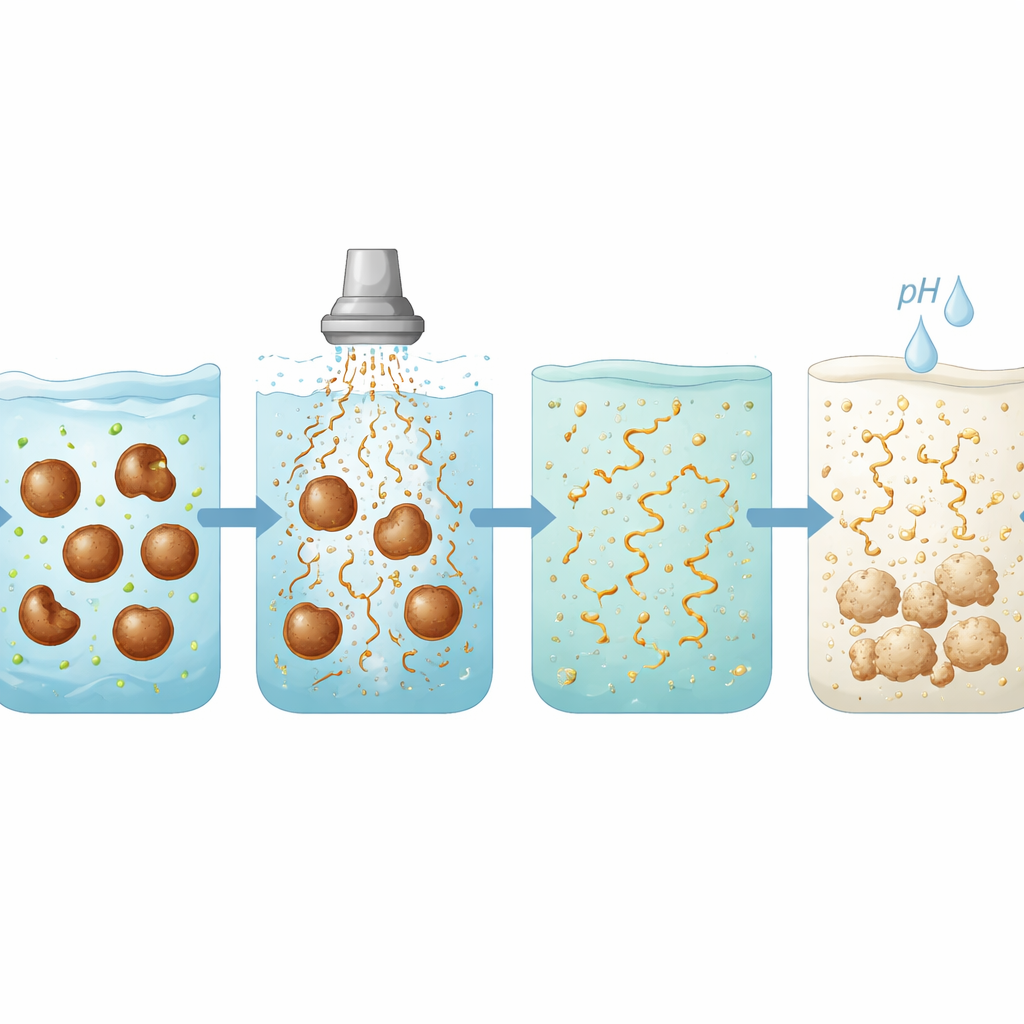
To transform this flour into a usable protein concentrate, the researchers developed a stepwise extraction process. They suspended the seed flour in water, adjusted the mixture to different conditions, and used high-energy sound waves—ultrasound—to help pull proteins out of the seed material. By systematically changing the amount of water, the acidity or alkalinity (pH), the strength of the ultrasound, and the treatment time, they pinpointed the combination that gave the highest protein yield with minimal damage. The best conditions were a relatively watery mixture, a strongly alkaline environment, moderate ultrasound intensity, and about twenty minutes of treatment. After this step, they shifted the pH to a mildly acidic point where the proteins naturally clump together and can be separated and dried into a powder.
What Makes This Protein Special
The resulting Gac seed protein concentrate was more than 81 percent protein, a big jump from the original flour, and much lower in fat, starch, and sugars. When the team examined the protein under laboratory techniques that separate molecules by size, they found that it was dominated by relatively small protein units. These low‑weight proteins have been linked in previous research to antioxidant and other beneficial activities. The amino acid makeup showed a mix of essential and non‑essential building blocks, including substantial amounts of glutamic acid, aspartic acid, and arginine. Tests using a standard free‑radical assay revealed that the concentrate did have measurable antioxidant capacity that increased with dose, suggesting it could help protect foods—and possibly the body—from some oxidative damage.
How the Protein Behaves in Food
Beyond nutrition, food makers care about how a protein behaves when mixed, heated, whipped, or combined with oil and water. The Gac seed protein performed well on many of these fronts. Its solubility in water dipped near its natural “neutral” zone but increased strongly in both acidic and alkaline conditions, a pattern common to many plant proteins. It held water effectively, especially at higher pH, which is important for juicy textures in plant-based meats and baked goods. Its ability to bind oil was higher than that of the starting flour, thanks to exposed water‑repelling regions on the protein surface, making it useful in fatty foods like sausages, spreads, and dressings. The protein also formed stable oil‑in‑water mixtures and generated foams whose stability improved in alkaline conditions. Remarkably, it could form firm gels at low concentrations, hinting at uses in products that rely on a springy, structured texture.
From Local By-Product to Global Ingredient
Taken together, these results show that Gac seeds—once considered waste—can be converted into a high‑purity protein ingredient with a useful blend of nutritional and functional traits. The optimized ultrasound‑based process not only boosts the amount of protein recovered but also appears to enhance its behavior in water, oil, and foam systems that underpin many familiar foods. While more work is needed to confirm how well the body digests and uses this protein, and how it performs in real commercial recipes, the study provides a clear proof of concept: an overlooked tropical by‑product can help meet rising global demand for sustainable, plant‑based protein while reducing food waste.
Citation: Nguyen, A.V., Nguyen, K.K., Le, U.N.T. et al. Production, characterization, and functional properties of protein concentrate from Momordica cochinchinensis seeds. Sci Rep 16, 10598 (2026). https://doi.org/10.1038/s41598-026-46377-1
Keywords: plant-based protein, Gac seed, ultrasound extraction, food waste valorization, functional food ingredients