Clear Sky Science · en
Prognostic performance of clinical scores and biomarkers in nonagenarians after TAVR requiring ICU admission
Why this matters for very old heart patients
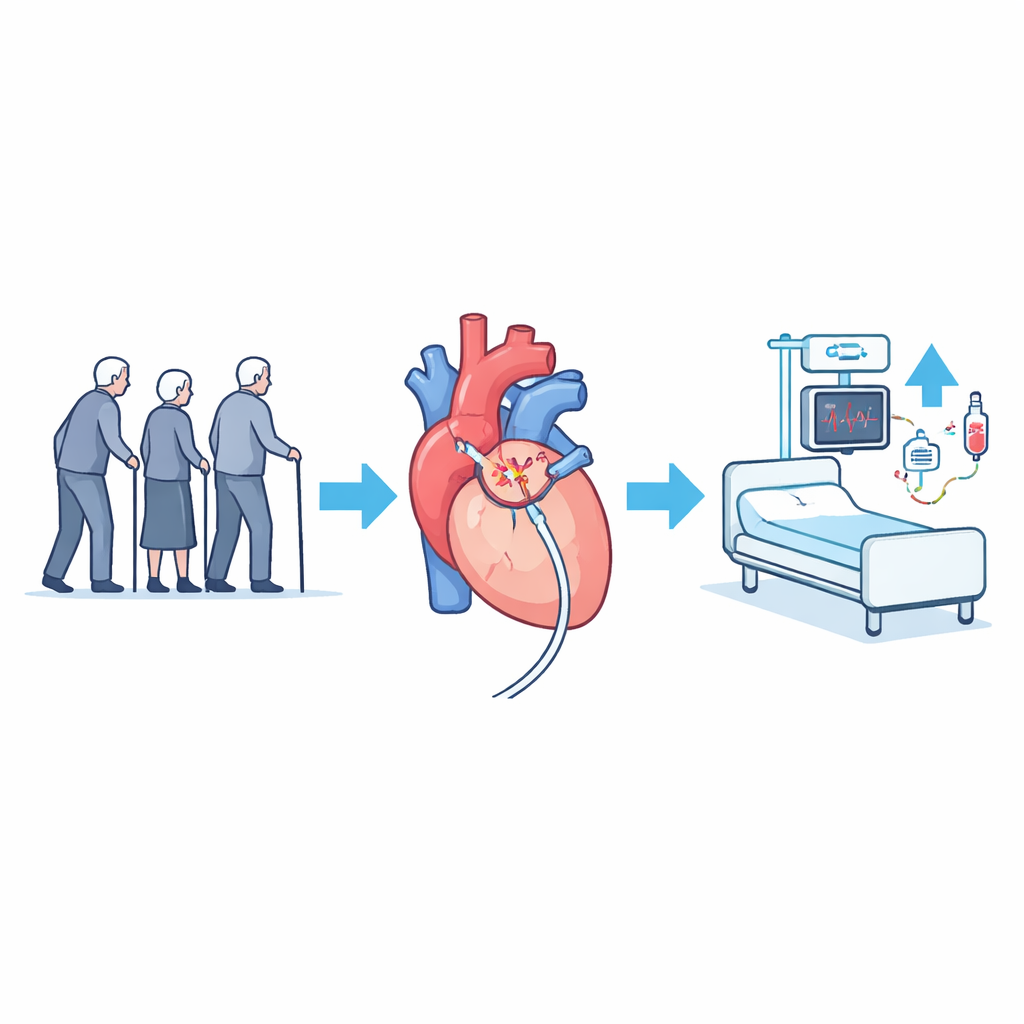
More people in their 90s are now living long enough to develop severe narrowing of the main heart valve that lets blood leave the heart. A minimally invasive procedure called transcatheter aortic valve replacement (TAVR) can relieve this blockage without open-heart surgery, but many of these very old patients still need a short stay in an intensive care unit (ICU) afterwards. Families and doctors naturally want to know: who is likely to do well, who may struggle, and how long will recovery take? This study looks for early bedside clues that can help answer those questions.
Who was studied
The researchers examined records from nearly all ICUs across Australia and New Zealand, focusing on 587 patients aged 90 and older who were admitted to ICU after TAVR between 2017 and 2024. These men and women are among the frailest people to undergo heart valve procedures, yet most had been carefully selected as strong enough for treatment. Overall, survival was high: only about 1 in 70 died in the ICU, and fewer than 1 in 20 died before leaving the hospital. This shows that, for many nonagenarians, TAVR followed by brief intensive care can be a realistic option rather than an extreme last resort.
Scores and blood tests as early warning signs
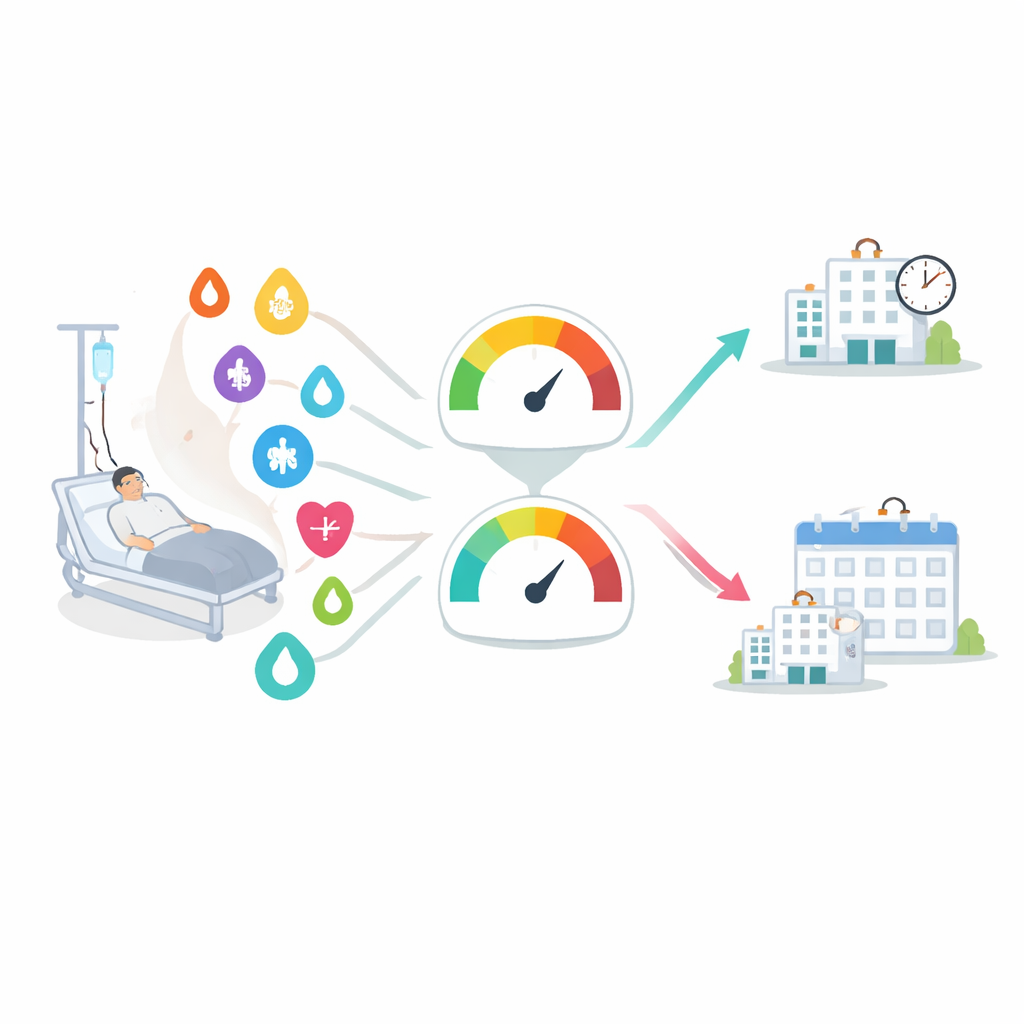
On ICU admission, every patient received standard assessments that summarize how sick they are, such as the APACHE III and SOFA scores, along with routine blood tests measuring substances like lactate, glucose (blood sugar), urea (a waste product filtered by the kidneys), and albumin (a blood protein linked to nutrition and inflammation). The team asked whether these simple numbers, collected in the first 24 hours, could signal who was at higher risk of dying soon after the procedure or needing a longer hospital stay. Both APACHE III and SOFA scores turned out to be very strong predictors of death in the ICU and during the hospital stay, performing almost flawlessly in separating the small group who died early from the large majority who survived.
What the lab results revealed
Several common blood measurements also carried important information. Higher levels of lactate, glucose, and urea were consistently linked with a greater chance of dying within a month and within a year after TAVR, even after accounting for age, sex, and other illnesses. In contrast, higher bicarbonate levels, which reflect a more balanced blood chemistry, seemed protective. The researchers also found that risk did not always rise in a straight line: for some markers, danger increased sharply only after a certain threshold, while others showed U-shaped patterns where both very low and very high values were worrisome. Despite the small absolute differences between survivors and non-survivors, these patterns became clear when the data were analyzed with modern statistical tools.
Clues to how long recovery takes
The same early scores and blood tests gave insight into how long patients stayed in intensive care and in the hospital. Each extra point on the APACHE III score predicted about a 1% longer ICU and hospital stay, while the SOFA score was especially linked to ICU time. Higher lactate, glucose, and urea levels and lower albumin were tied to longer admissions, suggesting that early metabolic stress and poorer nutritional reserves translate into more complicated recoveries. Importantly, traditional measures like frailty scales – which often predict outcomes in younger seniors – were less informative here, probably because nearly everyone in their 90s is frail to some degree.
What this means for patients and families
For very elderly people undergoing TAVR, this study shows that a handful of routinely collected ICU measurements can offer a surprisingly clear early picture of short-term risk and likely recovery time. High illness-severity scores and disturbed blood chemistry in the first day after surgery flag patients who may need closer monitoring, more intensive support, or earlier conversations about goals of care. Although these numbers cannot predict long-term outcomes with the same precision, they give doctors and families better guidance during the critical first days after the procedure. In short, simple bedside information can help tailor care for some of the oldest and most vulnerable heart patients, making high-tech treatments like TAVR safer and more thoughtfully used.
Citation: Suh, J.M., Weinberg, L., Jiang, Y. et al. Prognostic performance of clinical scores and biomarkers in nonagenarians after TAVR requiring ICU admission. Sci Rep 16, 10712 (2026). https://doi.org/10.1038/s41598-026-46311-5
Keywords: transcatheter aortic valve replacement, nonagenarian intensive care, prognostic clinical scores, postoperative biomarkers, aortic stenosis in the elderly