Clear Sky Science · en
Telemedicine readiness and its associated factors among healthcare professionals in primary hospitals of Southern Ethiopia
Why this matters for everyday health
In many parts of the world, seeing a doctor can mean long travel, crowded waiting rooms, and delayed care. Telemedicine uses phones and computers to connect patients and health workers at a distance. This study from Southern Ethiopia asks a simple but vital question: are front line healthcare workers in small hospitals actually ready to use these tools, and what do they need to make telemedicine work in real life?
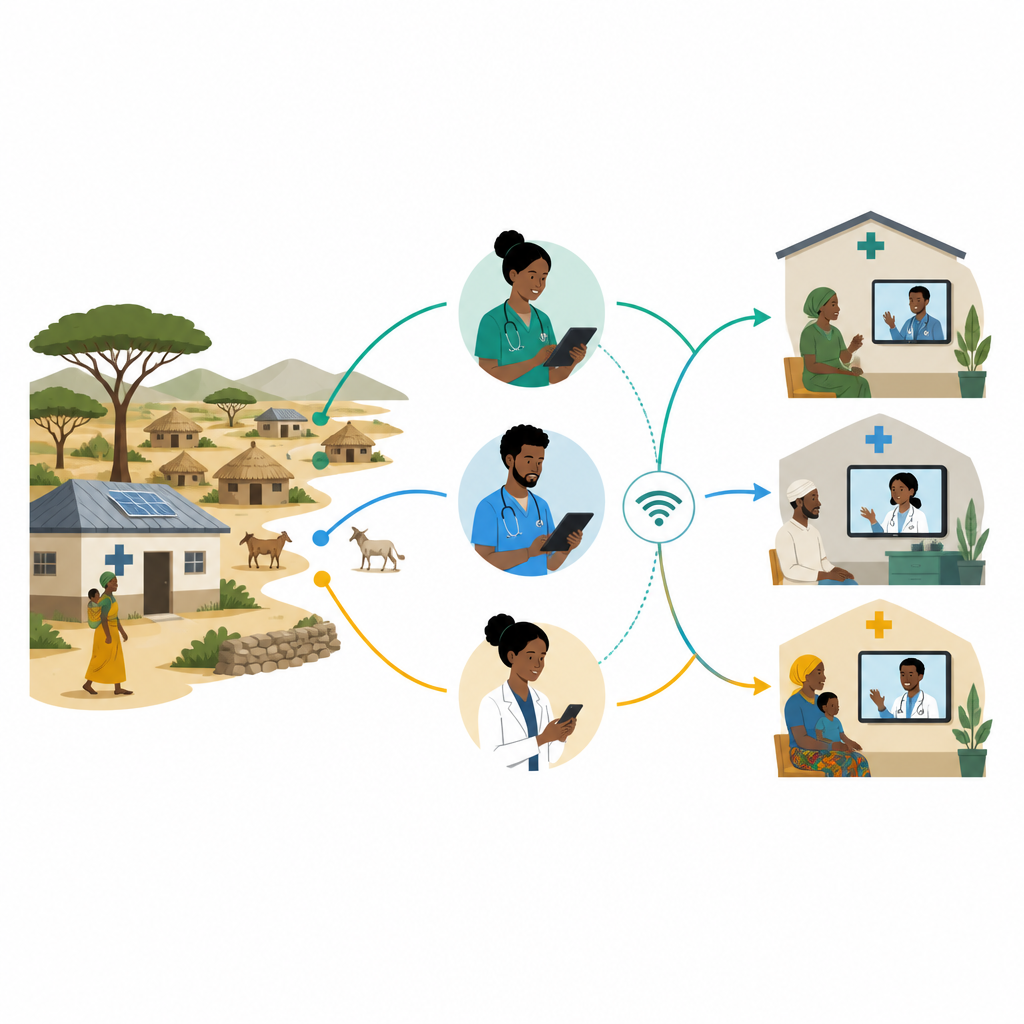
Healthcare in hard to reach places
Primary hospitals in Southern Ethiopia serve as the first stop for many people living far from big cities. These hospitals often face shortages of staff, equipment, and reliable transport for patients. Telemedicine could help doctors and nurses get specialist advice, follow up with patients remotely, and reduce unnecessary trips to larger hospitals. But for that to happen, the people working in these facilities must have the skills, devices, and support to use digital tools with confidence.
Taking the pulse of telemedicine readiness
The researchers surveyed 413 doctors, nurses, midwives, laboratory workers, and public health officers in four primary hospitals in the Wolaita Zone. They used structured questions to measure three aspects of readiness: seeing a real need for telemedicine, willingness to learn and use it, and having the basic infrastructure such as devices and internet. Each person received a combined score, which was then used to classify them as ready or not ready for telemedicine.
What the numbers reveal
Overall, about seven in ten healthcare workers were considered ready to use telemedicine. Most felt that remote care could improve access, reduce travel time, and ease crowding in hospitals. However, knowledge about specific telemedicine tools and national guidelines was often limited, and only a minority had actually seen telemedicine in action. Readiness was not strongly linked to age, sex, education level, or even general attitude. Instead, it depended more on whether people had practical experience with digital tools and solid backing from their workplace.
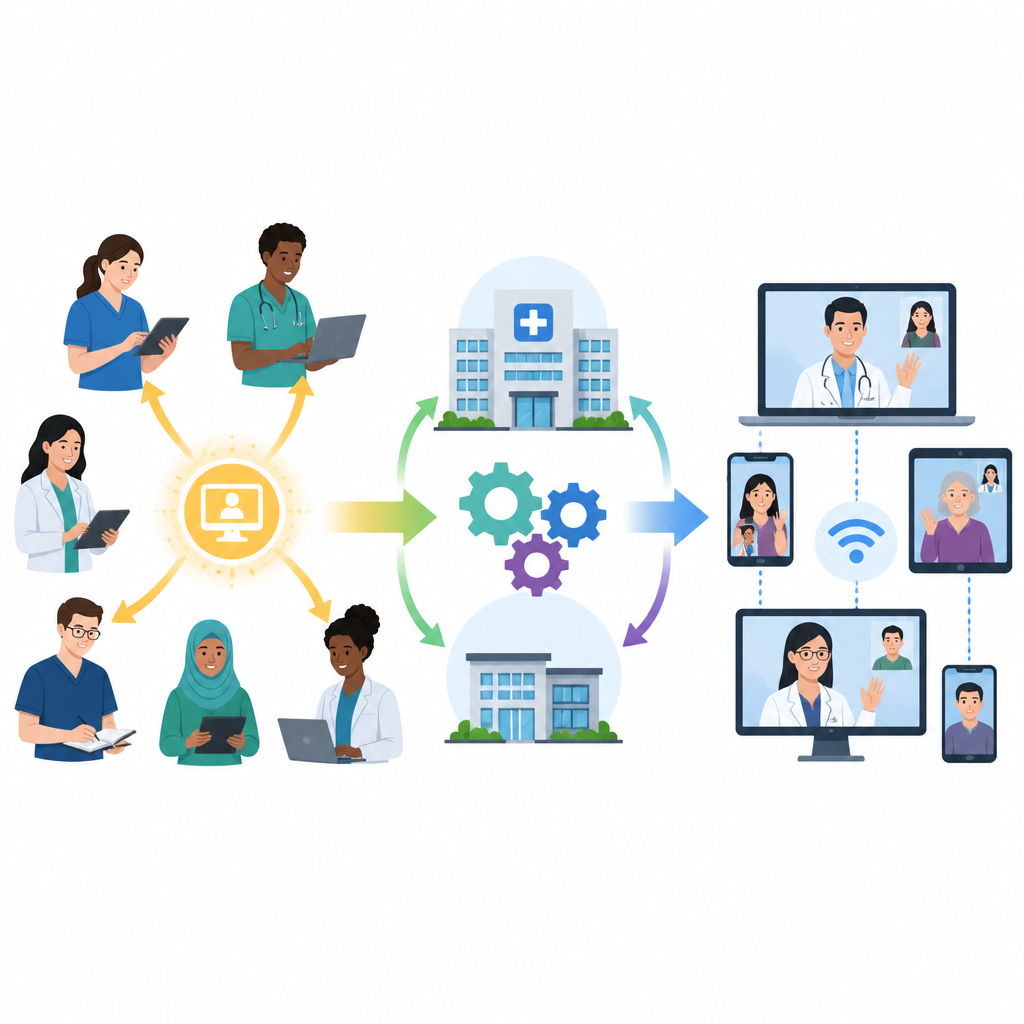
Training, support, and devices make the difference
Health workers who had received any form of digital training were more than twice as likely to be ready for telemedicine as those without such training. Those with higher digital health literacy, meaning they felt able to find and use online health information, were also more likely to be ready. Access to smartphones and computers made a big difference, greatly increasing the odds that a worker was telemedicine ready. Strong organizational support, such as helpful managers, technical assistance, and regular training, was another key factor. In other words, readiness grew where both people and systems had been invested in.
What this means for patients and policymakers
For patients in Southern Ethiopia, the study suggests that frontline staff are generally open to using telemedicine, but their ability to do so depends on much more than personal interest. To turn potential into practice, hospitals and health authorities need to provide ongoing digital training, reliable internet and power, and clear local routines for telemedicine use. When combined, these steps can help small hospitals offer more timely, flexible care, including during disease outbreaks when face to face visits are risky.
Big picture takeaway
This study concludes that telemedicine readiness in primary hospitals of Southern Ethiopia is moderate rather than low. The main barriers are not lack of goodwill but gaps in training, support, and basic tools. For telemedicine to truly strengthen health services in resource limited settings, investments must go beyond buying software and focus on people, workplace culture, and infrastructure. With the right support, rural hospitals can use digital connections to bring care closer to the communities they serve.
Citation: Suwanbamrung, C., Endrias, E.E. Telemedicine readiness and its associated factors among healthcare professionals in primary hospitals of Southern Ethiopia. Sci Rep 16, 15288 (2026). https://doi.org/10.1038/s41598-026-46280-9
Keywords: telemedicine, digital health, Ethiopia, healthcare workers, primary hospitals