Clear Sky Science · en
Influence of onset time on in-hospital outcomes in patients with acute intracerebral hemorrhage in China
Why the Hour of a Stroke Matters
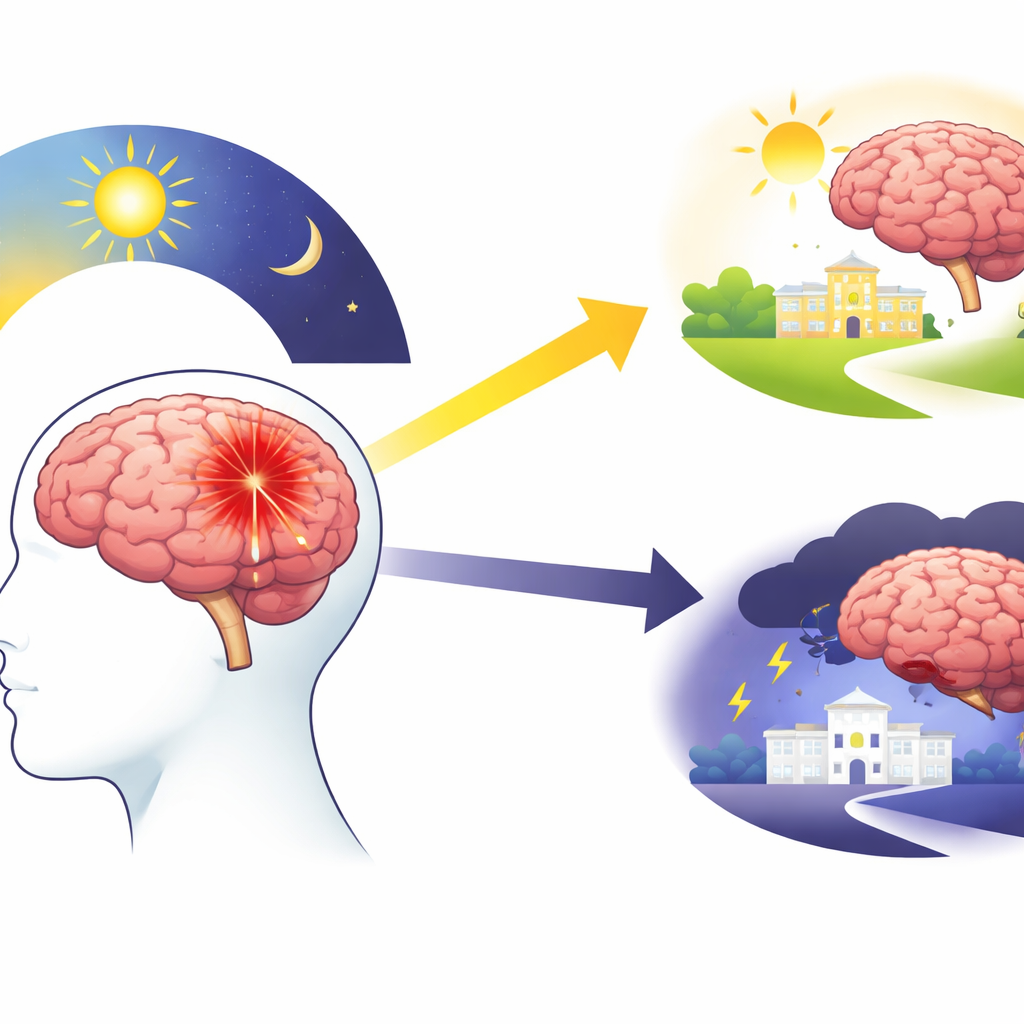
Most of us think of a stroke or brain bleed as a sudden bolt from the blue, where only speed and skill of treatment matter. But your body also runs on an internal 24-hour clock. This study asks a simple yet important question: if a dangerous brain bleed begins at night rather than during the day, are the chances of survival and recovery any different? Using data from tens of thousands of patients across China, the researchers show that the timing of onset is linked to how severe the stroke is, the risk of dying in the hospital, and the chance of early complications.
When Brain Bleeds Most Often Begin
The team examined over 80,000 adults who arrived at hospitals within 24 hours of an acute intracerebral hemorrhage, a type of stroke caused by sudden bleeding inside the brain. They tracked the clock time when symptoms began and compared outcomes between bleeds that started during the day (6 a.m. to 6 p.m.) and at night (6 p.m. to 6 a.m.). They found a clear daily rhythm: the number of brain bleeds peaked in the morning hours between 8 a.m. and 11 a.m., with a smaller bump in the late afternoon. This pattern closely mirrors known daily swings in blood pressure, which tends to surge after waking and again in the early evening—times when fragile brain vessels may be more likely to rupture.
Nighttime Bleeds Are Often More Severe
Simply counting events was not enough; the key was whether timing changed how sick patients were. To explore this, the researchers looked at standard bedside examinations that rate how alert a patient is and how badly movement, speech, and other functions are affected. On average, people whose brain bleeds began at night arrived with more serious neurological problems than those whose strokes started during the day. Follow-up analyses suggested that this greater severity partly explains why nighttime strokes were more dangerous: worse scores on these examinations acted as a bridge between night onset and higher odds of dying during the hospital stay.
Risks of Death and Complications in the Hospital
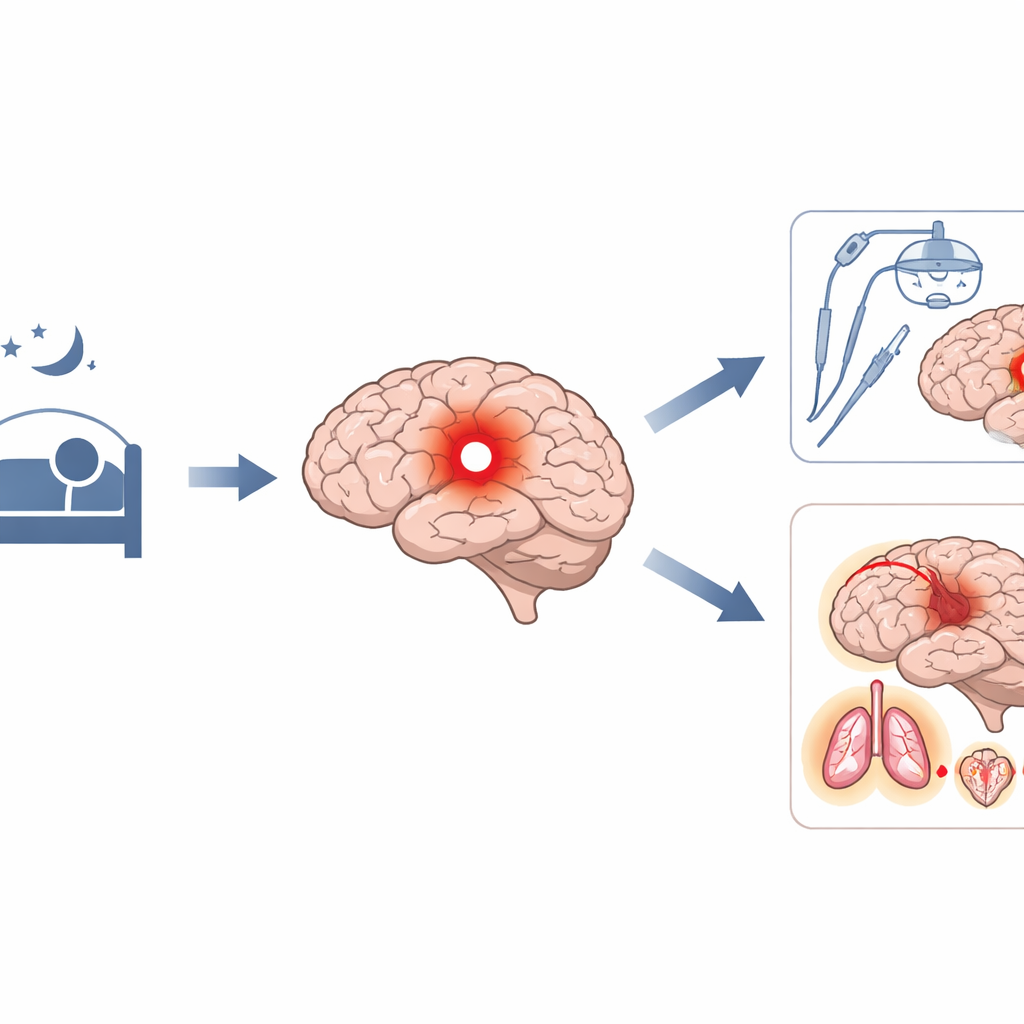
After taking into account age, blood pressure, medical history, and many other factors, night-onset bleeds were linked to a higher chance of dying before discharge, as well as a higher likelihood of leaving the hospital with marked disability. Patients whose strokes began at night were also more prone to infections such as pneumonia or urinary tract infections, especially when the bleed occurred around midnight. The study suggests several possible reasons: sleep disruption may worsen inflammation and weaken defenses, and nighttime hospital staffing and care routines may make it harder to detect swallowing problems or other early warning signs of infection. Interestingly, the time it took to reach the hospital influenced outcomes in similar ways regardless of whether the stroke began in the day or at night, indicating that onset time itself carries important information beyond simple delay.
How Surgery and Work Schedules Fit In
The investigators also examined patients who underwent surgical removal of the blood clot, known as hematoma evacuation. Among those who did not receive this procedure, people whose bleeds started late at night (about 10 p.m. to 2 a.m.) had the highest risks of in-hospital death and early poor recovery. In contrast, when surgery was performed, the disadvantage of a nighttime onset largely disappeared. This points to timely surgical care as a possible way to blunt the harm associated with night-onset strokes. When the team separated weekday and weekend admissions, they found that day-onset patients fared better than night-onset patients mainly on weekdays, echoing broader concerns that differences in staffing and resources across the clock can shape outcomes.
What This Means for Patients and Hospitals
For patients and families, the core message is straightforward: a brain bleed that begins at night is not just a bad stroke that happens to occur after dark—it is more likely to be severe and to bring a higher risk of death, disability, and infection. For hospitals and health systems, the findings argue for stronger nighttime coverage, faster recognition, and prompt treatment, including surgery when appropriate, for patients arriving with suspected brain bleeds. The study also highlights how our internal clocks and daily habits intersect with medical emergencies, suggesting that future treatments and staffing plans might be better tailored to the time of day when a stroke strikes.
Citation: Wei, M., Du, K., Liu, Z. et al. Influence of onset time on in-hospital outcomes in patients with acute intracerebral hemorrhage in China. Sci Rep 16, 10693 (2026). https://doi.org/10.1038/s41598-026-46172-y
Keywords: intracerebral hemorrhage, circadian rhythm, stroke outcomes, nighttime stroke, hematoma evacuation