Clear Sky Science · en
Age-stratified trajectories of patient-reported outcomes and perioperative safety after robot-assisted radical prostatectomy: a prospective multicenter cohort study
Why this matters for men and their families
As men live longer, more of them face decisions about how to treat early stage prostate cancer. Many worry not only about surviving the disease, but also about how surgery might affect everyday life, especially bladder control and sex. This study follows men of different ages who had robot assisted prostate removal and tracks how their own reports of comfort, function, and side effects changed during the first year after surgery.
Who was studied and what was measured
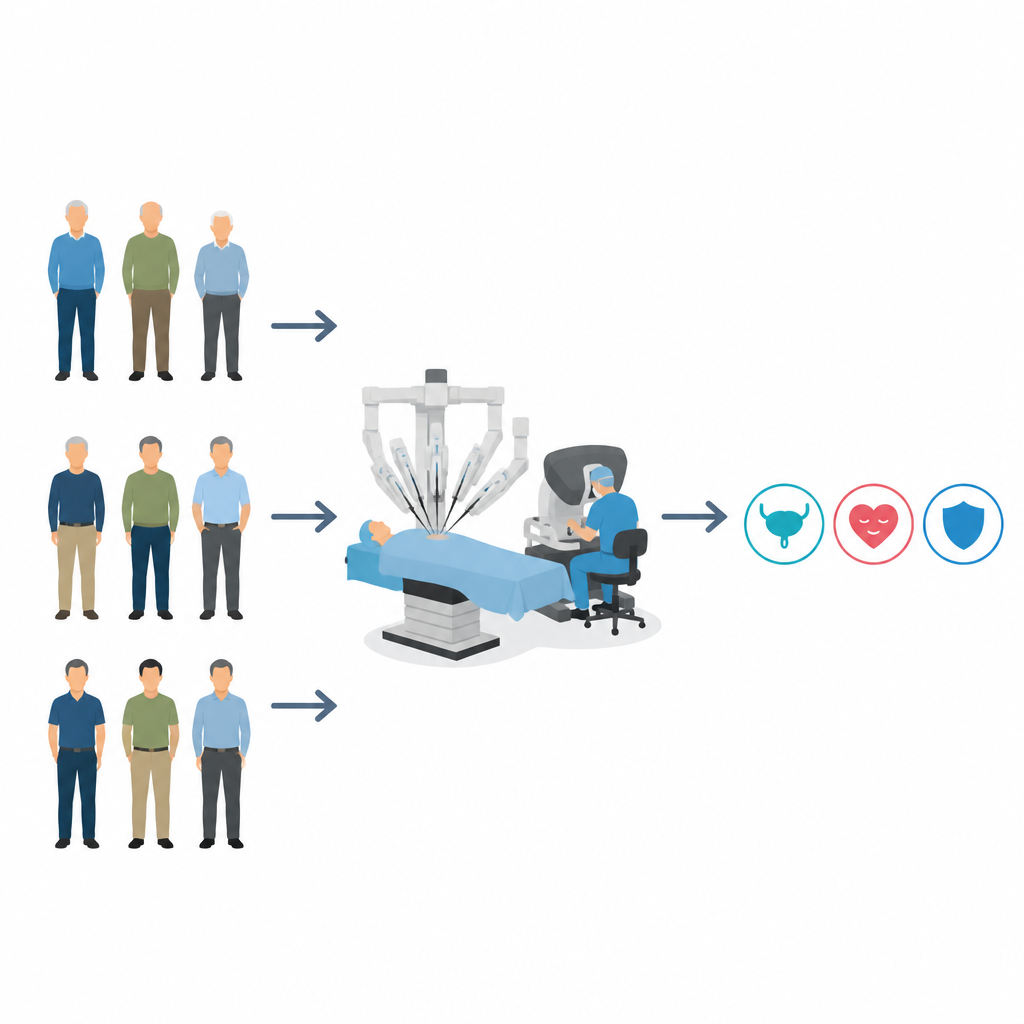
Researchers at several hospitals in Japan enrolled 604 men between 44 and 84 years old who chose robot assisted radical prostatectomy for localized prostate cancer. They divided patients into three age bands: younger than 65, 65 to 74, and 75 or older. Before surgery and at four time points afterward, the men filled out a detailed questionnaire about their urinary, bowel, sexual, and hormonal health, and their overall satisfaction with treatment. The team also recorded medical complications during the first month after surgery, such as infections, bleeding, or heart and lung problems.
Bladder control and daily comfort over time
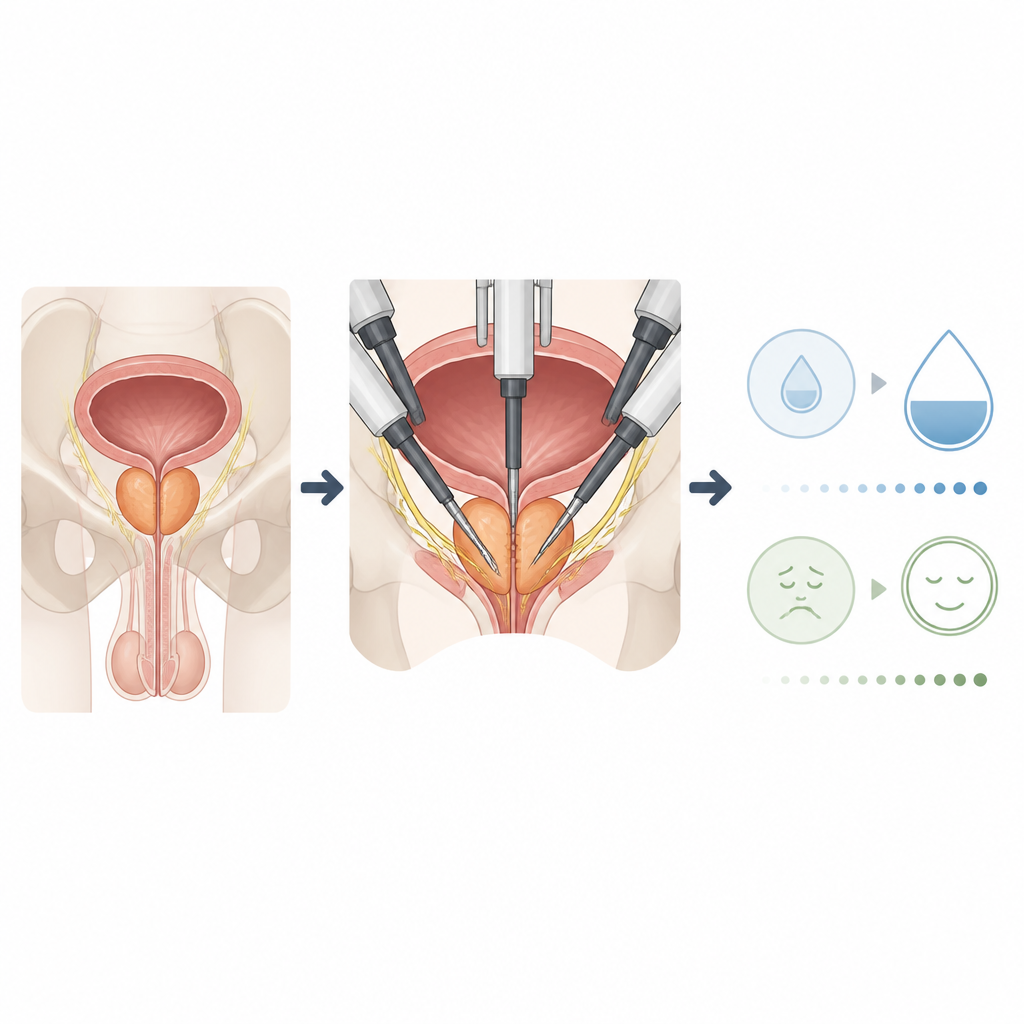
Across all ages, bladder function dropped sharply one month after surgery, as many men expected. Over the next year, however, scores steadily improved. By 12 months, overall urinary function and day to day bother from urinary symptoms were similar in all three age groups, including men 75 and older. Younger men actually felt more troubled by early symptoms such as frequent or urgent urination in the first month, but these differences faded with time. A small gap remained in leakage related quality of life, with men under 65 reporting slightly better continence than the oldest group at one year, though the difference was modest.
Sexual function and how much it bothers patients
Sexual function declined in nearly every man after surgery, whether or not nerves around the prostate were preserved. Among those who had nerve sparing procedures, younger patients kept higher levels of sexual ability than older men, reflecting better function before surgery. Yet how much this change bothered men did not follow the same pattern. The oldest patients, especially those 75 and above, reported little change in how distressed they felt about their sex lives, even though their function fell. Younger men, by contrast, reported a larger increase in sexual bother. This suggests that expectations and personal priorities shape how men feel about the same physical changes.
Surgical safety in older adults
The study also examined whether older age brought extra surgical risk. Complications such as leakage at the bladder connection, infections, bowel problems, or heart and lung events were tracked for 30 days after surgery. Overall complication rates, and the rate of more serious complications, did not differ meaningfully between the three age groups. Pathology findings related to the cancer itself were also similar. These results indicate that, among patients carefully chosen for surgery, robot assisted prostate removal can be performed with comparable short term safety in men in their mid 70s and beyond as in younger men.
What this means for treatment choices
For men and families weighing treatment options, this research suggests that calendar age alone should not rule out robot assisted prostate surgery. In this large group from several centers, men 75 and older generally regained bladder control and overall quality of life on a similar timeline as younger patients, and they did not face higher short term surgical risk. Sexual function commonly declined, but older men tended to feel less bothered by this change. The authors conclude that decisions about surgery should focus on overall health, personal values, and baseline function rather than age alone, and that honest discussion about likely changes in urinary and sexual health can help patients of all ages choose the approach that best fits their lives.
Citation: Kawamura, N., Nakayama, M., Inagaki, Y. et al. Age-stratified trajectories of patient-reported outcomes and perioperative safety after robot-assisted radical prostatectomy: a prospective multicenter cohort study. Sci Rep 16, 15241 (2026). https://doi.org/10.1038/s41598-026-46171-z
Keywords: prostate cancer, robotic surgery, elderly patients, quality of life, urinary function