Clear Sky Science · en
Life cycle assessment of a wood-aluminium window according to European norms
Why these windows matter for our homes and planet
When you think about making buildings greener, windows might not be the first thing that comes to mind. Yet they shape how much energy a home wastes or saves and how many resources are used to make and dispose of them. This study looks in detail at wood–aluminium windows made in Slovakia and asks a simple but far-reaching question: from raw materials to recycling, how kind are these windows to the environment, and where can we do better?
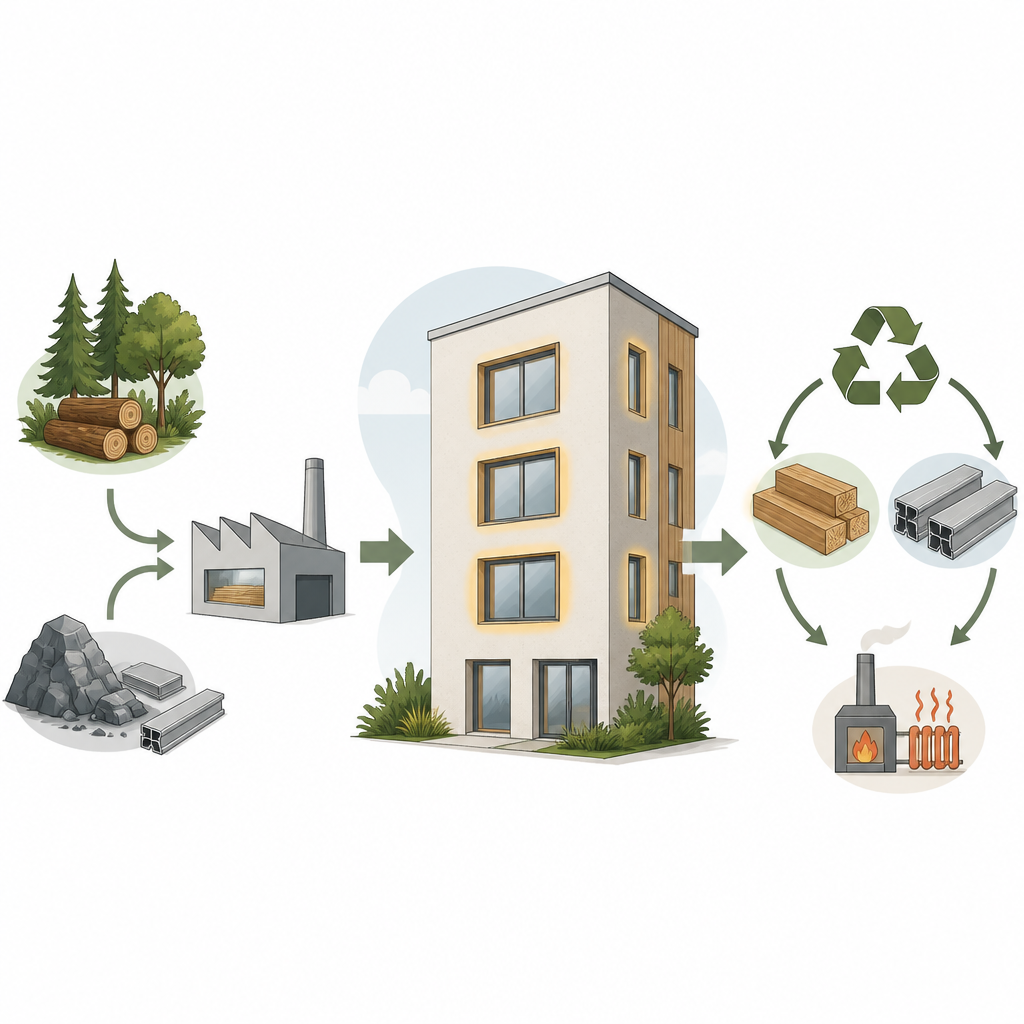
From forest and factory to finished window
The researchers used a method called life cycle assessment, which follows a product from the extraction of raw materials, through manufacturing and transport, all the way to use in a building and its end of life. They focused on a typical triple-glazed tilt-and-turn window with a wood–aluminium frame and assessed one square metre of window area. The work followed European rules for environmental product declarations, which break the life cycle into standardised modules so that different products and manufacturers can be compared fairly. For each stage, the study added up resource use, emissions and other environmental effects using detailed data from the Slovak window factory and an international database of industrial processes.
How materials and making dominate the footprint
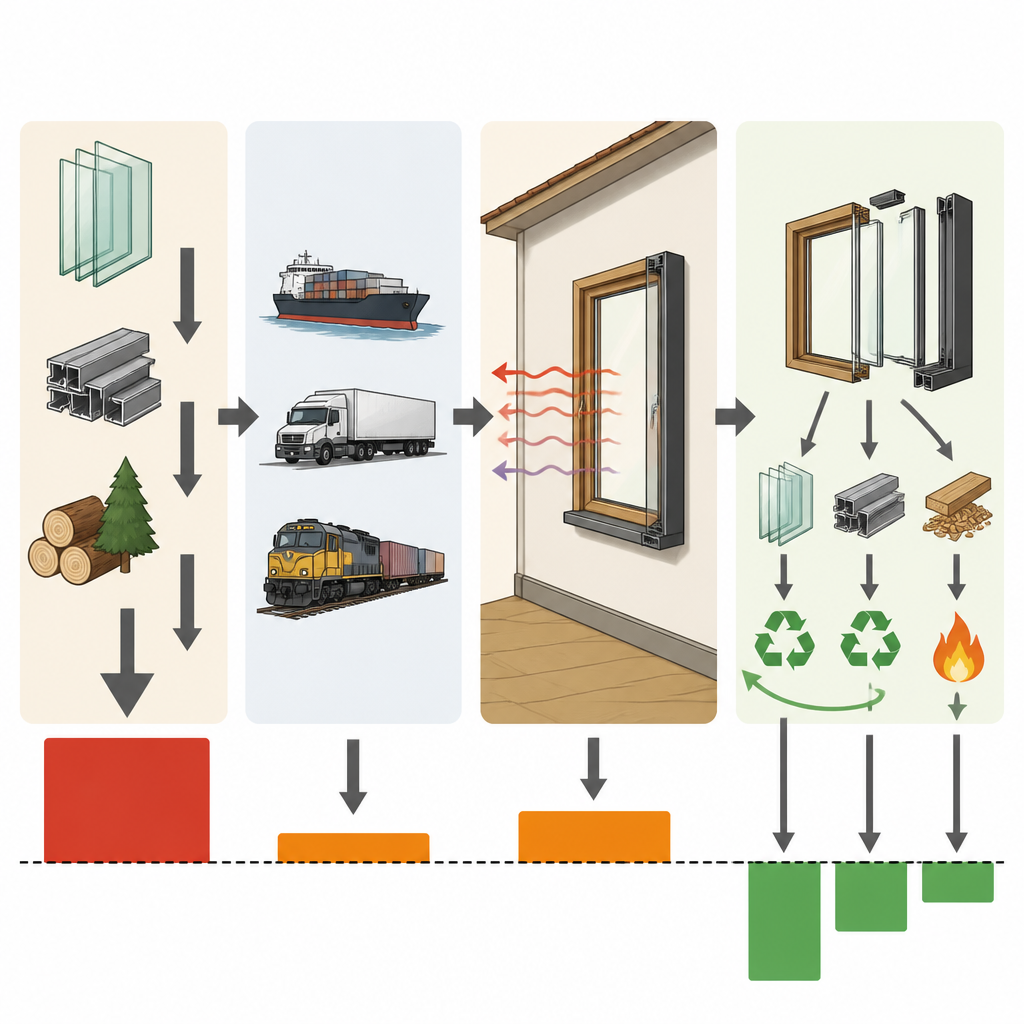
The analysis showed that the largest share of environmental impact comes from producing the materials and assembling the window. Making the glass panes alone accounts for about half of the climate impact during production, with aluminium frame parts and steel hardware also playing major roles. By contrast, the wooden frame section actually stores carbon during the tree’s growth, which appears as a short-term climate benefit while the window is in use. Overall, the production phase drives most indicators, including climate change and the use of fossil energy, meaning that careful choices of glass recipes, aluminium sourcing and factory energy can substantially improve performance.
Transport, heat loss and daily use
Moving the finished window from the factory to the building site adds another layer of impact, but the size of this layer depends strongly on distance. For deliveries within Slovakia, transport contributes only a tiny fraction of the total. When windows are shipped overseas to the United States using trucks, trains and container ships, transport becomes much more visible, especially for climate change, acid rain and water pollution indicators. Once the window is installed, its main environmental effect comes from heat that leaks through it during heating seasons. Even when modelled for just one year of operation, these heat losses add noticeably to fossil fuel use and greenhouse gas emissions, since they require extra energy from gas boilers and heat pumps to keep rooms warm.
What happens when the window’s life is over
At the end of the window’s life, it must be dismantled, transported and treated as waste. The study assumes that steel and aluminium parts are fully recycled, most glass is recycled, plastics are partly recycled and partly burned, and wood is entirely burned with energy recovery. Treating the waste itself produces some emissions, especially when the carbon stored in wood is released again. However, the materials and energy recovered from this process can replace new metal production and fossil fuels elsewhere. When these so-called credits are counted, the savings in greenhouse gases and fossil energy are large enough that they can offset much of the window’s earlier impacts, provided that recycling and energy systems are efficient and well managed.
What this means for better building choices
For non-specialists, the main message is that a window’s green credentials depend on far more than just its insulation label. For wood–aluminium windows, the biggest levers for improvement are cleaner material supply chains, efficient factories, good installation that minimises heat loss and strong recycling systems at the end of life. When these conditions are met, such hybrid windows can combine comfort and durability with a comparatively modest environmental footprint, helping buildings cut their climate impacts throughout their lifetime.
Citation: Sečkár, M., Schwarz, M. & Majer, D. Life cycle assessment of a wood-aluminium window according to European norms. Sci Rep 16, 14757 (2026). https://doi.org/10.1038/s41598-026-46142-4
Keywords: life cycle assessment, wood aluminium window, building sustainability, window energy performance, construction materials