Clear Sky Science · en
Corosolic acid alleviates rheumatoid arthritis by down regulation of the NF-κB/PI3K/AKT signaling pathway
Why This Matters for Aching Joints
Rheumatoid arthritis is a debilitating disease in which the body’s own defenses turn on the joints, causing pain, swelling, and gradual damage to bone. Many current drugs can help, but they often come with serious side effects or high costs. This study explores whether a natural compound called corosolic acid, found in plants such as loquat leaves, can calm the overactive inflammation that drives rheumatoid arthritis, at least in a rat model. The work offers a glimpse of how plant-derived molecules might one day complement or refine current arthritis treatments.
From Plant Leaves to Joint Protection
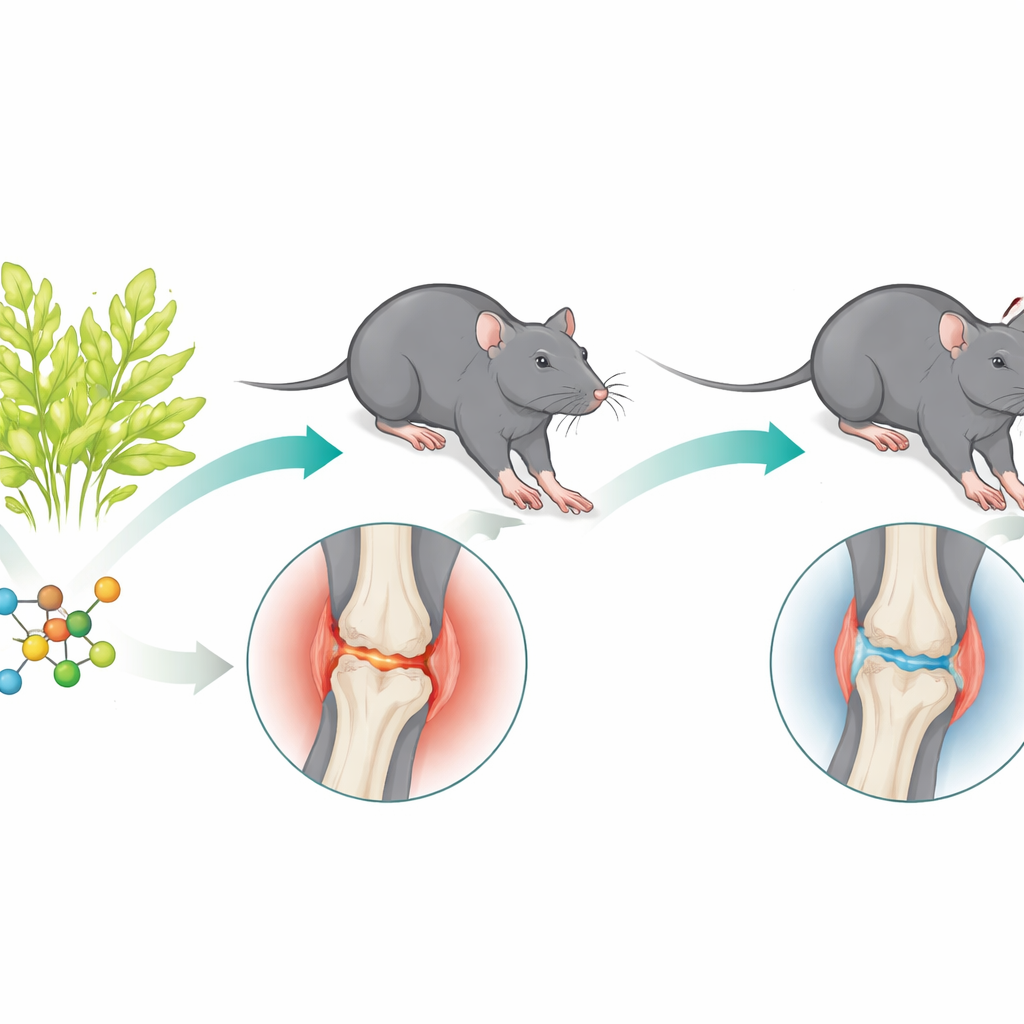
Corosolic acid is a small, ring-shaped molecule that plants make as part of their natural chemistry. Earlier research suggested it can lower inflammation, protect organs such as the kidney and liver, and help control blood sugar and blood pressure. Because rheumatoid arthritis is fueled by chronic inflammation in the joint lining, the authors asked whether this plant compound could reduce the harmful activity of joint-lining cells and protect bones and cartilage from damage. They focused on a well-established rat model of arthritis in which the immune system is triggered to attack the joints in a way that resembles human rheumatoid arthritis.
The Overactive Cells Inside Sore Joints
A key culprit in rheumatoid arthritis is a cell type called the fibroblast-like synoviocyte, which forms part of the thin membrane that lines each joint. In disease, these cells multiply, become unusually aggressive, and pour out inflammatory messengers that summon immune cells and erode nearby cartilage and bone. The researchers isolated these cells from arthritic rats and grew them in dishes. They then added corosolic acid at different doses to find a level that did not harm the cells but might change their behavior. At a chosen dose, the compound significantly reduced the release of key inflammatory messengers, the same molecules that are targeted by several modern arthritis drugs.
Quieting the Joint’s Alarm System
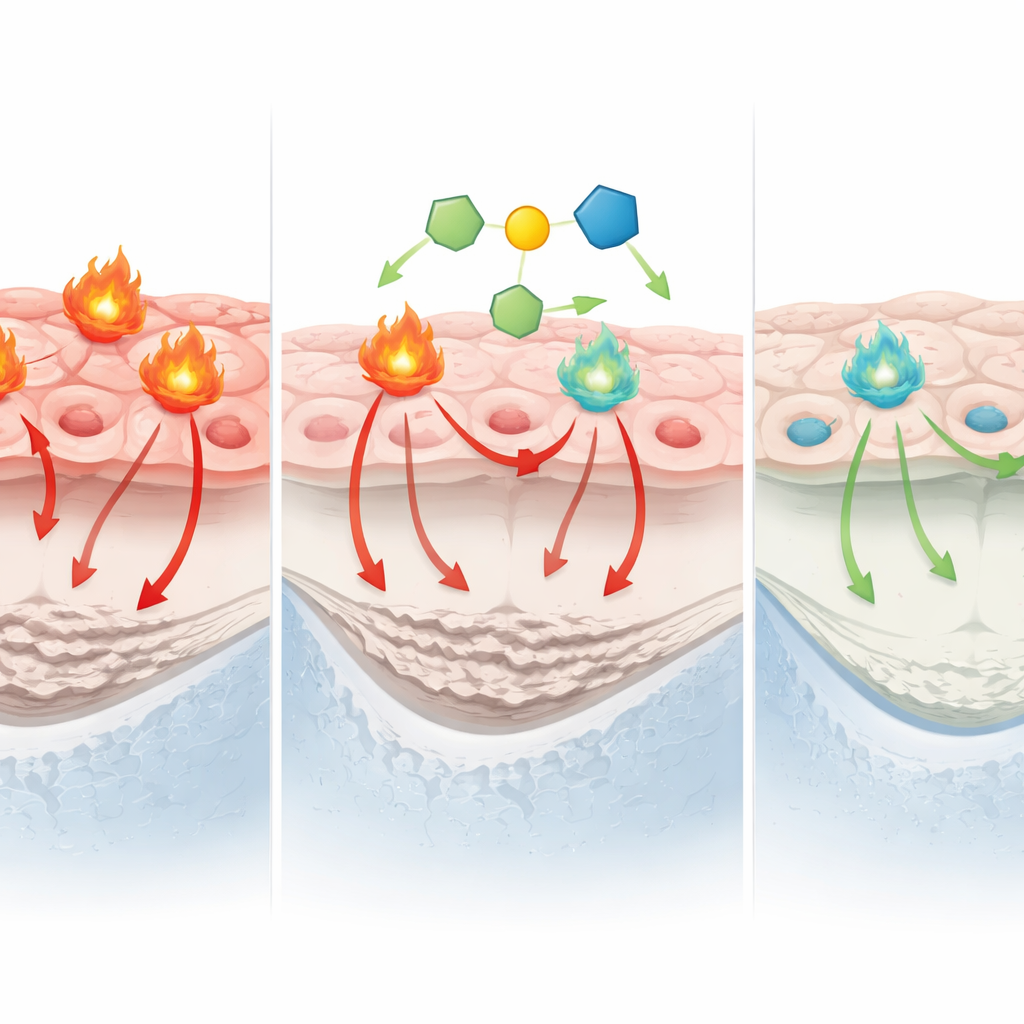
Inside these joint-lining cells, two major signaling routes act like alarm systems that amplify inflammation: one centered on a protein group called NF-kappaB, and another involving the PI3K/AKT cascade. When switched on, they drive the production of inflammatory messengers and help the harmful cells survive and invade tissue. Using protein tests and fluorescence microscopy, the team showed that corosolic acid dampened the chemical “on” switches in both routes and prevented NF-kappaB from moving into the cell nucleus where it would normally trigger inflammatory genes. By comparing the effects of known pathway-blocking drugs, they also found evidence that the NF-kappaB route sits upstream of the PI3K/AKT route in these cells, forming a linked chain of signals that corosolic acid can interrupt.
Putting the Compound to the Test in Rats
The researchers then tested corosolic acid in living rats with induced arthritis, giving the compound by mouth for three weeks and comparing it with a standard anti-inflammatory drug. Rats with untreated arthritis lost weight, developed swollen, painful paws, and showed enlarged immune organs, high levels of inflammatory messengers in the blood, and clear joint damage on tissue sections and 3D bone scans. In contrast, rats receiving corosolic acid had lower arthritis scores, healthier body weight, smaller immune organs, and reduced blood levels of inflammatory messengers. Their ankle joints showed thinner, less inflamed lining tissue, smoother cartilage surfaces, and less bone erosion, with bone density and structure measurements shifting toward normal.
What This Could Mean for Future Treatments
The authors conclude that corosolic acid can ease arthritis in this rat model by calming the overactive joint-lining cells and blocking a key signaling chain that links NF-kappaB to PI3K/AKT. While the results are promising, they are still preclinical: the work was done in rats and rat cells, and the compound’s long-term safety, dosing, and effectiveness in humans remain unknown. Even so, the study strengthens the idea that carefully studied natural molecules may help inspire safer or more targeted treatments for rheumatoid arthritis, either on their own or as part of combination strategies in the future.
Citation: Jiang, X., Liu, W., Xu, S. et al. Corosolic acid alleviates rheumatoid arthritis by down regulation of the NF-κB/PI3K/AKT signaling pathway. Sci Rep 16, 10760 (2026). https://doi.org/10.1038/s41598-026-46070-3
Keywords: rheumatoid arthritis, corosolic acid, natural anti-inflammatory compounds, joint inflammation, NF-kappaB signaling