Clear Sky Science · en
Integrated bioinformatic analysis and experiments reveal EFEMP1 as a novel aging-related signature gene in calcific aortic valve disease
Why aging hearts can develop stiff valves
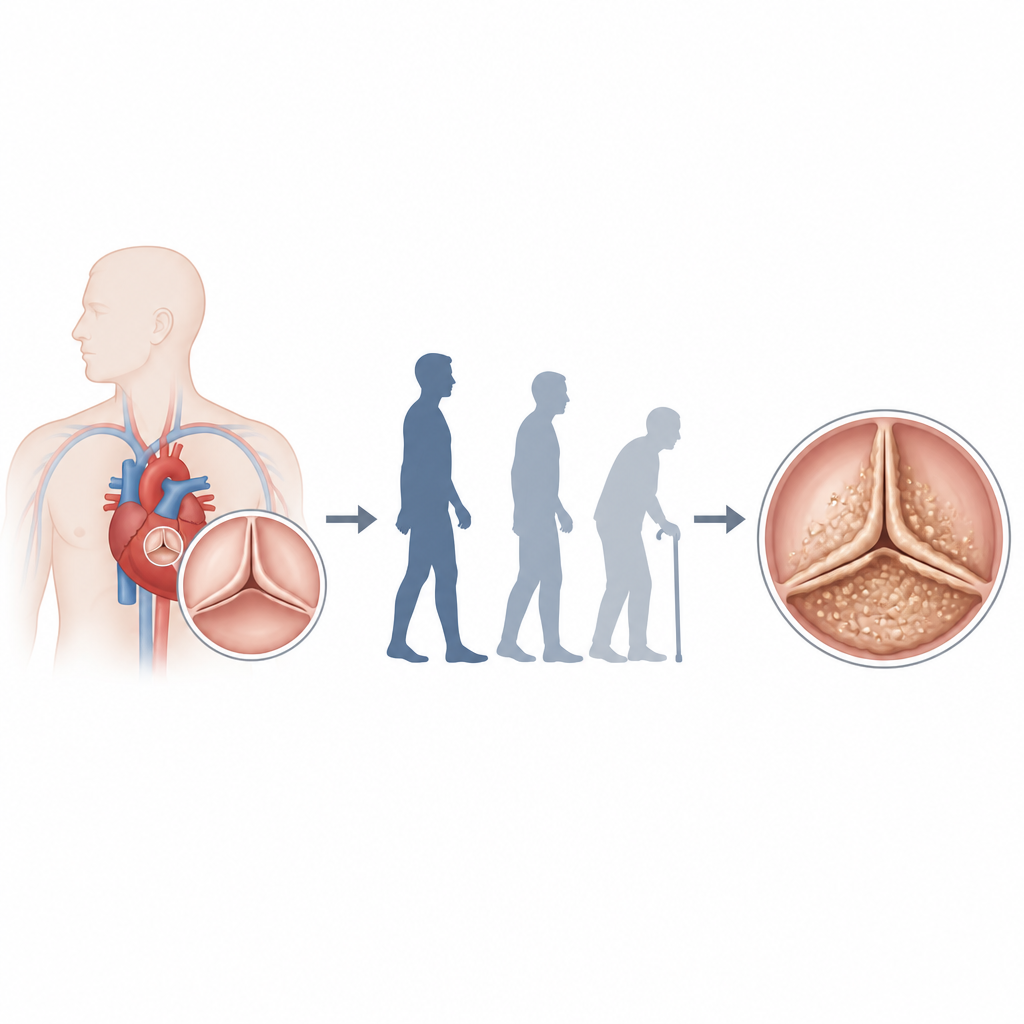
As people grow older, one of the most common heart problems they face is a stiff, calcified aortic valve, which can make every heartbeat harder work. This study looks under the hood of that process, asking why age so strongly raises the risk of calcific aortic valve disease and whether certain genes tied to aging push valve cells toward bone-like calcification. The researchers focus on a little-known gene called EFEMP1 and explore whether it might help explain how a once-flexible heart valve slowly turns rigid with time.
From soft tissue to stone-like valve
Calcific aortic valve disease occurs when the thin flaps of the aortic valve thicken and gather hard mineral deposits, narrowing the valve opening and straining the heart. Today, once the disease becomes severe, replacing the valve through surgery or catheter-based procedures is the only reliable treatment. No medicines have yet been shown to halt or reverse this slow transformation. Because the risk of the disease doubles roughly every decade of life, scientists have long suspected that aging-related pathways inside valve cells play a central role. The authors set out to pinpoint which aging-linked genes are most closely tied to the shift from normal valve tissue to calcified leaflets.
Mining big data to find a suspect gene
To do this, the team pooled several large gene-activity datasets from human aortic valves and from cultured valve interstitial cells, the main cell type that builds and maintains valve tissue. They compared samples from people with calcified valves to those without calcification and used advanced network methods to find groups of genes that changed together in disease. They then overlapped these findings with carefully curated lists of aging-related genes. This combined approach yielded 16 aging-linked genes that stood out in calcified valves. When the scientists looked more closely at data from both whole valves and isolated valve cells, only two genes, IL6 and EFEMP1, were consistently more active in both diseased tissue and in cells pushed toward a bone-like state.
Zooming in on EFEMP1 in valve cells
The researchers next turned to single-cell sequencing studies, which profile gene activity in thousands of individual cells from mouse and human aortic valves. These analyses showed that EFEMP1 was mainly switched on in valve interstitial cells and was higher in valves from animals and people with calcification. They then checked additional human datasets and found that EFEMP1 levels were reliably elevated in calcified valves, and that its activity could help distinguish diseased from normal valves in statistical tests. To move beyond computer predictions, they examined human valve tissue under the microscope. Using color-based and fluorescent staining, they confirmed that EFEMP1 protein was abundant in calcified regions and co-localized with markers of valve interstitial cells, reinforcing the idea that this gene is active where the disease is unfolding.
Testing how EFEMP1 changes cell behavior
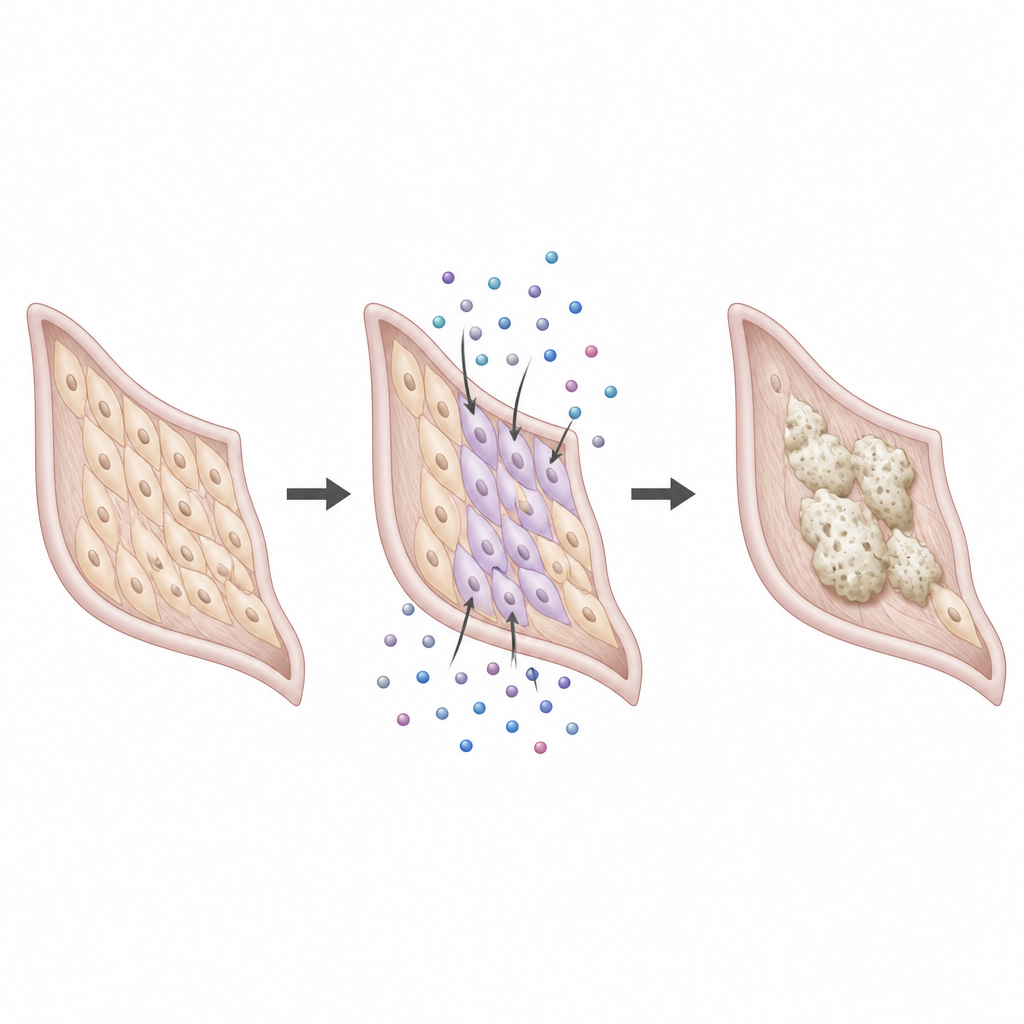
To probe cause and effect, the team used a lab-grown human valve interstitial cell line and exposed the cells to a medium that promotes bone-like mineral buildup. Under these conditions, the cells deposited calcium and increased classic bone markers such as ALP, RUNX2, and BMP2. EFEMP1 levels rose in step with these bone markers at both the RNA and protein level. When the scientists used small interfering RNA to dial down EFEMP1, the cells still experienced the calcifying conditions but showed reduced levels of the bone markers, suggesting that EFEMP1 helps drive the cells toward a stiff, mineralized state rather than simply being a passive bystander.
What this could mean for future care
In plain terms, this research suggests that EFEMP1 acts as an aging-linked switch that nudges key valve cells toward behaving more like bone-forming cells, contributing to the hardening of the aortic valve. While more work is needed to understand exactly how EFEMP1 exerts this influence and how it relates to disease severity and outcomes, the gene now stands out as both a possible marker of early valve damage and a potential target for treatments aimed at slowing or stopping calcification before surgery becomes necessary.
Citation: Liu, D., Wang, J., Fang, Y. et al. Integrated bioinformatic analysis and experiments reveal EFEMP1 as a novel aging-related signature gene in calcific aortic valve disease. Sci Rep 16, 15764 (2026). https://doi.org/10.1038/s41598-026-45986-0
Keywords: calcific aortic valve disease, heart valve calcification, EFEMP1, aging-related genes, valve interstitial cells