Clear Sky Science · en
Diagnostic validation of the Chinese version of the five-part questionnaire for screening joint hypermobility in young adults
Why flexible joints matter
Some people can easily touch the floor with straight legs or bend their thumb to their forearm. These extra flexible joints can be harmless, or they can hint at conditions linked to pain, fatigue, or frequent injuries. Doctors need quick ways to spot who might need a closer look. This study tested a short Chinese questionnaire to see whether it can reliably flag very flexible young adults so that limited clinic time can be focused where it is most needed.
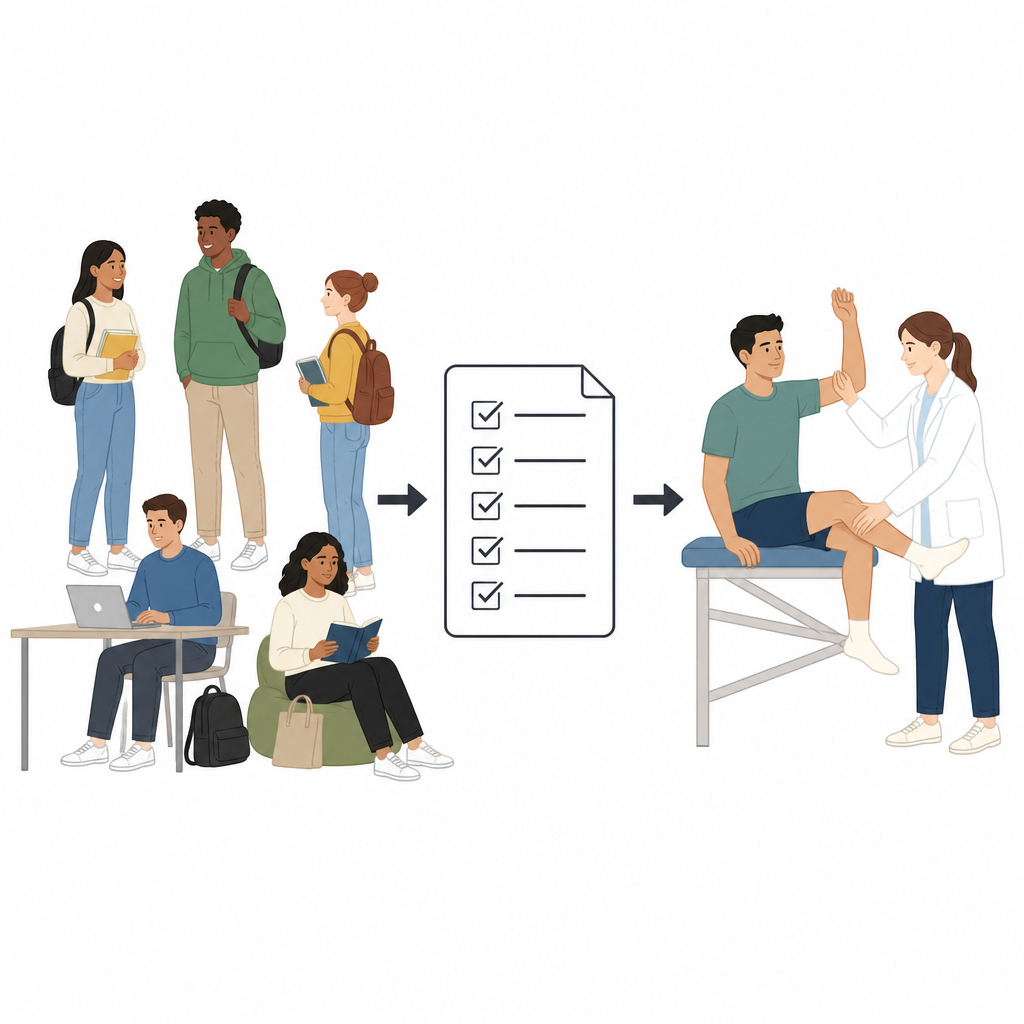
A quick set of simple questions
The research team focused on a five question survey about everyday flexibility, such as whether someone can do the splits or has ever had a shoulder or kneecap slip out of place. This tool, known internationally as the Five Part Questionnaire, was carefully translated and adapted into Mandarin for Chinese university students. Experts in language and rehabilitation checked that the wording was clear and culturally suitable, then trialed it with students to make sure the questions made sense and matched the original meaning.
Comparing the quiz with a hands on exam
To judge whether the questionnaire really works, the researchers compared it with a standard in person joint test called the Beighton Score. In this exam, a trained assessor gently checks how far certain joints move and gives a score based on a nine point scale. Over 1,900 students from two universities in Chengdu were invited, and 615 completed both the questionnaire and the physical exam. The team used the widely recommended rule that a Beighton Score of five or more points signals generally flexible joints.
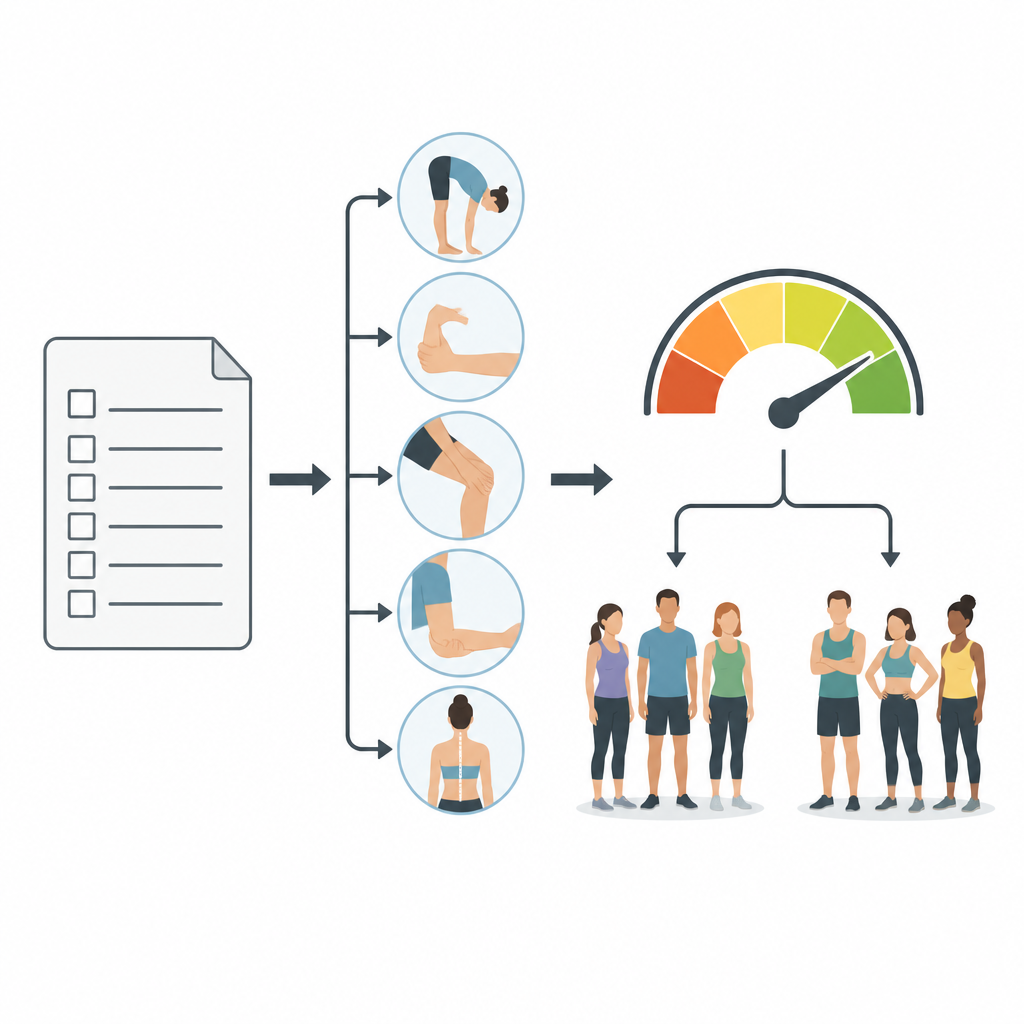
How well the questionnaire performed
When the answers were matched to the physical exam results, the Chinese questionnaire correctly identified about eight out of ten students who had very flexible joints according to the Beighton test. It also correctly reassured around two thirds of those without such flexibility. Overall, just over 70 percent of students were classified in line with the hands on exam. The study also checked consistency over time. A subgroup of 325 students filled out the questionnaire twice, one week apart, and their results were largely stable, showing that most people gave similar answers on both occasions.
What the questions revealed
Not all questions were equally helpful. Items asking about touching the floor with straight knees, bending the thumb to the forearm, and doing the splits were strongly linked to having flexible joints on the physical exam. A question about past dislocations of the shoulder or kneecap was less useful in this mostly healthy student group, where such injuries were rare. The researchers also noticed that some students seemed to overestimate how far they could bend, probably because they judged movements differently from the strict clinical method, hinting that adding simple drawings might improve future versions.
What this means for everyday health checks
For a layperson, the takeaway is that a short, easy questionnaire in Chinese can give a reasonably accurate first look at who has very flexible joints among young adults. It cannot replace a full physical exam, and some people it flags will turn out not to be especially flexible, but it can help doctors and researchers quickly sort large groups and decide who should be checked more closely. In busy clinics, schools, or sports programs, this simple tool could support earlier recognition of those whose flexibility might later be linked with pain, imbalance, or other problems, while also avoiding unnecessary exams for many others.
Citation: Wang, Y., Li, X. & Wang, Y. Diagnostic validation of the Chinese version of the five-part questionnaire for screening joint hypermobility in young adults. Sci Rep 16, 15163 (2026). https://doi.org/10.1038/s41598-026-45970-8
Keywords: joint hypermobility, Beighton score, screening questionnaire, Chinese university students, musculoskeletal health