Clear Sky Science · en
Effect of surface polishing on roughness, biofilm formation, and biocompatibility of LCD-printed denture base polymer
Smoother dentures for a healthier mouth
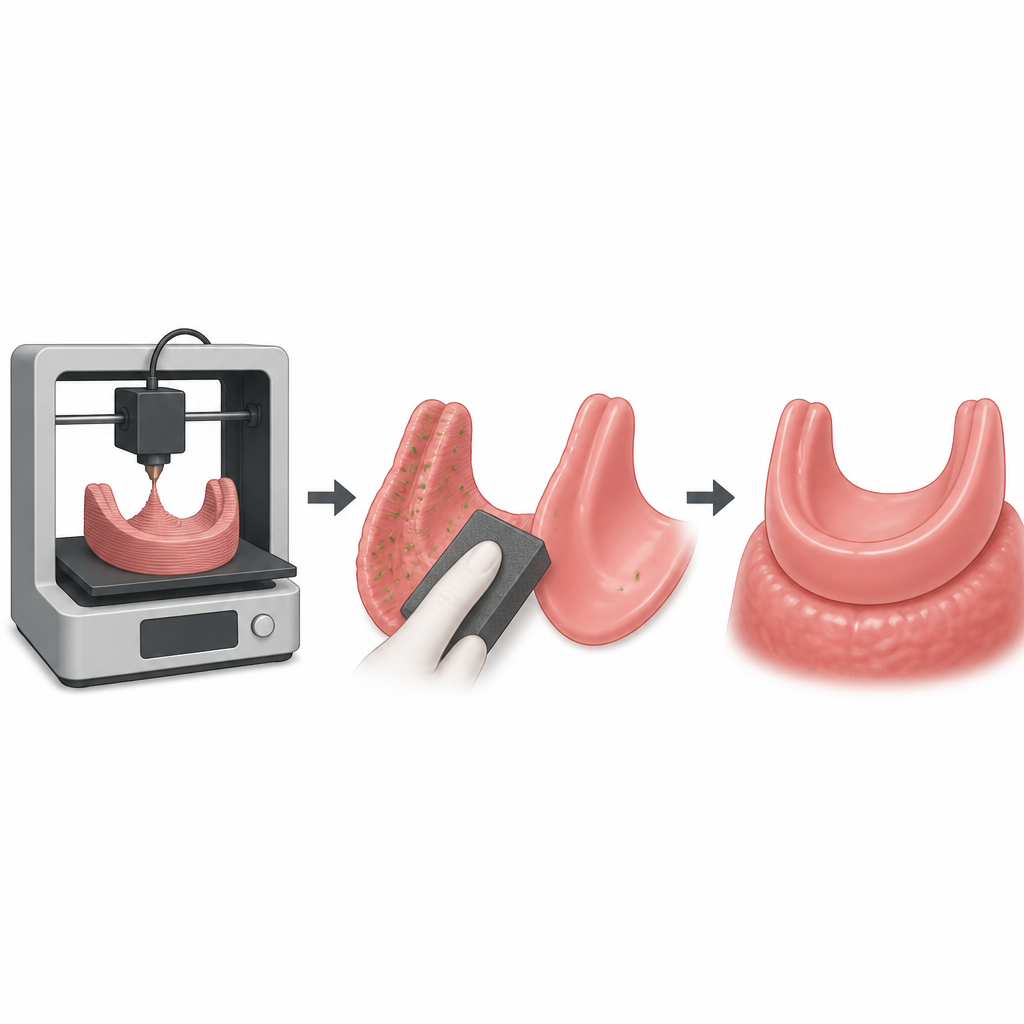
Dentures made with modern 3D printers promise faster, cheaper care, but their surfaces can come out ridged and rough. Those tiny grooves may give germs a place to hide, raising the risk of sore, inflamed gums under the denture. This study asked a practical question that matters to many denture wearers and dentists alike: if we take the time to carefully polish these 3D printed bases, do they actually get safer and easier on mouth tissues, without becoming weaker?
Why denture smoothness matters
A common problem for people who wear full dentures is denture stomatitis, a red, inflamed patch on the gums that can affect more than half of wearers. A yeast called Candida albicans often plays a key role by clinging to the underside of the denture and building up slimy biofilms. Earlier work showed that rougher materials can trap more microbes, but most dentures made by 3D printing are still left with the factory texture on the fitting surface. The authors wanted to know whether a careful polishing routine for liquid crystal display (LCD) printed denture plastic could lower surface roughness enough to matter for microbes and human cells.
How the team tested polishing
The researchers printed small discs from a commercial denture base resin using an LCD printer, then split them into two groups. One group was only lightly sanded to mimic the layered texture that printing leaves behind. The other group went through a stepwise hand polishing process using finer and finer sandpapers under running water, like a very controlled version of what a dental lab might do. They measured the resulting roughness with both a contact probe and a laser microscope, looked at the surface shape with electron microscopy, checked how water droplets spread on the plastic, and tested how the discs handled pressing forces similar to chewing.
What happened to microbes and cells
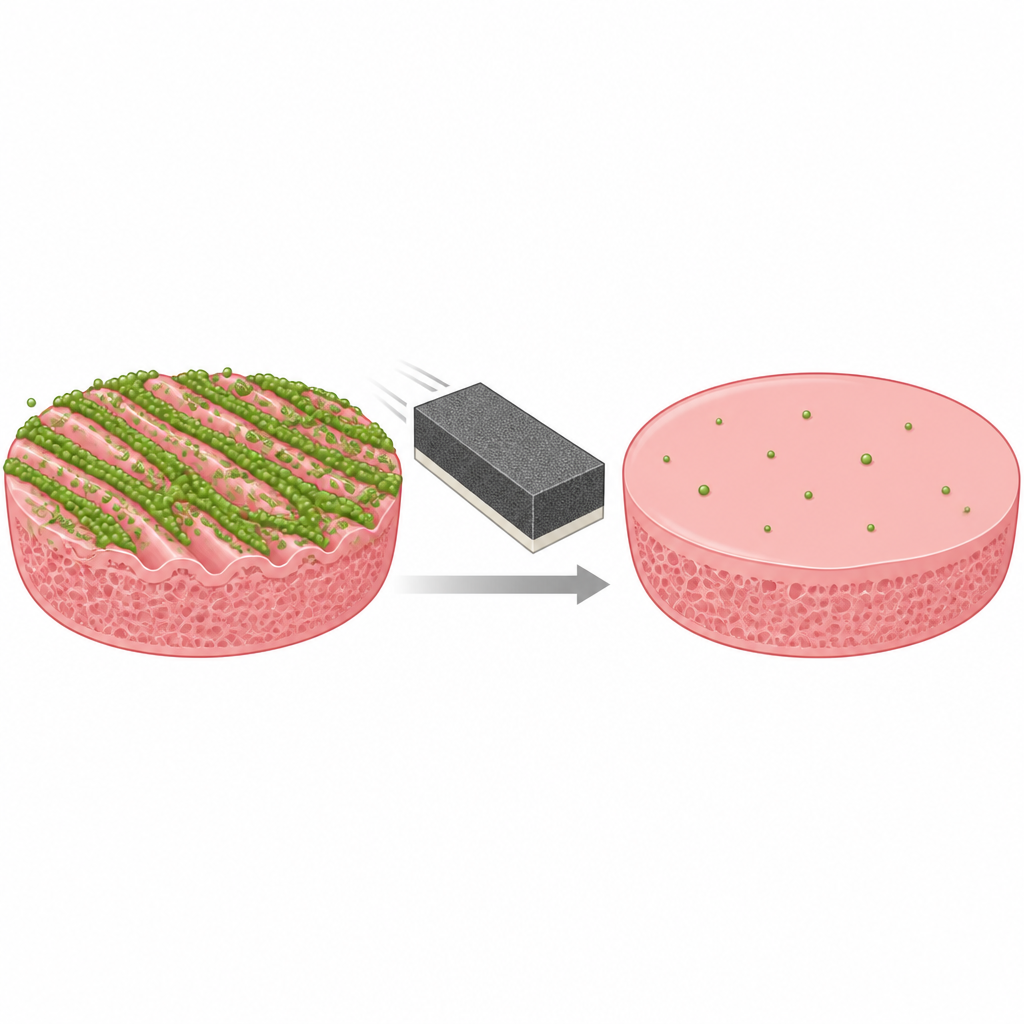
To see how germs responded, the team grew Candida albicans on both rough and polished discs. The rough and smooth plastics ended up carrying similar numbers of yeast cells overall, but there was a clear difference in how active those cells were and how thickly they covered the surface. On the polished discs, the yeast showed lower metabolic activity and formed a thinner, less dense living layer. At the same time, tests with mouse fibroblast cells, which stand in for mouth tissue, showed that both rough and smooth versions of the material supported cell metabolism at levels comparable to a control group, with healthy looking cell layers over time. Protein adsorption, a first step that can shape how microbes and cells attach, was similar on both surfaces.
Strength and water behavior stayed acceptable
The researchers also checked whether polishing might make the printed plastic more fragile. By compressing small cylinders of the material, they found no meaningful difference in stiffness between rough and polished samples, suggesting that the process removes only a thin outer layer without harming the inner structure. Polished surfaces did shed their deepest grooves, which brought roughness down close to or below the level often considered safer against plaque buildup. They also showed somewhat higher water contact angles, hinting that the true material is mildly more water-repelling when its texture is smoothed, though this shift alone did not explain the changes seen in yeast behavior.
What this means for denture wearers
For people who rely on 3D printed dentures, these findings suggest that careful polishing of the fitting surface can make a real difference. Smoother LCD printed denture bases became less inviting to Candida biofilms without losing their strength or becoming more irritating to cells. In simple terms, taking the extra step to polish the inner side of a printed denture may help keep the mouth surface calmer and cleaner, while still giving dentists and technicians the practical benefits of digital production.
Citation: Ferro, A.C., de Oliveira, J.S., Scabelo, L. et al. Effect of surface polishing on roughness, biofilm formation, and biocompatibility of LCD-printed denture base polymer. Sci Rep 16, 15577 (2026). https://doi.org/10.1038/s41598-026-45942-y
Keywords: 3D printed dentures, surface polishing, Candida biofilm, denture stomatitis, dental materials