Clear Sky Science · en
Association between the Framingham steatosis index and osteoarthritis: evidence of mediation by phenotypic age
Why your liver might matter to your aching joints
Many people think of osteoarthritis as simple wear and tear in the knees or hips. This study suggests that what happens deep inside the body, especially in the liver and in how fast we biologically age, may also be tied to joint pain. Understanding this hidden connection could change how we think about risk for osteoarthritis and how doctors might one day prevent it.
A simple score for hidden liver fat
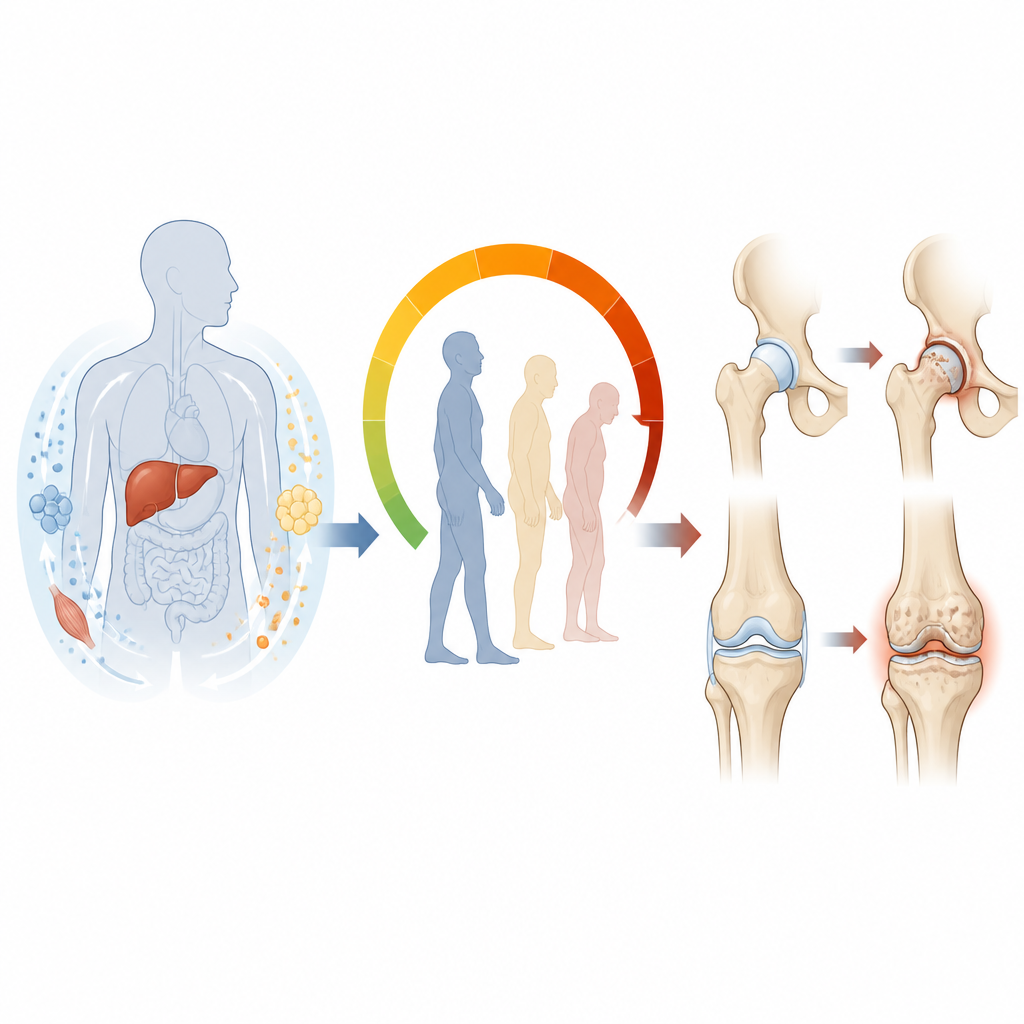
The researchers focused on a number called the Framingham steatosis index, or FSI, which uses common health measures such as age, body weight, blood fats, blood pressure, blood sugar and liver tests to estimate how much fat is likely stored in the liver. Fatty liver is closely linked to obesity and metabolic problems like insulin resistance. Rather than scanning every liver, FSI gives a practical way to capture this broader metabolic burden using data that are already collected in routine checkups.
Looking for links in a national health survey
To test whether this liver fat score relates to joint disease, the team analyzed data from 9279 adults who took part in the long running U.S. National Health and Nutrition Examination Survey. About one in ten of these participants reported having osteoarthritis, based on a doctor’s diagnosis. The scientists used statistical models that accounted for the complex sampling design of the survey, so their findings would better reflect the U.S. adult population as a whole. They also adjusted for a range of factors such as race, income, smoking, alcohol use, physical activity, and major heart and brain conditions.
Higher liver fat score, higher odds of joint disease
The analysis showed a clear pattern: people with higher FSI values were more likely to report osteoarthritis. With every step up in the index, the odds of having osteoarthritis rose, even after accounting for many other influences. When the researchers divided participants into four groups from lowest to highest FSI, those in the top group had more than three times the odds of osteoarthritis compared with those in the lowest group. The relationship was not perfectly straight, however. At very low FSI levels, increases were linked to a steep rise in osteoarthritis, but beyond a certain point the curve flattened, suggesting that once metabolic strain is high, extra liver fat may add less additional risk.
Biological age as a missing piece
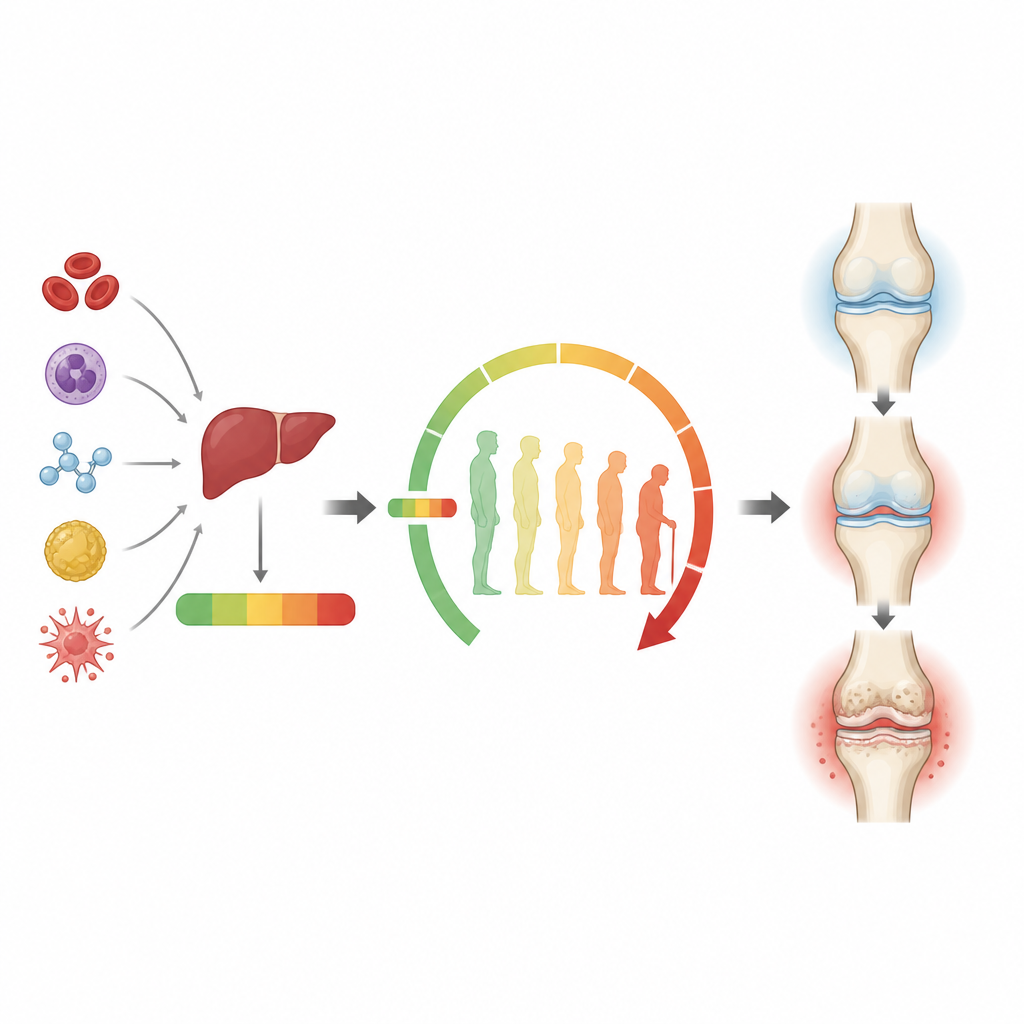
The study also examined a measure called Phenotypic Age, or PhenoAge, which blends chronological age with nine blood markers to estimate how old the body behaves biologically. People with osteoarthritis tended to have higher PhenoAge. When the researchers used a mediation analysis, they found that roughly one quarter of the link between FSI and osteoarthritis could be explained by PhenoAge. In other words, part of the association between liver related metabolic stress and joint disease seemed to run through faster biological aging, though the cross sectional design means the direction of cause and effect cannot be proven.
What this means for everyday health
For readers, the message is that osteoarthritis may be connected not only to worn joints and extra body weight, but also to deeper metabolic health and how quickly the body ages. A higher liver fat score was tied to more osteoarthritis, and accelerated biological aging appeared to explain some of this link. The authors stress that more long term studies are needed to see whether improving metabolic health or slowing biological aging can actually lower osteoarthritis risk, but their findings hint that caring for the liver and overall metabolism might also help protect the joints.
Citation: Guo, T., Zhang, W., Zhao, C. et al. Association between the Framingham steatosis index and osteoarthritis: evidence of mediation by phenotypic age. Sci Rep 16, 15304 (2026). https://doi.org/10.1038/s41598-026-45922-2
Keywords: osteoporosis, fatty liver, osteoarthritis, biological aging, metabolic health