Clear Sky Science · en
The effects of boriding on kinetic, microstructure and corrosive behavior of Ramor 500 and Ramor 550 steels
Stronger armor for harsh environments
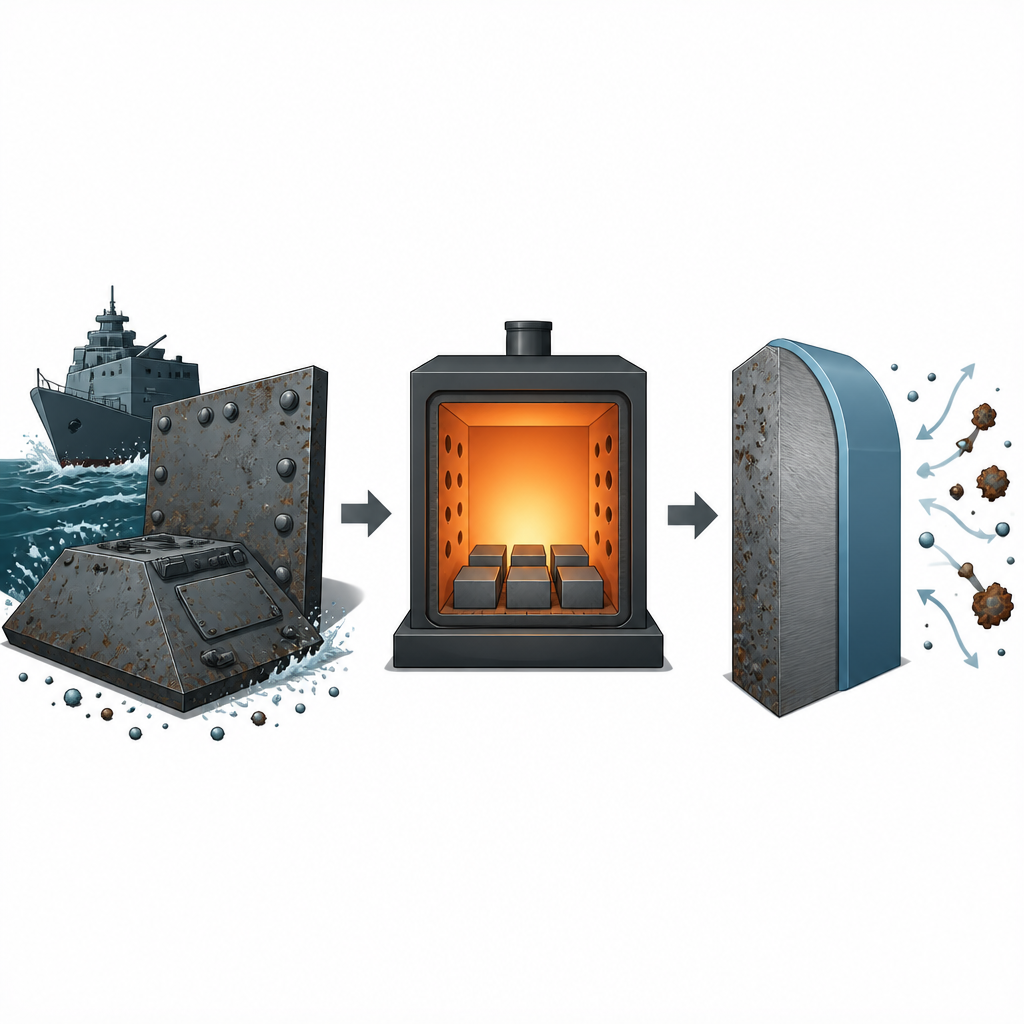
From armored vehicles to secure doors on ships, modern protection systems rely on tough steels that must withstand both impact and relentless exposure to the elements. This study explores a way to give two commonly used armor steels, Ramor 500 and Ramor 550, a tougher skin that is harder to wear down and more resistant to salty water, helping critical parts last longer and perform more reliably.
A hard protective skin made with boron
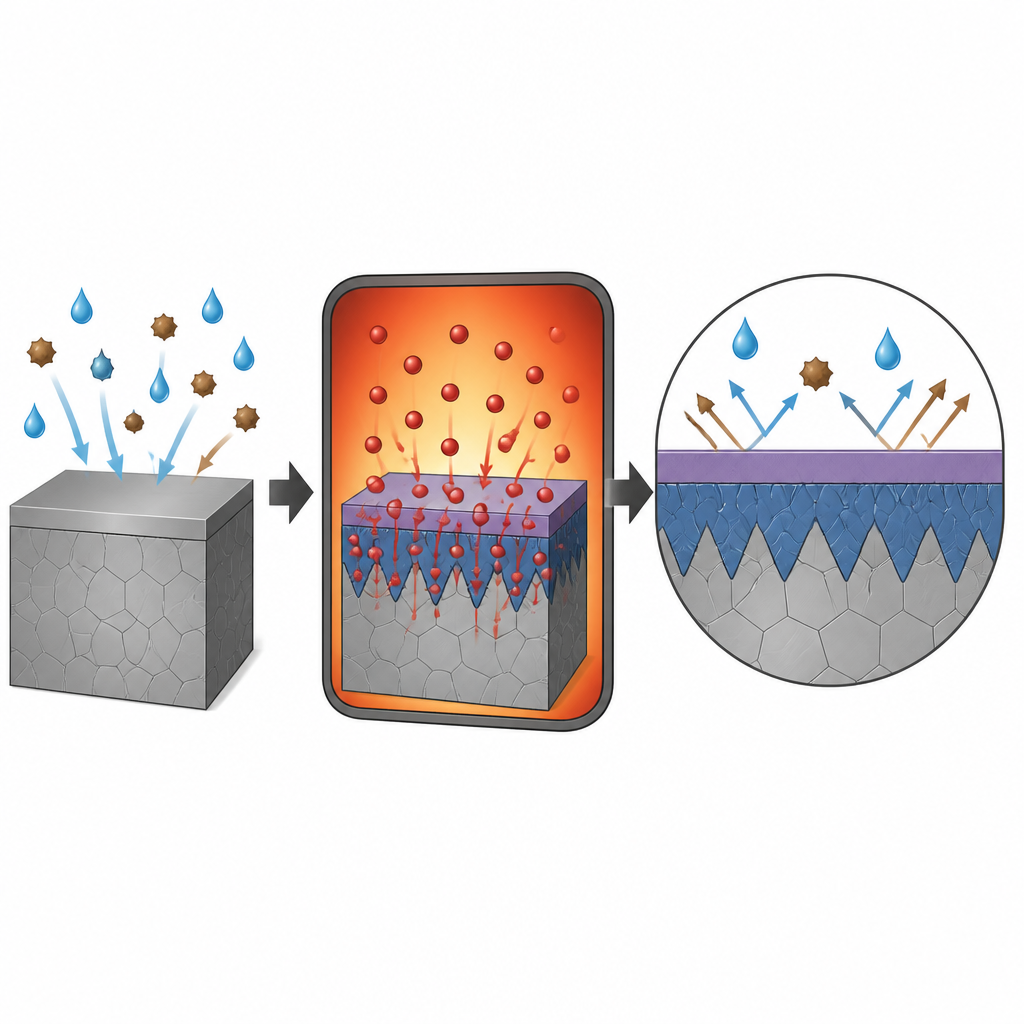
The research focuses on a treatment called boriding, in which steel parts are heated in a powder rich in boron, a small atom that can diffuse into the metal. When the steel is held at high temperature, boron atoms move inward and react with iron to form a very hard outer layer. The authors point out that, despite the wide use of Ramor armor steels in defense and industry, there has been little data on how boriding behaves on these specific alloys or how it affects their resistance to wear and corrosion, especially in salty or marine-like conditions.
How the tests were carried out
Small blocks of Ramor 500 and Ramor 550 were polished clean and then packed in a commercial boriding powder before being heated to 900, 950, or 1000 degrees Celsius for 2, 4, or 6 hours. After cooling, the team used powerful microscopes and X-ray tools to examine the treated surfaces. They measured the thickness of the new layer, identified which compounds had formed, and mapped how the boron was distributed. They also pressed a diamond tip into the surface at different depths to track how hardness changed from the outer skin down into the core steel.
What the surface looks like after treatment
The boriding process produced a continuous two-layer coating on both steels. Closest to the air the surface was rich in a very hard iron boride phase, while just beneath it lay a slightly less hard but tougher second boride phase. Together they formed a distinctive tooth-like pattern that locks the coating into the underlying steel. The researchers found that the thickness of this protective skin increased in a predictable way with higher temperature and longer time, following a simple growth law. They calculated how easily boron moves through each steel, finding only slightly higher resistance in Ramor 550, which contains a bit more alloying elements such as chromium, nickel, and molybdenum.
Hardness and resistance to salty water
Measurements showed that the borided surfaces were four to five times harder than the untreated steels, reaching values comparable to high-end tool steels used for cutting and forming. Hardness was highest at the very surface and then gradually decreased toward the core, reflecting the change from the hard outer layer to the more ductile base metal. To mimic marine conditions, the team immersed the samples in a 3 percent salt solution and performed electrochemical tests that track how easily corrosion starts and spreads. The borided samples of both steel grades showed very similar behavior and no obvious localized damage, indicating that the dense boride skin acts as an effective barrier against attack by chloride-rich water.
Why these findings matter
The study delivers a detailed map of how boriding conditions control the thickness, structure, and protective power of the outer layer on Ramor 500 and Ramor 550 steels. For designers of armored vehicles, naval components, and security structures, these results provide practical guidelines for choosing the time and temperature needed to reach a desired coating thickness and surface hardness while gaining added corrosion resistance. Put simply, the work shows how to grow a tough, well-anchored shell on these steels that helps them stand up better to both mechanical stress and harsh, salty environments.
Citation: Tan, H.O. The effects of boriding on kinetic, microstructure and corrosive behavior of Ramor 500 and Ramor 550 steels. Sci Rep 16, 15842 (2026). https://doi.org/10.1038/s41598-026-45921-3
Keywords: boriding, armor steel, surface hardness, corrosion resistance, Ramor steel