Clear Sky Science · en
Isokinetic knee strength profiles, conventional hamstring-to-quadriceps ratio, and performance decrement in weightlifting and wrestling athletes: a cross-sectional study
Why leg strength balance matters
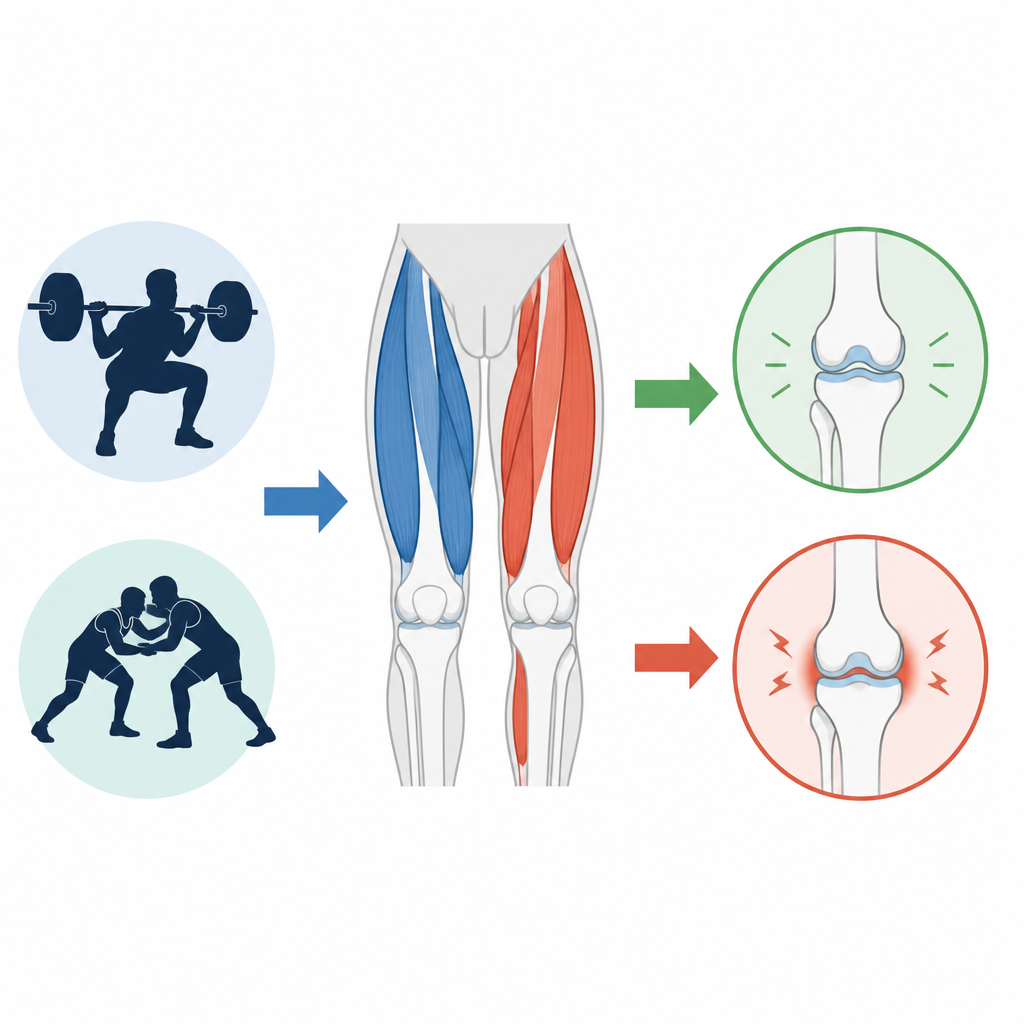
Athletes in power sports place enormous stress on their knees, which can boost performance but also raise injury risk. This study looks closely at how the front and back thigh muscles work together in elite weightlifters and wrestlers, and how quickly their power drops during repeated efforts. By understanding these patterns, coaches and clinicians can better tailor training and recovery to keep athletes both strong and safe.
Looking inside the working knee
The knee depends on a partnership between the quadriceps muscles on the front of the thigh, which straighten the leg, and the hamstrings on the back, which bend it and help steady the joint. The researchers focused on the balance between these groups, known as the hamstring to quadriceps ratio, and on how rapidly athletes could develop force and then maintain it under repeated effort. This balance is important because if the front muscles overpower the back, the knee can become less stable during fast or forceful movements, which has been linked to ligament and muscle injuries.
How the study was done
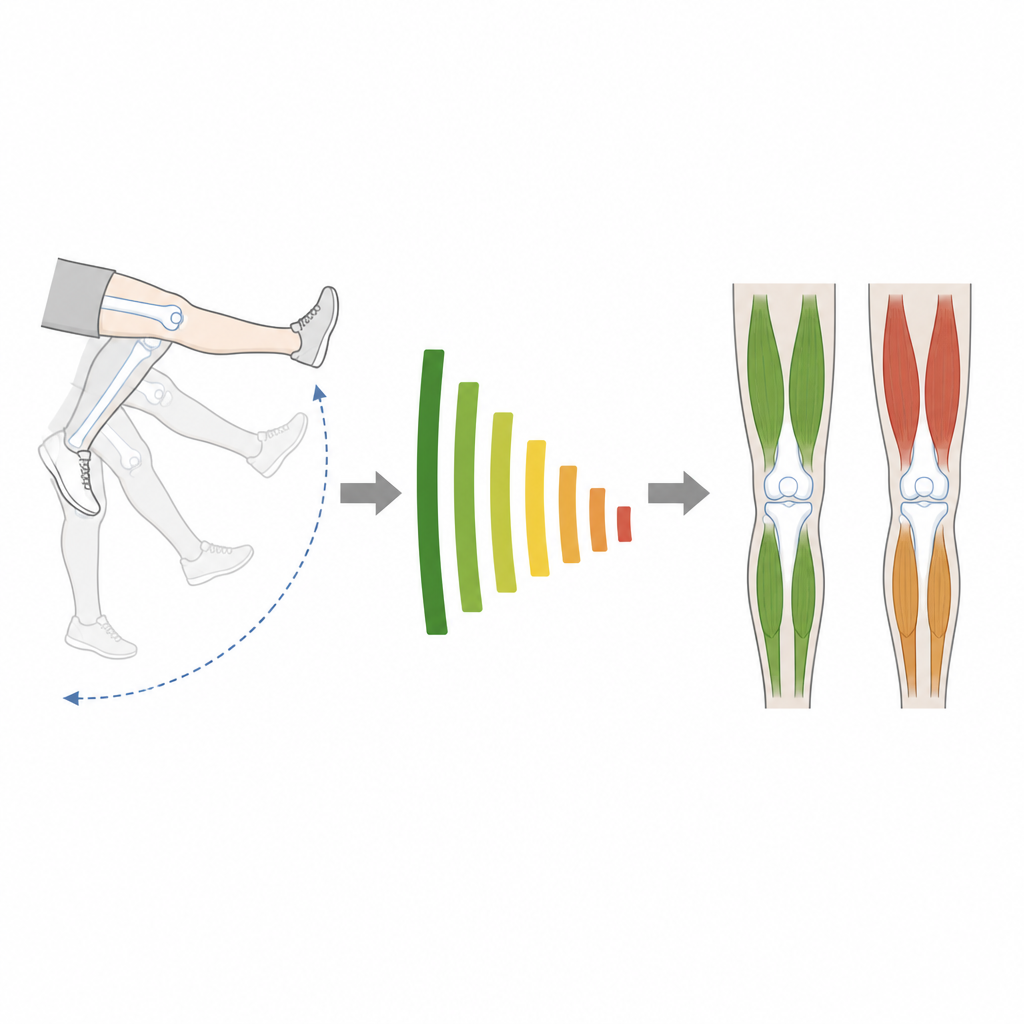
Forty experienced athletes, split evenly between weightlifting and wrestling, took part in the research. They trained hard at least five days a week and had no injuries that would limit maximal testing. The scientists divided them into two groups based on training history: those with five years or less of experience and those with six years or more. Using a computerized dynamometer, they measured how much torque the athletes could produce while bending and straightening each knee at three different speeds, representing maximum strength, power, and endurance. From these tests they calculated the muscle balance ratio, how quickly peak force was reached, and how much performance dropped off after many repeated contractions.
Differences between sports and careers
When comparing sports, weightlifters generally showed higher hamstring to quadriceps ratios at the slowest test speed on both legs, suggesting a more balanced relationship between the front and back thigh muscles at maximal efforts. They also tended to reach peak force faster in some movements, especially in right leg extension, than wrestlers. Wrestlers, however, often showed slightly smaller drops in performance across repeated efforts, hinting that they may cope differently with fatigue, even though these differences were not statistically strong. When looking at training history, athletes with six or more years of experience produced higher torque and explosive force in several measures, particularly in fast knee bending. But the older group was also about a decade older than the less experienced group, so age and maturity likely influenced these results alongside training years.
Links between strength, fatigue, and control
The study also explored how knee strength measures related to other performance features. Stronger athletes tended to show clear patterns in when and how quickly they reached peak torque, and these features were consistently tied to their knee strength across all speeds. Measures of fatigue, expressed as performance decrement, were strongly connected with strength-related variables as well. In simple terms, how much an athlete’s power faded over repeated efforts was closely linked to their basic strength and how their muscles produced force over time.
What this means for athletes and coaches
Overall, the work shows that leg strength patterns, muscle balance, and fatigue behavior differ between weightlifters and wrestlers and across stages of an athletic career. Because the study was cross sectional and the groups differed in age and sport mix, the authors stress that these findings show associations rather than cause and effect. Still, the message for practice is clear. Regular testing of knee strength profiles, including the hamstring to quadriceps ratio and how performance declines with repetition, can help coaches and clinicians spot imbalances early and adjust training loads. This kind of monitoring may support safer, more individualized programs that aim to protect the knees while sustaining the power these athletes need to compete.
Citation: Sung, JY., Lee, KL., Noh, KW. et al. Isokinetic knee strength profiles, conventional hamstring-to-quadriceps ratio, and performance decrement in weightlifting and wrestling athletes: a cross-sectional study. Sci Rep 16, 15023 (2026). https://doi.org/10.1038/s41598-026-45803-8
Keywords: knee strength, hamstring quadriceps ratio, weightlifting, wrestling, sports injury risk