Clear Sky Science · en
Energy, environment, and economy implications of electrifying minibus taxis in African cities
Why Small Buses Matter for Big Change
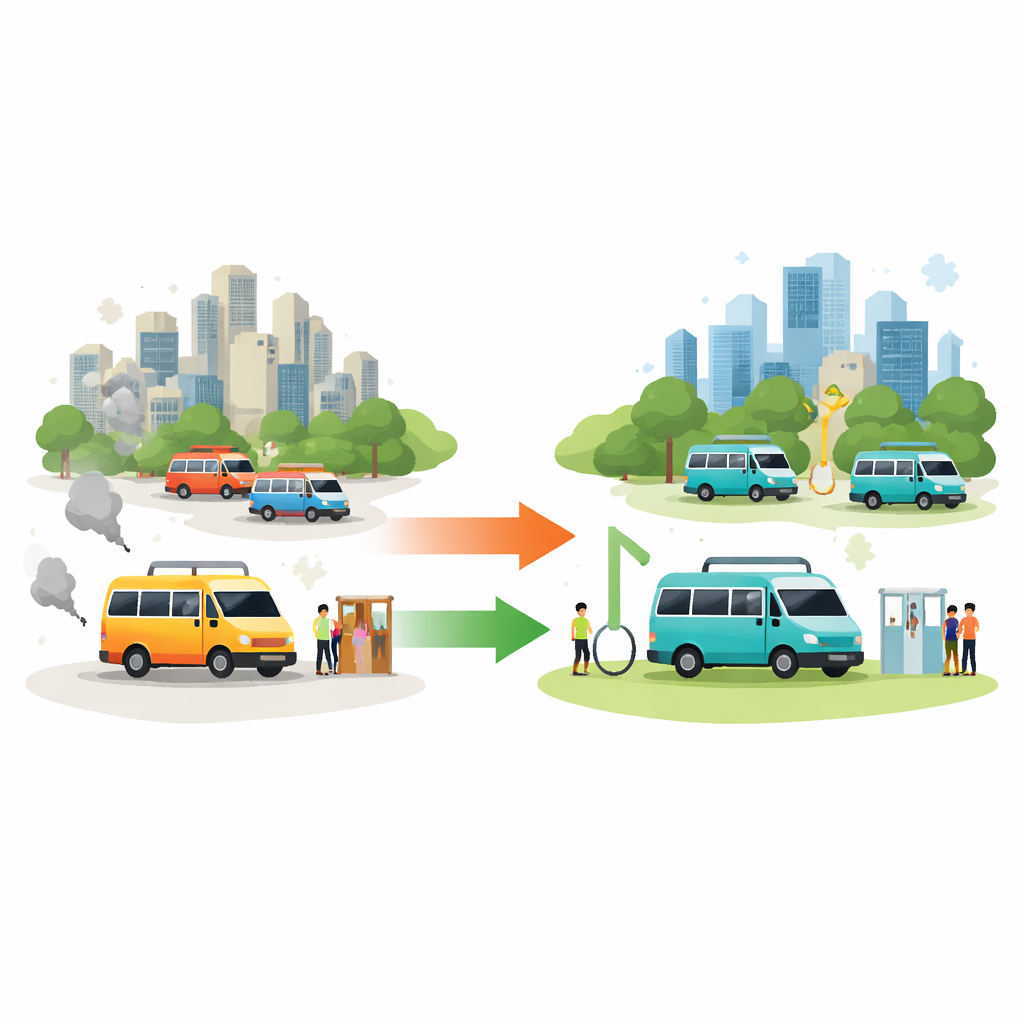
Across many African cities, small privately run minibuses are the backbone of everyday travel. They shuttle millions of people to work, school, and markets, but they also burn diesel, pollute the air, and cost operators a lot in fuel. This study asks a simple but powerful question: what would happen if these workhorse vehicles were switched to electricity? Using easy-to-find transport and energy data, the authors explore how electrifying minibus taxis in nine African cities could affect power demand, climate-warming emissions, local air quality, and the wallets of drivers and owners.
How the Study Looked Inside City Travel
Instead of relying on expensive tracking gadgets or detailed traffic simulations, the researchers built a model that draws on open transit schedule files already available for many cities. These files describe when and where minibuses run, how often they depart, and how long routes are. From this, the team reconstructed how many minibuses are on the road on a typical weekday, how far they drive, and how much energy electric versions would use. They then linked this picture of daily movement to national data on electricity use, fuel prices, and the carbon footprint of each country’s power plants. Finally, they overlaid the routes on population maps to see how many people live close to busy minibus corridors and would therefore breathe their exhaust.
What Electrification Means for Power Use
The model shows that switching all minibuses in a city to electricity would raise power demand, but the size of that increase depends heavily on local context. Some big cities, such as Cairo and Alexandria, would need hundreds of megawatt-hours of extra electricity per day to charge their fleets—yet this would still be less than 1% of their current total power use. Others, like Kampala and Freetown, have smaller absolute charging needs but very low existing electricity consumption; in those places, minibus charging could add more than 20% to today’s city-level demand. At the level of individual vehicles, typical daily energy needs range from about 40 kilowatt-hours in Freetown to over 200 in Cairo, with some buses in Cairo and Harare requiring far more. That means some cities could rely on small off-the-shelf electric minibuses, while others would need larger batteries or smart charging strategies that spread charging over the day.
Cleaner Air and Lower Climate Emissions
On the climate front, the results are unambiguous. In every city studied, electric minibuses would cut greenhouse gas emissions compared with diesel models, even when the power grid still relies partly on fossil fuels. Each vehicle would avoid between about 4 and 19 metric tons of carbon dioxide per year under today’s electricity mixes, with the highest savings in Nairobi, where buses travel long distances and the grid is relatively clean. Across the nine cities together, this amounts to roughly 150,000 tons of carbon dioxide avoided annually—similar to the yearly emissions of more than 160,000 average Africans—and more than 115 million liters of diesel not burned. The benefits would grow further as more renewable power, such as hydropower and solar, is added to national grids.
Healthier Streets and Better Economics
The study also highlights strong gains for both public health and operators’ finances. Because many minibus routes cut through dense neighborhoods, about 23 million people across the nine cities live within 300 meters of a paratransit line and are regularly exposed to traffic-related air pollution. Electrifying minibuses would sharply reduce these near-road exhaust plumes, especially in hotspots where high traffic overlaps with crowded districts. At the same time, owners and drivers stand to save money. In all cities, running electric vehicles on grid power is cheaper per kilometer than buying diesel. Depending on location and mileage, annual fuel savings range from roughly US$1,200 to US$14,000 per minibus, with the largest gains in places where diesel is expensive but electricity is relatively cheap, such as Harare. If governments phase out diesel subsidies, the economics tilt even more strongly toward electric fleets, and some of the public savings could be redirected to support charging infrastructure or lower purchase prices.
Planning the Road Ahead
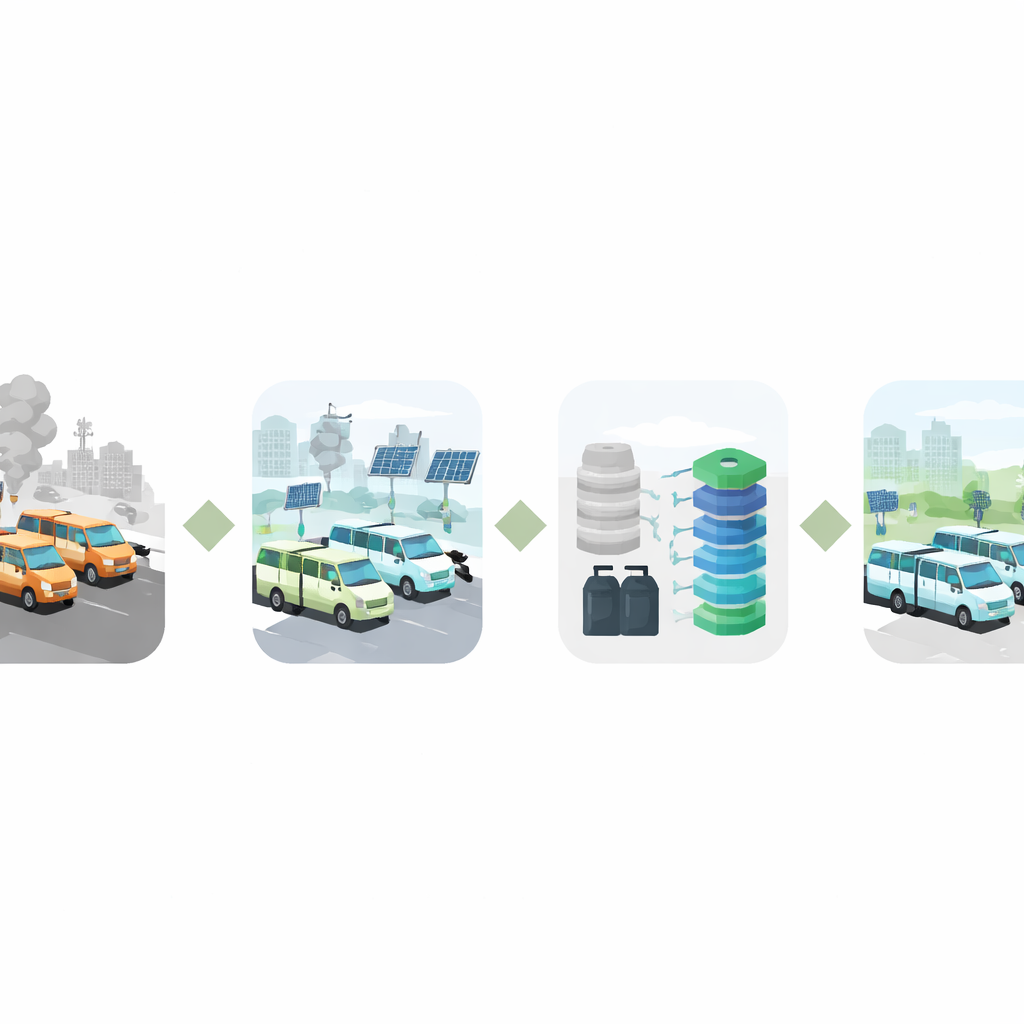
For everyday residents, the takeaway is straightforward: replacing old diesel minibuses with electric ones could mean cleaner air, fewer climate-warming emissions, and cheaper transport operations, but only if cities prepare their power systems and charging networks carefully. Some cities can plug electric minibuses into existing grids with minimal upgrades, while others will need new lines, smart charging during off-peak hours, and possibly local solar-power stations to meet demand. The framework developed here gives planners a practical, data-light tool to understand these trade-offs city by city. It shows that, with the right policies and investments, electrifying minibus taxis can become a cornerstone of healthier, more sustainable urban mobility across Africa.
Citation: Dumoulin, J., Pena-Bello, A., Jeannin, N. et al. Energy, environment, and economy implications of electrifying minibus taxis in African cities. Sci Rep 16, 10661 (2026). https://doi.org/10.1038/s41598-026-45790-w
Keywords: electric minibuses, African cities, urban air pollution, public transport electrification, energy planning